

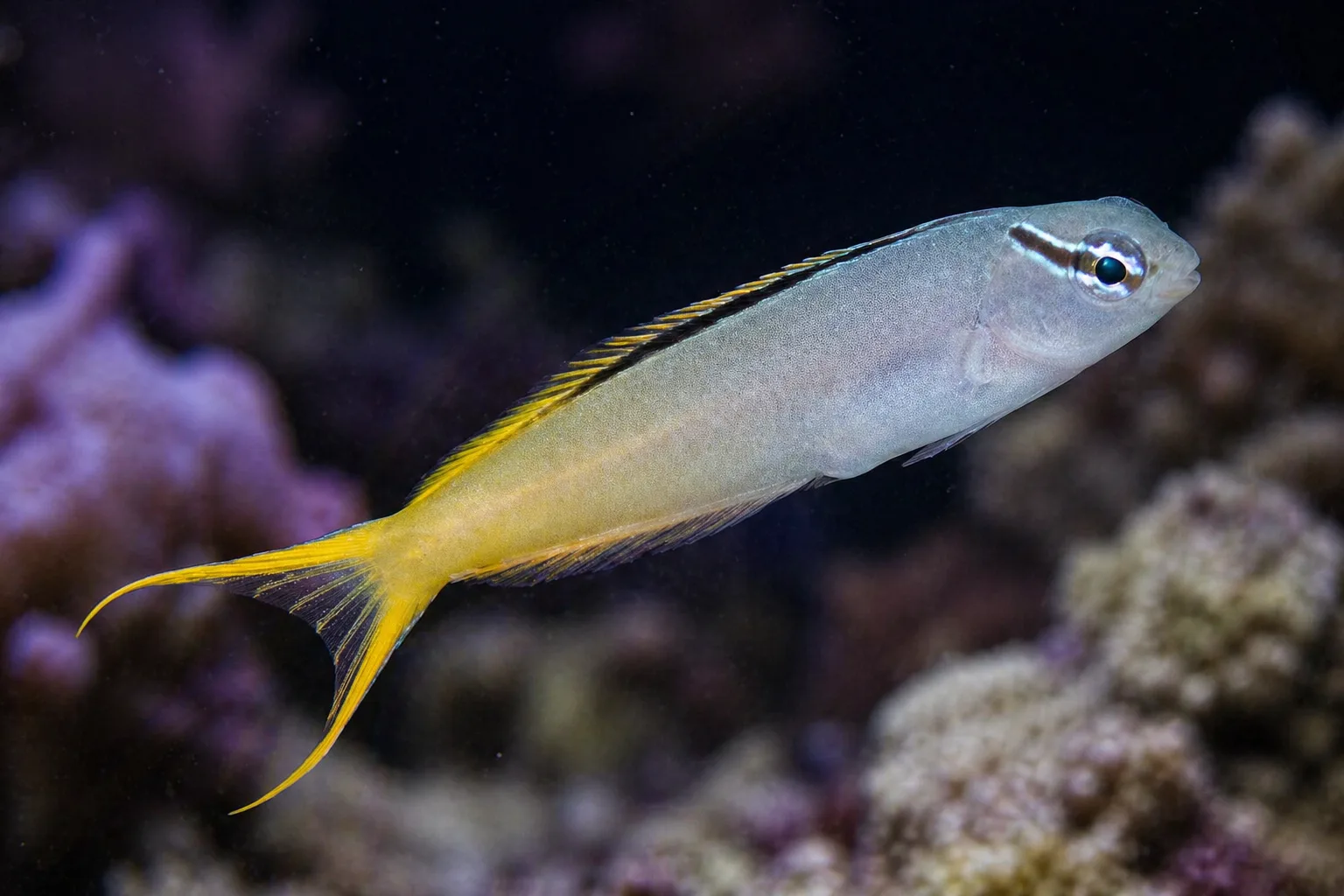
Illustrative images
Forktail Blenny
Meiacanthus atrodorsalis
Overview
The Forktail Blenny, belonging to the genus Meiacanthus, is a small, vibrant fish that is popular among marine aquarium enthusiasts. Known for its distinctive forked tail and engaging behavior, this species adds both color and personality to a reef environment.
Natural Habitat
Forktail Blennies are typically found in the warm, shallow waters of the Indo-Pacific region, particularly in coral reefs. They are often seen hovering close to the substrate, using their elongated bodies to navigate through rocky crevices and algae-covered surfaces.
Care Requirements
Forktail Blennies are relatively easy to care for, making them suitable for both novice and experienced aquarists. They thrive in a well-maintained reef tank with plenty of hiding spots. Here are some important care requirements:
- Tank Size: A minimum of 50 liters (approximately 13 gallons) is recommended.
- Water Type: They require marine conditions with stable salinity.
- Temperature: The tank should be maintained between 24°C to 28°C (75°F to 82°F).
Tank Setup
Creating an ideal environment for Forktail Blennies involves using plenty of live rock, which serves as both shelter and grazing area. They prefer open swimming spaces but also need nooks to retreat to when feeling threatened. Live rock provides both hiding spots and a source of algae for them to graze on.
Compatibility
Forktail Blennies are generally peaceful and can cohabit with other small, non-aggressive fish. When introducing them to a tank, it's advisable to add them last to prevent bullying from more territorial species. Good tank mates include clownfish, gobies, and other small reef-safe species.
Feeding
In the wild, Forktail Blennies primarily feed on algae and small zooplankton. In captivity, they should be provided a varied diet that includes:
- High-quality pelleted food
- Frozen or live brine shrimp
- Spirulina flakes and other algae-based foods
Regular feeding will ensure their health and vibrant coloration.
Lighting and CO2 Requirements
These fish do not have specific lighting needs; however, providing adequate lighting will help maintain a healthy environment for any live rock and algae present in the tank. CO2 supplementation is not necessary for Forktail Blennies but maintaining stable water conditions is critical.
Conclusion
In summary, the Forktail Blenny is an attractive and engaging fish that can enhance the appearance of a marine aquarium. With proper care, attention, and tank setup, they can thrive and contribute to the biodiversity of your reef setup.
How to care for Forktail Blenny
- 1
Set up the tank
Use a minimum 30-gallon tank with live rock for hiding and grazing.
- 2
Acclimate slowly
Introduce the blenny to the tank gradually to reduce stress.
- 3
Maintain water parameters
Keep salinity at 1.020-1.025, temperature between 22.2-25.6°C (72-78°F), pH 8.1-8.4, and alkalinity 8-12 dKH.
- 4
Provide a varied diet
Offer a mix of zooplankton, small invertebrates, and algae-based foods.
- 5
Monitor behavior
Observe for signs of aggression, especially towards other blennies.
Frequently asked questions
What is the maximum size of a Forktail Blenny?▾
Forktail Blennies can grow up to 11 cm (4.3 inches) in length.
What are the ideal water parameters for a Forktail Blenny?▾
Maintain a salinity of 1.020-1.025, temperature between 22.2-25.6°C (72-78°F), pH 8.1-8.4, and alkalinity 8-12 dKH.
Can Forktail Blennies be kept with other fish?▾
They are generally peaceful but may become territorial towards other blennies; it's best to keep only one per tank unless a breeding pair is maintained.
What do Forktail Blennies eat?▾
They are omnivorous, feeding on zooplankton, small benthic invertebrates, and algae.
Are Forktail Blennies venomous?▾
Yes, they possess venomous fangs used for self-defense.