

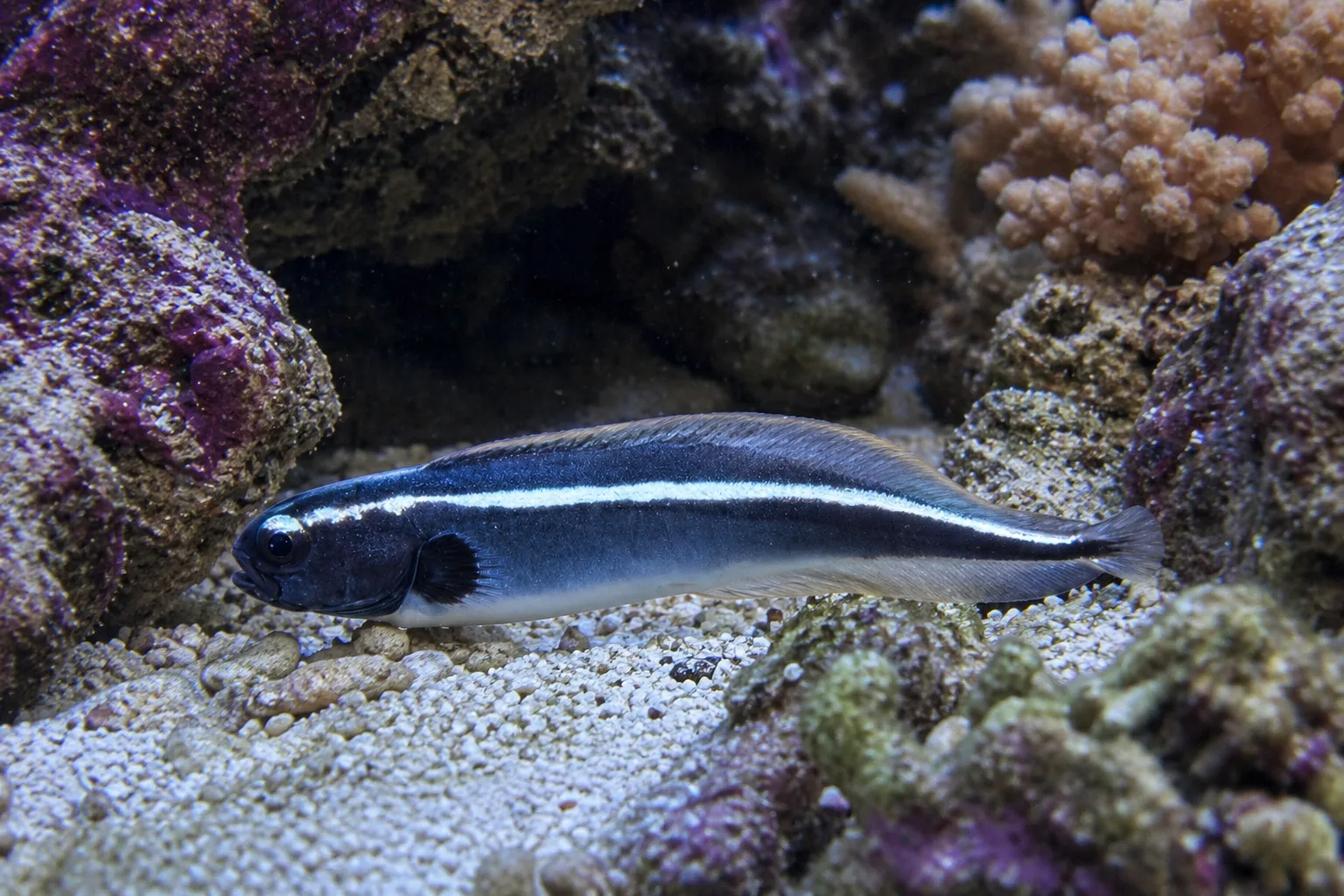
Illustrative images
Engineer Goby
Pholidichthys leucotaenia
Overview
The Engineer Goby, scientifically known as Pholidichthys leucotaenia, is a distinctive fish known for its burrowing behavior and elongated body. It is often found in both reef and sand environments, making it a fascinating addition to aquarium setups.
Natural Habitat
This species is native to the Indo-Pacific region, typically inhabiting shallow waters, lagoons, and sandy bottoms. They are known to create tunnels and burrows, which provide both shelter and a space for foraging.
Care Requirements
The Engineer Goby is generally suitable for aquarists with moderate experience. They thrive in a well-maintained aquarium that mimics their natural habitat. Key considerations include:
- Tank Size: A minimum tank size of 100 liters (approximately 26 gallons) is recommended to provide adequate space for swimming and burrowing.
- Water Conditions: Maintaining stable water parameters is crucial. Aim for a general hardness (dGH) of 8-12 dGH and a pH range of 8.1 to 8.4.
- Temperature: Optimal water temperature ranges from 24°C to 28°C (75°F to 82°F).
Tank Setup
Creating a suitable environment for the Engineer Goby involves providing plenty of hiding spots and substrate for burrowing. A sandy substrate is ideal, along with live rock arrangements that mimic their natural habitat. Incorporating caves and tunnels will also encourage natural behaviors.
Compatibility
Engineer Gobies are generally peaceful but can be territorial, especially around their burrows. It is best to keep them in a community tank with other peaceful species. Avoid housing them with overly aggressive fish that may stress them.
Feeding
These gobies are omnivores and will accept a varied diet. Offer high-quality pellets or flakes, along with frozen and live foods such as brine shrimp and mysis shrimp. Regularly varying their diet will promote health and vibrant coloration.
Lifespan
With proper care, Engineer Gobies can live for several years in captivity, often reaching a lifespan of about 5-10 years.
Conclusion
The Engineer Goby is a unique and engaging species that can enhance the beauty and diversity of your aquarium. With appropriate care and attention to their environment, they make an intriguing addition to both community tanks and reef setups.
How to care for Engineer Goby
- 1
Set up the tank
Use a 75-gallon tank for juveniles, with a deep sand bed for burrowing.
- 2
Acclimate slowly
Introduce the goby to the tank gradually to reduce stress.
- 3
Maintain water parameters
Keep salinity at 1.020-1.025, temperature at 72-78°F, pH at 8.1-8.4, and alkalinity at 8-12 dKH.
- 4
Provide hiding spots
Ensure ample caves and crevices for shelter.
- 5
Feed appropriately
Offer a variety of meaty foods like brine shrimp and mysis shrimp twice daily.
Frequently asked questions
What size tank does an Engineer Goby need?▾
A minimum of 75 gallons is recommended for juveniles, with 125 gallons preferred for adults.
What do Engineer Gobies eat?▾
They are carnivorous, feeding on meaty foods like brine shrimp and mysis shrimp.
Are Engineer Gobies reef-safe?▾
Yes, they are generally reef-safe but may disturb frags and small invertebrates.
How big do Engineer Gobies get?▾
They can grow up to 12 to 14 inches in length.
What is the natural habitat of Engineer Gobies?▾
They inhabit shallow lagoons and coastal reefs from the Philippines to the Solomon Islands.