

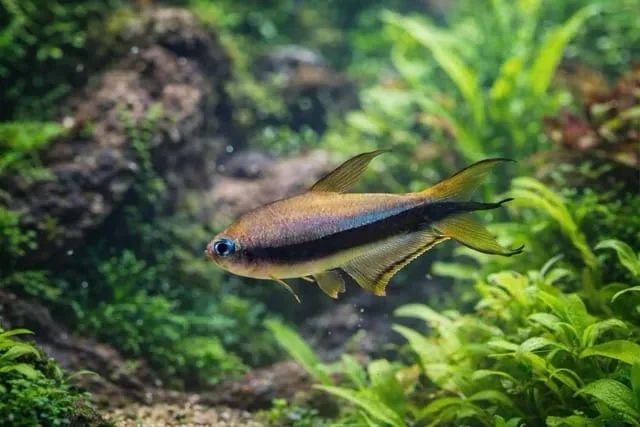
Illustrative images
Emperor Tetra
Nematobrycon palmeri
Overview
The Emperor Tetra, scientifically known as Nematobrycon palmeri, is a popular freshwater fish in the aquarium hobby. Recognized for its striking coloration and peaceful nature, this species is an excellent choice for community tanks.
Natural Habitat
Emperor Tetras are native to the rivers and streams of the Orinoco Basin in Venezuela and Colombia. They thrive in slow-moving waters with abundant vegetation, which provides both hiding places and breeding grounds.
Care Requirements
Tank Setup
When setting up a tank for Emperor Tetras, it is important to replicate their natural habitat. A well-planted aquarium with floating plants and subdued lighting is ideal. This creates a comfortable environment for them, encouraging their natural behaviors.
Water Parameters
- pH: 6.0 - 7.5
- Temperature: 24 - 28 °C
- Hardness: Soft to moderate
Tank Size
A minimum tank size of 80 liters (about 20 gallons) is recommended to provide ample swimming space, as Emperor Tetras prefer to be in schools.
Compatibility
Emperor Tetras are known for their peaceful temperament, making them suitable for community tanks. They pair well with other peaceful fish species such as Guppies, Rasboras, and other Tetras. However, avoid keeping them with aggressive species that may stress them.
Feeding
Emperor Tetras are omnivorous and will accept a variety of foods. A balanced diet should include high-quality flake foods, micro-pellets, and occasional live or frozen foods like brine shrimp and daphnia to enhance their color and health.
Lifespan
With proper care, Emperor Tetras can live up to 5 years in captivity.
Conclusion
The Emperor Tetra is a vibrant addition to any community aquarium. With its peaceful nature and beautiful appearance, it is sure to be a favorite among aquarium enthusiasts. By ensuring the right tank conditions and providing a varied diet, hobbyists can enjoy observing these enchanting fish for years to come.
How to care for Emperor Tetra
- 1
Set up the tank
Choose a tank of at least 20 gallons (76 liters) for a small group. Use a dark substrate like sand or gravel, and include plenty of live plants, driftwood, and rocks to mimic their natural habitat.
- 2
Acclimate slowly
When introducing Emperor Tetras to the tank, acclimate them slowly to prevent stress. Float the bag in the tank for 15-20 minutes, then gradually mix tank water into the bag before releasing them.
- 3
Maintain water parameters
Keep the water temperature between 75-82°F (24-28°C), pH between 5.0-7.5, and hardness between 5-19 dGH. Regularly test water parameters to ensure stability.
- 4
Feed appropriately
Offer a varied diet of high-quality flakes or pellets, supplemented with live or frozen foods like daphnia and mosquito larvae, and occasional vegetable matter.
- 5
Monitor health
Observe Emperor Tetras regularly for signs of stress or disease, such as changes in behavior, coloration, or appetite. Promptly address any issues to maintain a healthy environment.
Frequently asked questions
What is the ideal tank size for Emperor Tetras?▾
A minimum of 20 gallons (76 liters) is recommended for a small group of Emperor Tetras. Larger groups may require bigger tanks to accommodate their active nature.
What water parameters do Emperor Tetras prefer?▾
Emperor Tetras thrive in water temperatures between 75-82°F (24-28°C), with a pH range of 5.0-7.5, and water hardness between 5-19 dGH.
What is the lifespan of Emperor Tetras?▾
Emperor Tetras typically live between 3-5 years in a well-maintained aquarium, with some specimens reaching up to 6 years.
What do Emperor Tetras eat?▾
Emperor Tetras are omnivorous and should be fed a varied diet, including high-quality flakes or pellets, live or frozen foods like daphnia and mosquito larvae, and vegetable matter.
Can Emperor Tetras be kept with other fish?▾
Yes, Emperor Tetras are peaceful and can be kept with other non-aggressive species of similar size, such as other tetras, rasboras, guppies, dwarf gouramis, and small catfish.