

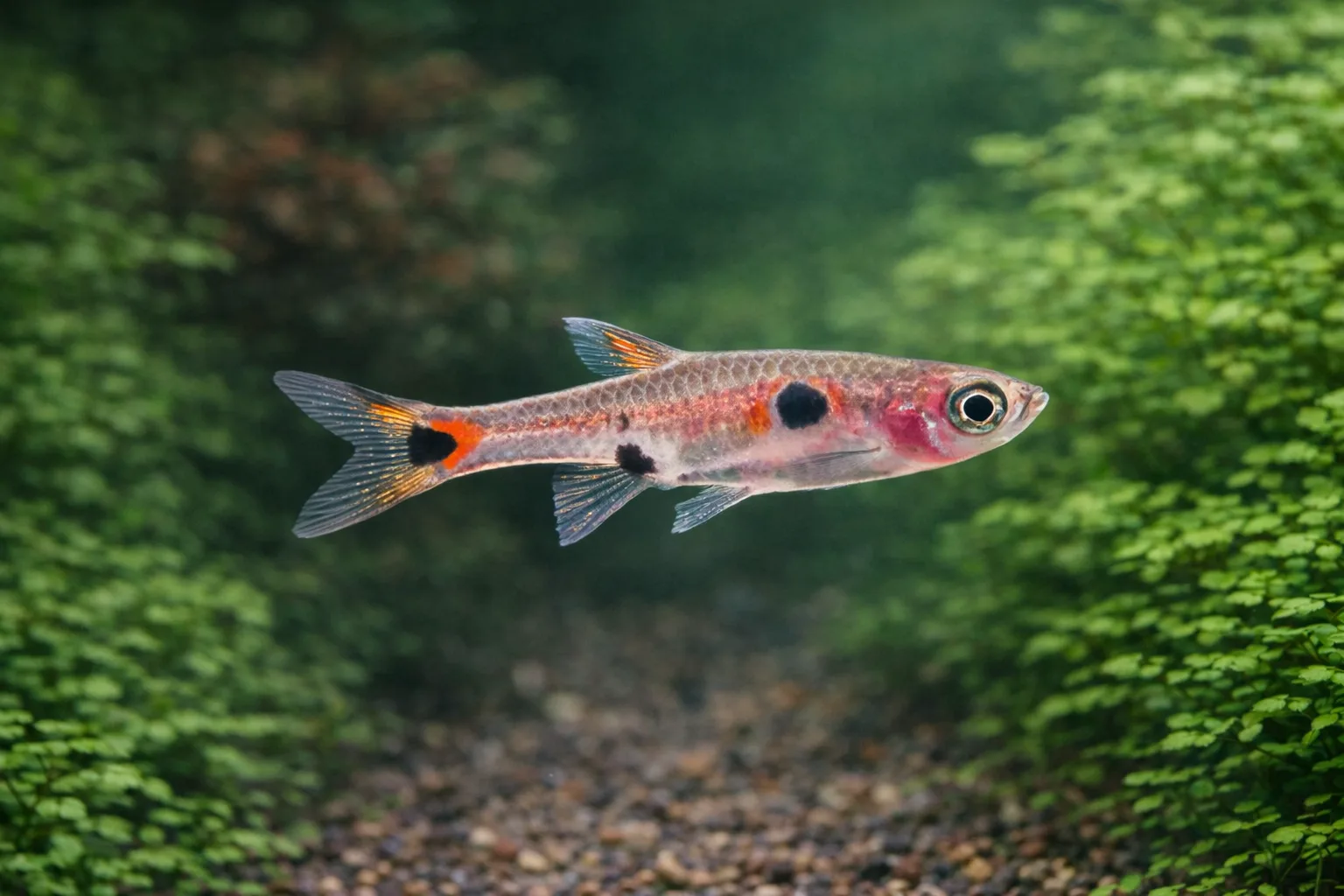
Illustrative images
Dwarf Rasbora
Boraras maculatus
Overview
The Dwarf Rasbora, scientifically known as Boraras maculatus, is a small freshwater fish native to Southeast Asia. Renowned for its vibrant coloration, it is a popular choice among aquarists seeking to enhance their community tanks with a peaceful and attractive species. These fish are easily recognized by their distinctive pattern and size, making them a great addition to small aquariums.
Natural Habitat
Dwarf Rasboras can be found in the shallow waters of rice paddies, swamps, and streams in Southeast Asia, particularly in regions of Thailand and Indonesia. They are typically found in slow-moving waters rich in vegetation, which provides ample cover from predators.
Care Requirements
Caring for Dwarf Rasboras is relatively straightforward, making them suitable for both novice and experienced aquarists. Here are some important care considerations:
- Tank Setup: A planted aquarium is ideal for Dwarf Rasboras. They thrive in environments that mimic their natural habitat, so include plenty of live plants, driftwood, and rocks.
- Water Conditions: These fish prefer soft, slightly acidic to neutral water. Keeping the water clean and well-filtered is crucial.
- Minimal Tank Size: A minimum tank size of 10 gallons is recommended to accommodate a small group.
Compatibility
Dwarf Rasboras are peaceful fish that tend to do well in community tanks with other small, non-aggressive species. They should be kept in groups of at least six to encourage natural schooling behavior. Good tank mates include:
- Neon Tetras
- Pygmy Corydoras
- Cherry Shrimp
Feeding
Dwarf Rasboras are omnivores and thrive on a varied diet. They can be fed high-quality flake foods, micro pellets, and occasional live or frozen food such as brine shrimp or daphnia. Since they are small fish, it's essential to ensure that food particles are appropriately sized for them.
Lighting and CO2 Requirements
Moderate lighting is suitable for Dwarf Rasboras, as it promotes plant growth without stressing the fish. CO2 injection can be beneficial in a planted tank but is not strictly necessary.
Lifespan and Size
In ideal conditions, Dwarf Rasboras can live for 3 to 5 years. Adult Dwarf Rasboras typically reach a maximum size of about 2.5 cm (1 inch), allowing them to fit comfortably in smaller aquariums.
Como cuidar de Dwarf Rasbora
- 1
Set up the tank
Choose a minimum 5-gallon tank with a dark substrate and plenty of live plants to mimic their natural habitat.
- 2
Acclimate slowly
Introduce Dwarf Rasboras to the tank gradually to minimize stress, especially when adding new fish.
- 3
Maintain water parameters
Keep the water soft and acidic with a pH of 4.0 to 7.0, hardness of 1 to 5 dGH, and a temperature between 73 to 82°F (23 to 28°C).
- 4
Feed appropriately
Offer a varied diet including micropredators, flake, pellet, and live foods to ensure balanced nutrition.
- 5
Monitor health
Regularly observe fish for signs of stress or disease, and perform routine water changes to maintain water quality.
Perguntas frequentes
What size tank do Dwarf Rasboras need?▾
A minimum tank size of 5 gallons (19 liters) is recommended for a school of at least 8 Dwarf Rasboras.
What water parameters are ideal for Dwarf Rasboras?▾
Dwarf Rasboras thrive in soft, acidic water with a pH of 4.0 to 7.0, hardness of 1 to 5 dGH, and a temperature range of 73 to 82°F (23 to 28°C).
What do Dwarf Rasboras eat?▾
Dwarf Rasboras are omnivores, feeding on micropredators, and can be offered a variety of foods including flake, pellet, and live foods.
How long do Dwarf Rasboras live?▾
Dwarf Rasboras typically live 3 to 5 years in captivity.
Can Dwarf Rasboras be kept with other fish?▾
Dwarf Rasboras are peaceful and should be kept with other small, non-aggressive species. They are not suitable for community aquariums with larger or more aggressive fish.