

Illustrative images
Duncan Coral
Duncanopsammia axifuga
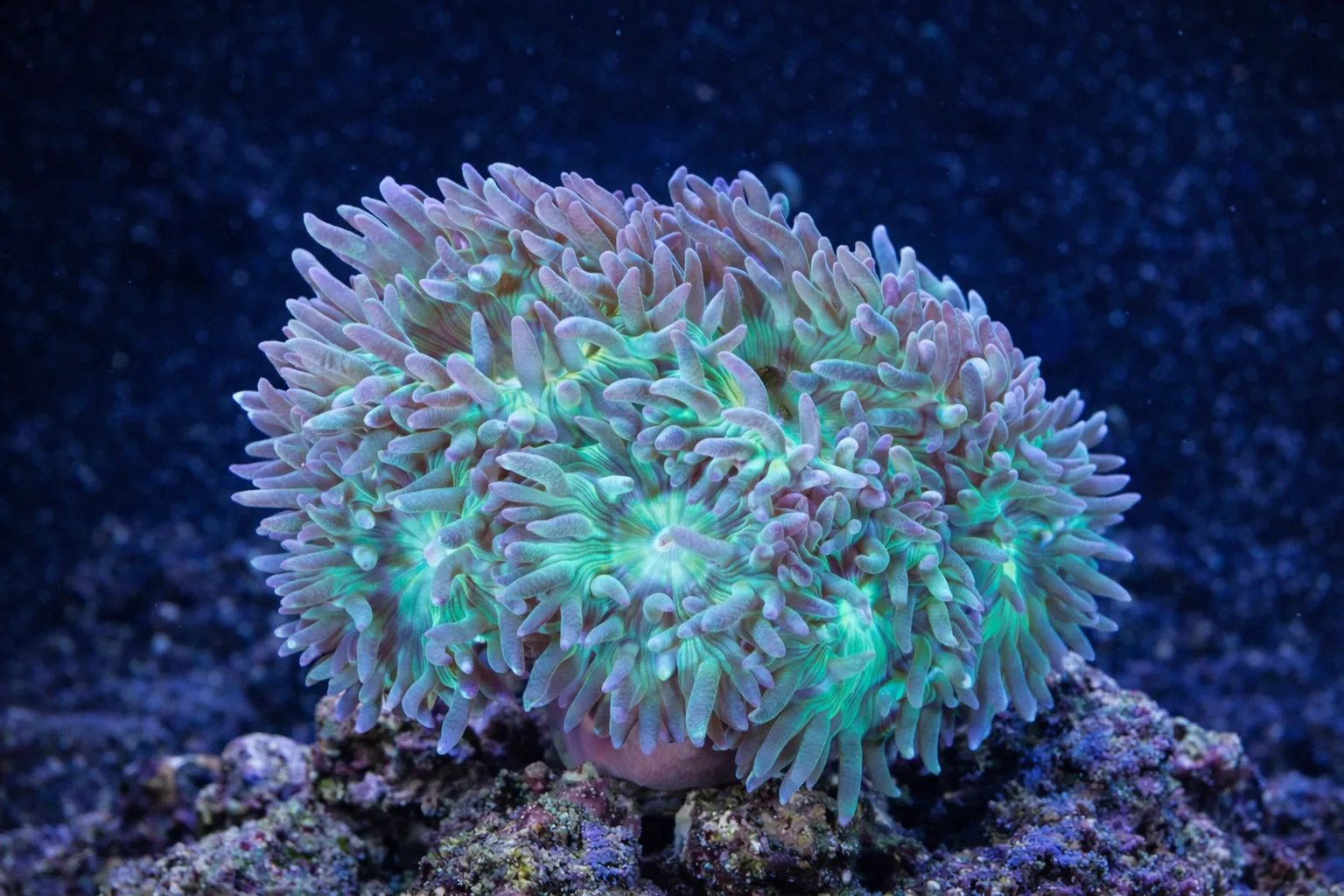
The Duncan Coral (Duncanopsammia axifuga), often called Duncanopsammia or Whisker Coral, is one of the most popular LPS corals in the reef aquarium hobby. Native to the Indo-Pacific region, particularly Australia, this coral is known for its long, flowing tentacles and vibrant coloration, making it a stunning centerpiece in marine aquariums.
Duncan Coral forms colonies of branching skeletons with large fleshy polyps that extend outward during the day. Each polyp features a circular mouth surrounded by numerous soft tentacles that gently sway in the water current. The coral typically displays bright green, neon lime, or teal coloration, often contrasted with lighter or yellowish centers, especially under blue reef aquarium lighting.
One of the reasons Duncan Coral is so beloved among reef aquarists is its hardiness and relatively easy care requirements. Compared to many other LPS corals, Duncanopsammia adapts well to a variety of aquarium conditions and is considered suitable for both beginner and experienced reef keepers.
Duncan Coral thrives best under moderate lighting and gentle to moderate water flow. Excessively strong flow can cause the polyps to retract, while insufficient flow may allow debris to accumulate around the coral’s base. Proper water movement helps deliver nutrients and oxygen while keeping the coral clean.
As a photosynthetic coral, Duncan Coral receives much of its energy from symbiotic zooxanthellae algae living within its tissue. However, it also benefits from target feeding. Many reef aquarists feed Duncan corals small foods such as mysis shrimp, brine shrimp, reef roids, or finely chopped seafood. Regular feeding can significantly increase growth rates and polyp expansion.
Maintaining stable water chemistry is essential for healthy skeletal growth. Ideal reef parameters include:
-
Calcium: 400–450 ppm
-
Alkalinity: 8–9 dKH
-
Magnesium: 1250–1350 ppm
-
Temperature: 24–26°C (75–79°F)
-
Moderate nutrient levels (low nitrate and phosphate)
Duncan Coral is generally peaceful and reef safe, making it an excellent choice for mixed reef aquariums. Unlike some aggressive LPS corals, Duncanopsammia has relatively short sweeper tentacles and typically does not harm nearby corals when given reasonable spacing.
Another appealing feature of Duncan Coral is its fast growth compared to many other LPS species. New heads form at the base of existing polyps, gradually creating large branching colonies over time. Because of this growth pattern, Duncan Coral is also easy to frag and propagate, making it a favorite among reef hobbyists who enjoy coral propagation.
With its flowing tentacles, vibrant color, and hardy nature, the Duncan Coral is one of the most rewarding LPS corals to keep in reef aquariums, providing movement, color, and natural beauty to any marine aquascape.
How to care for Duncan Coral
- 1
Set up the tank
Ensure your aquarium has a minimum of 30 gallons capacity, with stable water parameters: temperature 75-80°F (24-27°C), pH 8.1-8.4, salinity 1.023-1.025, alkalinity 8-12 dKH, calcium 400-450 ppm, and magnesium 1250-1350 ppm.
- 2
Position the coral
Place Duncan Coral in areas with low to moderate water flow and moderate lighting, avoiding direct high-intensity light to prevent bleaching.
- 3
Acclimate the coral
Before introducing Duncan Coral, acclimate it by floating the bag in the aquarium for 15-30 minutes to equalize temperature, then slowly drip aquarium water into the bag over 1-2 hours to adjust to the new water chemistry.
- 4
Feed the coral
Feed Duncan Coral 2-3 times per week with meaty foods like enriched mysis or brine shrimp, turning off pumps during feeding to allow the coral to capture the food effectively.
- 5
Monitor the coral
Regularly observe Duncan Coral for signs of stress or disease, such as closed polyps or discoloration, and adjust care routines as needed.
Frequently asked questions
What are the ideal water parameters for Duncan Coral?▾
Duncan Coral thrives in water with a temperature of 75-80°F (24-27°C), pH between 8.1-8.4, salinity of 1.023-1.025 specific gravity, alkalinity (dKH) of 8-12, calcium levels at 400-450 ppm, and magnesium at 1250-1350 ppm.
How should I position Duncan Coral in my aquarium?▾
Place Duncan Coral in areas with low to moderate water flow and moderate lighting, avoiding direct high-intensity light to prevent bleaching.
What is the recommended tank size for Duncan Coral?▾
A minimum tank size of 30 gallons is recommended to provide adequate space for Duncan Coral to grow and thrive.
How often should I feed Duncan Coral?▾
Feed Duncan Coral 2-3 times per week with meaty foods like enriched mysis or brine shrimp, turning off pumps during feeding to allow the coral to capture the food effectively.
Can Duncan Coral be kept with other corals?▾
Duncan Coral is peaceful and can coexist with other non-aggressive corals and invertebrates, provided it has enough space to grow.