

Illustrative images
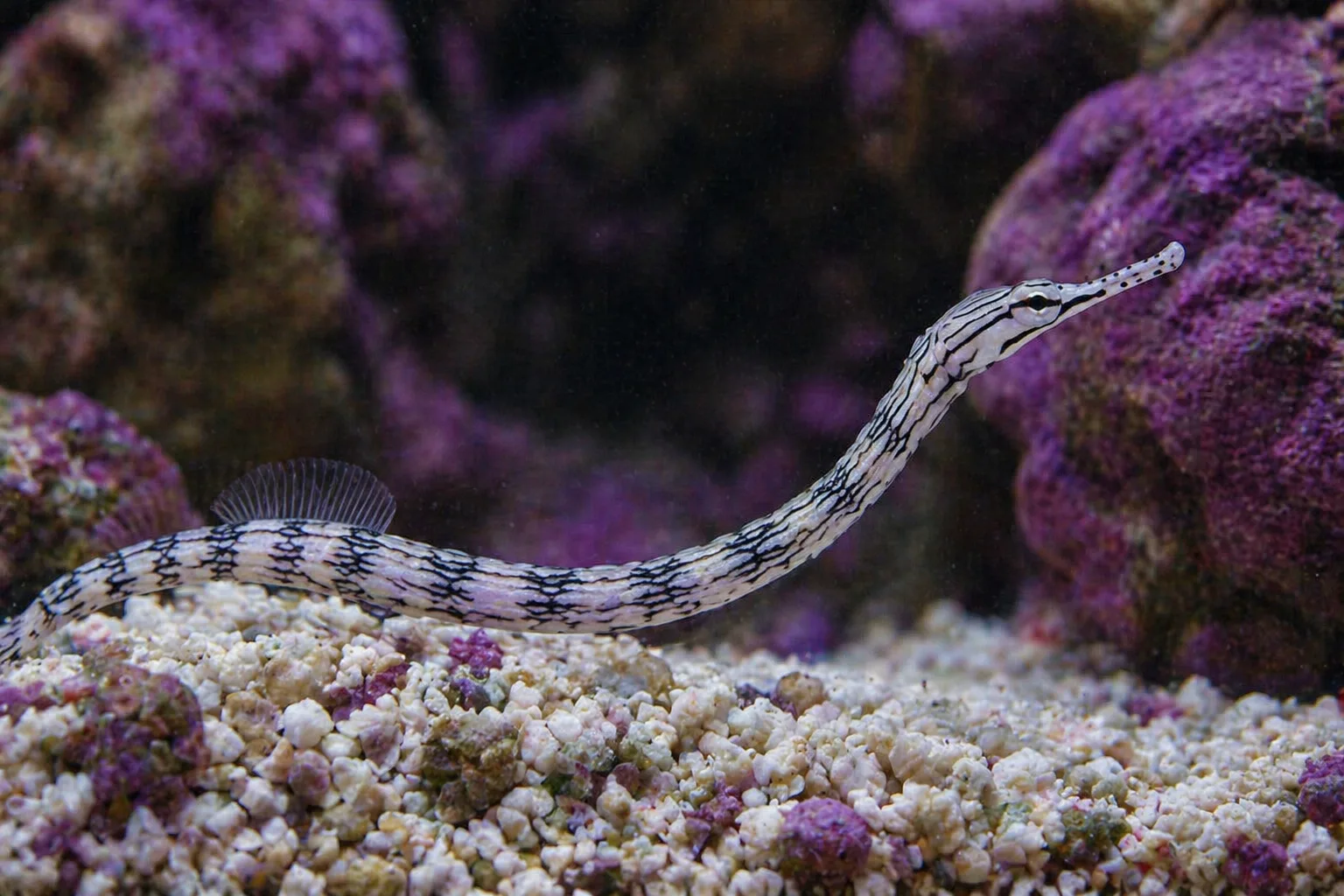
Dragonface Pipefish
Corythoichthys haematopterus
Overview
The Dragonface Pipefish is an intriguing species belonging to the Syngnathidae family, which also includes seahorses. Characterized by their elongated bodies and distinctive snouts, these fish are often sought after by aquarists for their unique appearance and behavior. The Dragonface Pipefish is especially known for its ability to blend into its surroundings, making it an interesting addition to a well-planted aquarium.
Natural Habitat
In the wild, the Dragonface Pipefish is typically found in shallow coastal waters, particularly among seagrass beds and coral reefs. Their natural habitat provides ample hiding spots from predators and creates a rich environment for them to thrive. Observing them in their natural setting reveals their fascinating behaviors, including how they use their camouflage to avoid detection.
Care Requirements
When keeping Dragonface Pipefish in an aquarium, it is important to replicate their natural environment as closely as possible. Below are some essential care requirements:
- Tank Size: A minimum tank size of 75 liters (20 gallons) is recommended to give them enough space to swim and explore.
- Water Parameters: They thrive in stable water conditions – low current, with a pH around 7.5 to 8.5, and a temperature range of 24-28°C (75-82°F).
- Tank Setup: A heavily planted tank with plenty of hiding spots, such as live plants, rocks, and driftwood, will help mimic their natural habitat.
Compatibility
Dragonface Pipefish are generally considered to be peaceful but should be housed with compatible fish. Good tank mates include:
- Peaceful reef fish
- Smaller species that do not pose a threat
- Other pipefish
Avoid aggressive species as they may harass the pipefish, leading to stress or injury.
Feeding
Diet plays a crucial role in the health of the Dragonface Pipefish. They are carnivorous and primarily feed on small live foods. Suitable food options include:
- Brine shrimp
- Mysis shrimp
- Small crustaceans
- Frozen or live food that mimics their natural diet
Feeding should occur multiple times a day in smaller portions to ensure they receive adequate nutrition.
Lighting and CO2 Requirements
Moderate lighting is ideal for a Dragonface Pipefish aquarium, as excessive light can cause stress and disrupt their natural behavior. While they do not require CO2 supplementation, providing lush aquatic plants will enhance their environment.
Lifespan
With proper care, Dragonface Pipefish can live up to 5 years in captivity. Regular maintenance of water quality and appropriate feeding practices will contribute to a healthy lifespan.
How to care for Dragonface Pipefish
- 1
Set up the tank
Use a well-established aquarium with plenty of live rock and crevices for hiding. Ensure the tank has low water flow to mimic their natural habitat.
- 2
Acclimate slowly
Introduce the pipefish to the tank gradually to reduce stress and allow them to adjust to the new environment.
- 3
Maintain water parameters
Regularly monitor and maintain water temperature between 72-78°F (22-27°C), salinity at 1.020-1.025, pH between 8.1-8.4, and alkalinity of 8-12 dKH.
- 4
Provide appropriate diet
Offer a steady supply of small live or frozen foods like copepods, brine shrimp, and mysis shrimp, as they primarily feed on small crustaceans.
- 5
Select compatible tank mates
Choose peaceful species that do not outcompete the pipefish for food, such as seahorses or small gobies.
Frequently asked questions
What are the ideal water parameters for Corythoichthys haematopterus?▾
Maintain a temperature of 72-78°F (22-27°C), salinity of 1.020-1.025, pH between 8.1-8.4, and alkalinity of 8-12 dKH.
What is the recommended tank size for Corythoichthys haematopterus?▾
A minimum tank size of 30 gallons (114 liters) is recommended to accommodate this species.
What is the natural diet of Corythoichthys haematopterus?▾
In the wild, they feed on small crustaceans like copepods, brine shrimp, and mysis shrimp.
Can Corythoichthys haematopterus be kept with other fish?▾
Yes, they are peaceful and can be kept with other non-aggressive tank mates.
How do Corythoichthys haematopterus reproduce?▾
They are ovoviviparous; males carry fertilized eggs in a brood pouch until they hatch.