

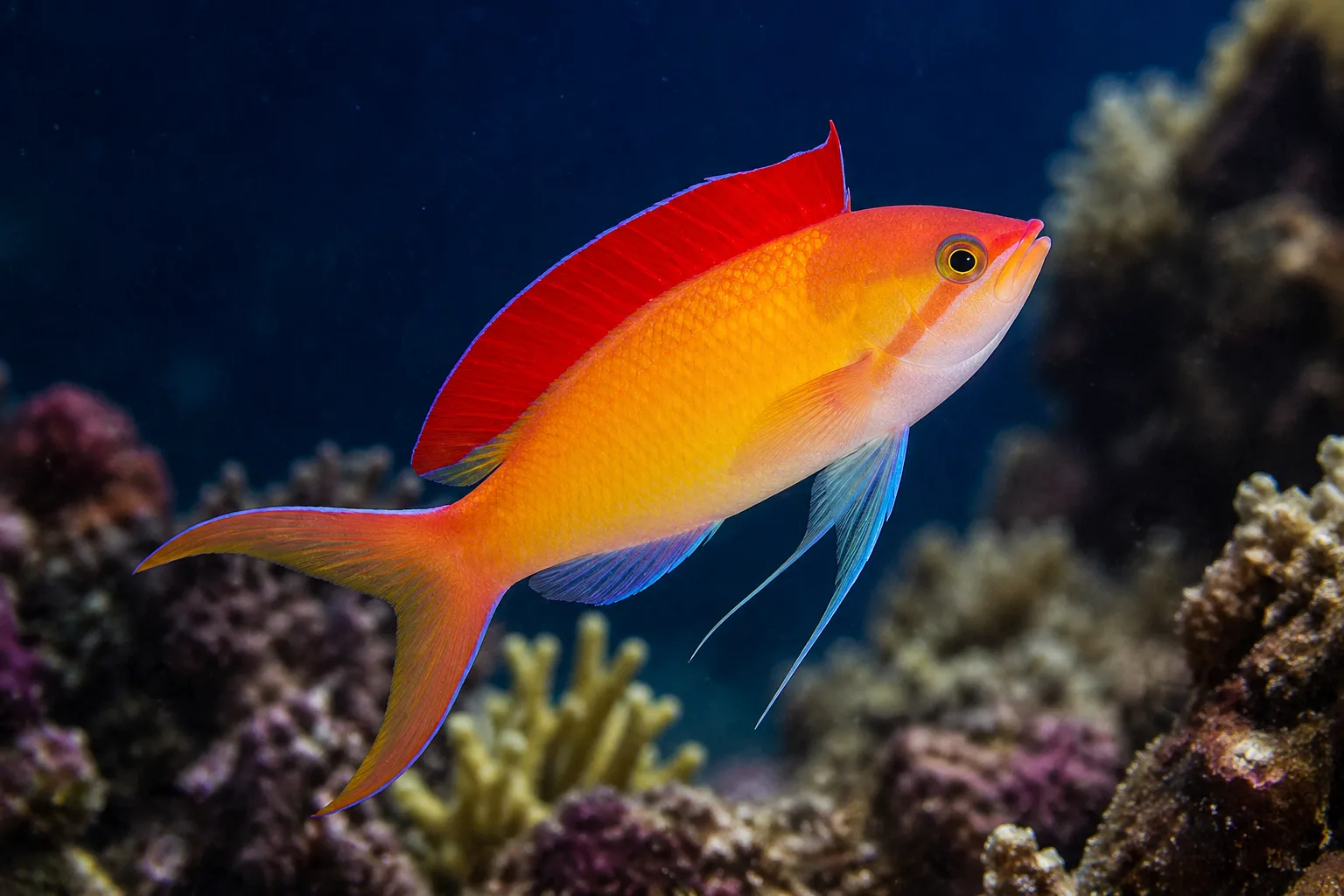
Illustrative images
Dispar Anthias
Pseudanthias dispar
Overview
The Dispar Anthias, scientifically known as Pseudanthias dispar, is a striking marine fish commonly found in coral reef environments. With its bright colors and active behavior, it captures the attention of both aquarists and casual observers alike.
Natural Habitat
The Dispar Anthias is native to the Indo-Pacific region, typically inhabiting shallow coral reefs. They are known to form small groups, often seen darting in and out of reef structures. This schooling behavior not only provides safety from predators but also makes them a delightful addition to a well-planned marine tank.
Care Requirements
Caring for Dispar Anthias requires some specific considerations:
- Tank Size: A minimum tank size of 200 liters (approximately 52 gallons) is recommended to provide adequate space for swimming and social interactions.
- Water Conditions: Maintain stable water parameters with a temperature range of 22-28°C (72-82°F), a pH of 8.1-8.4, and moderate salinity levels suitable for marine aquariums.
- Filtration: Strong filtration and regular water changes are crucial to keep the environment clean and stable.
Tank Setup
When setting up a tank for Dispar Anthias, consider these factors:
- Incorporate plenty of live rock and hiding spots to mimic their natural coral reef habitat.
- Use soft corals and anemones to create a visually appealing and secure environment.
- Ensure good water flow to create a dynamic environment that encourages natural behavior.
Compatibility
Dispar Anthias are typically peaceful fish and can be kept with a variety of other marine species. They are best housed with other small to medium-sized reef fish and should not be kept with overly aggressive tank mates.
Feeding
Feeding Dispar Anthias can be straightforward:
- They are primarily planktivores, thriving on a diet of small zooplankton and fine foods.
- Offer high-quality flake or pellet food supplemented with live or frozen foods such as brine shrimp, mysis shrimp, and other small marine organisms.
Lifespan
In captivity, with proper care, Dispar Anthias can live up to 5 years or more, making them a rewarding addition to any marine aquarium enthusiast's collection.
How to care for Dispar Anthias
- 1
Set up the tank
Prepare a well-established reef tank with live rock structures to mimic their natural habitat, providing both security and areas to explore.
- 2
Acclimate slowly
Introduce Dispar Anthias to the aquarium gradually to reduce stress and allow them to adjust to the new environment.
- 3
Maintain water parameters
Ensure stable water conditions with temperatures between 72-80°F (22-27°C), pH 8.1-8.4, and specific gravity of 1.020-1.025.
- 4
Feed appropriately
Offer a varied diet of frozen or live brine shrimp, mysis shrimp, and high-quality flake foods in small portions multiple times daily.
- 5
Monitor behavior
Observe the fish for signs of stress or aggression, especially if housed with other species, and ensure they have ample swimming space.
Frequently asked questions
What size tank do Dispar Anthias need?▾
A minimum tank size of 75 gallons (approximately 284 liters) is recommended for Dispar Anthias. Larger tanks are preferable for keeping a group of 8-10 individuals.
What are the ideal water parameters for Dispar Anthias?▾
Dispar Anthias thrive in water temperatures between 72-80°F (22-27°C), a pH of 8.1-8.4, and a specific gravity of 1.020-1.025. Alkalinity should be maintained between 8-12 dKH.
What do Dispar Anthias eat?▾
Dispar Anthias are carnivorous and primarily feed on zooplankton, including mysis shrimp and vitamin-enriched brine shrimp. They may also accept high-quality flake foods offered in small quantities throughout the day.
Are Dispar Anthias reef-safe?▾
Yes, Dispar Anthias are peaceful and reef-safe, making them suitable for reef aquariums.
How do Dispar Anthias reproduce?▾
Dispar Anthias are hermaphroditic; if a dominant male perishes, the largest female of the group will often morph into a male to take its place.