

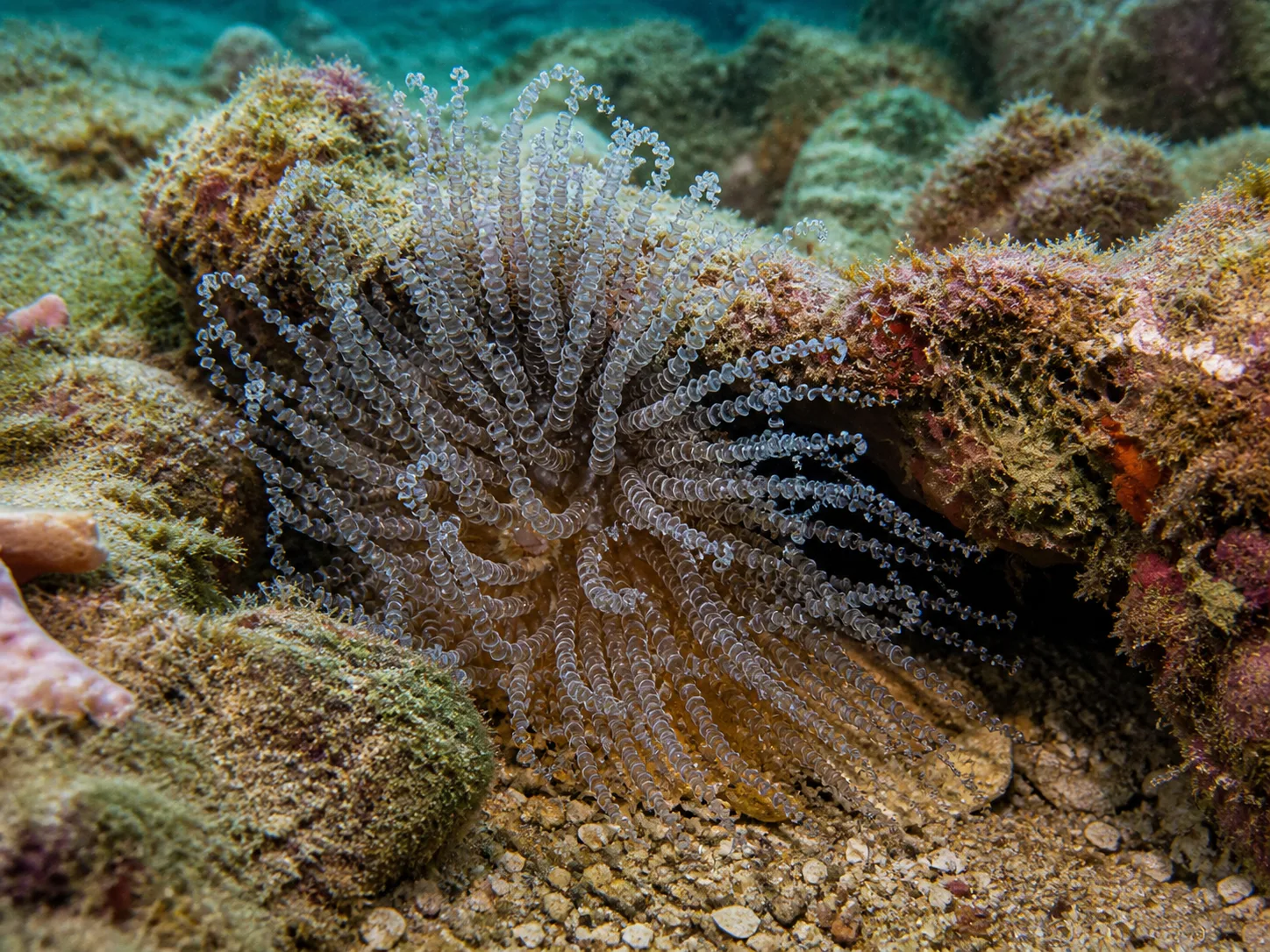
Illustrative images
Corkscrew Anemone
Bartholomea annulata
Overview
The Corkscrew Anemone, commonly encountered in marine aquariums, is an intriguing species known for its distinct and spiraled tentacles. While it is often mistaken for a fish, this organism plays a vital role in marine ecosystems, particularly in symbiotic relationships with certain clownfish species. It is imperative for aquarium hobbyists to understand its care requirements and compatibility with other tank inhabitants.
Natural Habitat
The Corkscrew Anemone is native to the warm, shallow waters of the Indo-Pacific region. It commonly resides in coral reefs where it attaches to rocky substrates. Preferring sandy or gravel beds, this anemone thrives in environments that provide ample light and stable water conditions.
Care Requirements
Caring for the Corkscrew Anemone requires specific attention to water parameters, lighting, and tank mates. Due to its active lifestyle and feeding habits, maintaining optimal conditions is crucial.
Tank Setup
- Minimum Tank Size: A minimum of 75 gallons is recommended to provide ample space for movement.
- Lighting: Moderate to high lighting is essential to support its photosynthetic activity. Full-spectrum lighting mimics the natural conditions of its habitat.
- Water Conditions: Stable water temperatures between 24-28°C (75-82°F), with salinity levels of 1.020-1.025 specific gravity are ideal.
Compatibility
The Corkscrew Anemone can coexist with various marine species, particularly clownfish, which form a mutualistic relationship with it. However, caution should be exercised with aggressive fish that may threaten its well-being.
Feeding
This anemone is primarily carnivorous and benefits from a varied diet. Offer small pieces of marine-based foods such as:
- Mysis shrimp
- Oysters
- Fish roe
- Other meaty offerings
Additionally, the anemone benefits from the photosynthesis provided by the zooxanthellae living in its tissues, so it is important to ensure it has access to adequate lighting.
Lifespan
With proper care, Corkscrew Anemones can live many years in a well-maintained aquarium, but specific longevity data can vary.
How to care for Corkscrew Anemone
- 1
Set up the tank
Ensure a minimum tank volume of 100 liters (26 gallons) with stable water parameters: salinity 1.023-1.025, pH 8.1-8.4, and temperature 24-28°C (75-82°F).
- 2
Provide appropriate lighting
Install moderate to high lighting to support the anemone's symbiotic zooxanthellae, which require sufficient light for photosynthesis.
- 3
Maintain water flow
Ensure moderate water flow to mimic the natural reef environment, allowing the anemone to anchor securely.
- 4
Acclimate the anemone
Introduce the anemone slowly to the tank to minimize stress, allowing it to find a suitable location.
- 5
Feed appropriately
Offer small pieces of fish, crustaceans, zooplankton, and mussels about three times a week using a baster or a refugium incorporated into the tank.
- 6
Monitor tankmates
Be cautious with tankmates, as the anemone may eat smaller fish. Larger fish are more suitable companions.
Frequently asked questions
What are the ideal water parameters for Corkscrew Anemones?▾
Maintain a salinity of 1.023-1.025, pH between 8.1 and 8.4, and a temperature range of 24-28°C (75-82°F).
What size tank is suitable for a Corkscrew Anemone?▾
A minimum tank volume of 100 liters (26 gallons) is recommended to accommodate a Corkscrew Anemone. ([reeflings.com](https://reeflings.com/species/bartholomea-annulata?utm_source=openai))
What do Corkscrew Anemones eat?▾
They feed on small fish, zooplankton, and invertebrates, using their tentacles to immobilize prey. ([animaldiversity.org](https://animaldiversity.org/accounts/Bartholomea_annulata/?utm_source=openai))
Can Corkscrew Anemones host clownfish?▾
They do not typically host clownfish, as they are native to regions without clownfish. ([theaquariumwiki.com](https://theaquariumwiki.com/wiki/Bartholomea_annulata?utm_source=openai))
How do Corkscrew Anemones reproduce?▾
They reproduce both sexually by releasing gametes and asexually through pedal laceration, where a portion of the basal disc detaches to form a new individual. ([en.wikipedia.org](https://en.wikipedia.org/wiki/Bartholomea_annulata?utm_source=openai))