

Illustrative images
Copperband Butterflyfish
Chelmon rostratus
Overview
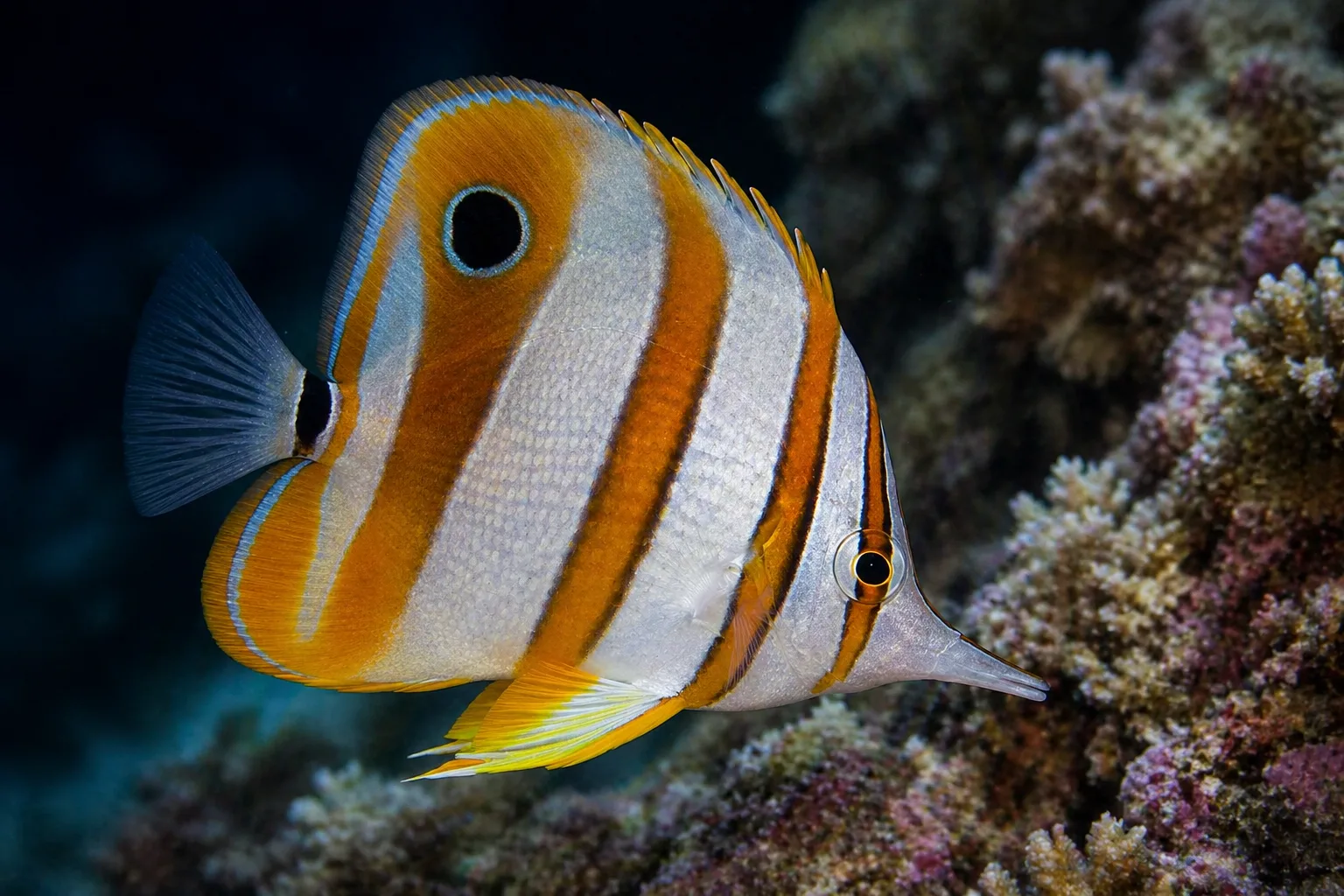
The Copperband Butterflyfish, scientifically known as Chelmon rostratus, is a popular marine aquarium species admired for its striking coloration and unique shape. This fish is characterized by its elongated body, prominent snout, and distinctive vertical orange bands that contrast beautifully with its white body. It typically grows to a size of about 20 cm (8 inches) in length, making it a moderate-sized species suitable for larger aquariums.
Natural Habitat
In the wild, the Copperband Butterflyfish is found in the coral reefs of the Indo-Pacific region, including areas around the Great Barrier Reef and the Red Sea. It thrives in shallow waters where it forages among the reefs for food.
Care Requirements
This species requires a well-maintained marine environment to thrive. Here are some basic care guidelines:
- Water Type: Marine
- Minimum Tank Size: 200 liters (approximately 53 gallons) is recommended to provide sufficient swimming space.
- Temperature: Maintain a stable temperature between 24-27°C (75-81°F).
- pH Level: A pH range between 8.1 and 8.4 is ideal.
- Salinity: Keep salinity around 1.020-1.025 specific gravity.
- Diet: This fish is known to be a carnivore. It feeds on small invertebrates, including brine shrimp, mysis shrimp, and other meaty foods. Some may adapt well to a diet including high-quality frozen or flake foods.
Tank Setup
When setting up a tank for a Copperband Butterflyfish, consider the following:
- Aquascape: Include live rock and corals to create hiding spots and provide a natural environment where the fish can feel secure.
- Filtration: Ensure robust filtration to maintain water quality, as they are sensitive to poor water conditions.
- Lighting: Moderate lighting is preferred, mirroring their natural habitat conditions.
Compatibility
Copperband Butterflyfish are generally peaceful but can be territorial, particularly in smaller tanks. They can coexist with a variety of community fish, but it’s best to avoid housing them with overly aggressive species. Suitable tank mates include:
- Small wrasses
- Clowns
- Cardinals
- Other peaceful marine fish
However, it is advisable to introduce them to the tank first or last to minimize territorial disputes.
Conclusion
The Copperband Butterflyfish is a beautiful addition to a marine aquarium for those willing to provide the specific care it requires. With proper tank conditions and a compatible community, they can thrive and serve as an attractive focal point in your underwater habitat.
How to care for Copperband Butterflyfish
- 1
Set up the tank
Prepare a well-established, mature reef aquarium with ample live rock for grazing and hiding. ([hightidecorals.com](https://www.hightidecorals.com/fish-invertebrate-care/copperband-butterflyfish-care-guide?utm_source=openai))
- 2
Acclimate slowly
Introduce the Copperband Butterflyfish to the tank gradually to reduce stress and allow it to adjust to the new environment. ([hightidecorals.com](https://www.hightidecorals.com/fish-invertebrate-care/copperband-butterflyfish-care-guide?utm_source=openai))
- 3
Maintain water parameters
Keep water temperature between 74–78°F (23.9–25.6°C), pH between 8.1 and 8.4, and salinity at 1.024–1.026 specific gravity. ([hightidecorals.com](https://www.hightidecorals.com/fish-invertebrate-care/copperband-butterflyfish-care-guide?utm_source=openai))
- 4
Provide a varied diet
Offer live blackworms, frozen mysis and brine shrimp, clams on the half shell, and specialized marine carnivore diets to meet nutritional needs. ([hightidecorals.com](https://www.hightidecorals.com/fish-invertebrate-care/copperband-butterflyfish-care-guide?utm_source=openai))
- 5
Monitor tankmates
Ensure compatibility with other non-aggressive species and be cautious with corals, as some individuals may nip at LPS corals, clams, and feather dusters. ([hightidecorals.com](https://www.hightidecorals.com/fish-invertebrate-care/copperband-butterflyfish-care-guide?utm_source=openai))
- 6
Observe behavior
Regularly monitor the fish for signs of stress or illness, and adjust care routines as needed to maintain health. ([hightidecorals.com](https://www.hightidecorals.com/fish-invertebrate-care/copperband-butterflyfish-care-guide?utm_source=openai))
Frequently asked questions
What size tank does a Copperband Butterflyfish need?▾
A Copperband Butterflyfish requires a minimum tank size of 75 gallons (284 liters), though larger tanks (100–125 gallons) are recommended for optimal health. ([hightidecorals.com](https://www.hightidecorals.com/fish-invertebrate-care/copperband-butterflyfish-care-guide?utm_source=openai))
What are the ideal water parameters for Copperband Butterflyfish?▾
Maintain water temperature between 74–78°F (23.9–25.6°C), pH between 8.1 and 8.4, and salinity at 1.024–1.026 specific gravity. ([hightidecorals.com](https://www.hightidecorals.com/fish-invertebrate-care/copperband-butterflyfish-care-guide?utm_source=openai))
What do Copperband Butterflyfish eat?▾
They primarily consume live blackworms, frozen mysis and brine shrimp, clams on the half shell, and specialized marine carnivore diets. ([hightidecorals.com](https://www.hightidecorals.com/fish-invertebrate-care/copperband-butterflyfish-care-guide?utm_source=openai))
Are Copperband Butterflyfish reef-safe?▾
They are generally reef-safe but may nip at LPS corals, clams, and feather dusters. Success often depends on the individual fish's behavior. ([hightidecorals.com](https://www.hightidecorals.com/fish-invertebrate-care/copperband-butterflyfish-care-guide?utm_source=openai))
How big do Copperband Butterflyfish get?▾
They can grow up to 8 inches (20 cm) in length. ([fishbase.org](https://www.fishbase.org/FieldGuide/FieldGuideSummary.php?GenusName=Chelmon&SpeciesName=rostratus&print=&sps=&utm_source=openai))
Can Copperband Butterflyfish control Aiptasia anemones?▾
Some individuals may help control Aiptasia anemones, but this behavior is not guaranteed. ([hightidecorals.com](https://www.hightidecorals.com/fish-invertebrate-care/copperband-butterflyfish-care-guide?utm_source=openai))
Are Copperband Butterflyfish easy to care for?▾
They are best suited for intermediate to advanced aquarists due to their specialized feeding habits and sensitivity to water conditions. ([hightidecorals.com](https://www.hightidecorals.com/fish-invertebrate-care/copperband-butterflyfish-care-guide?utm_source=openai))