

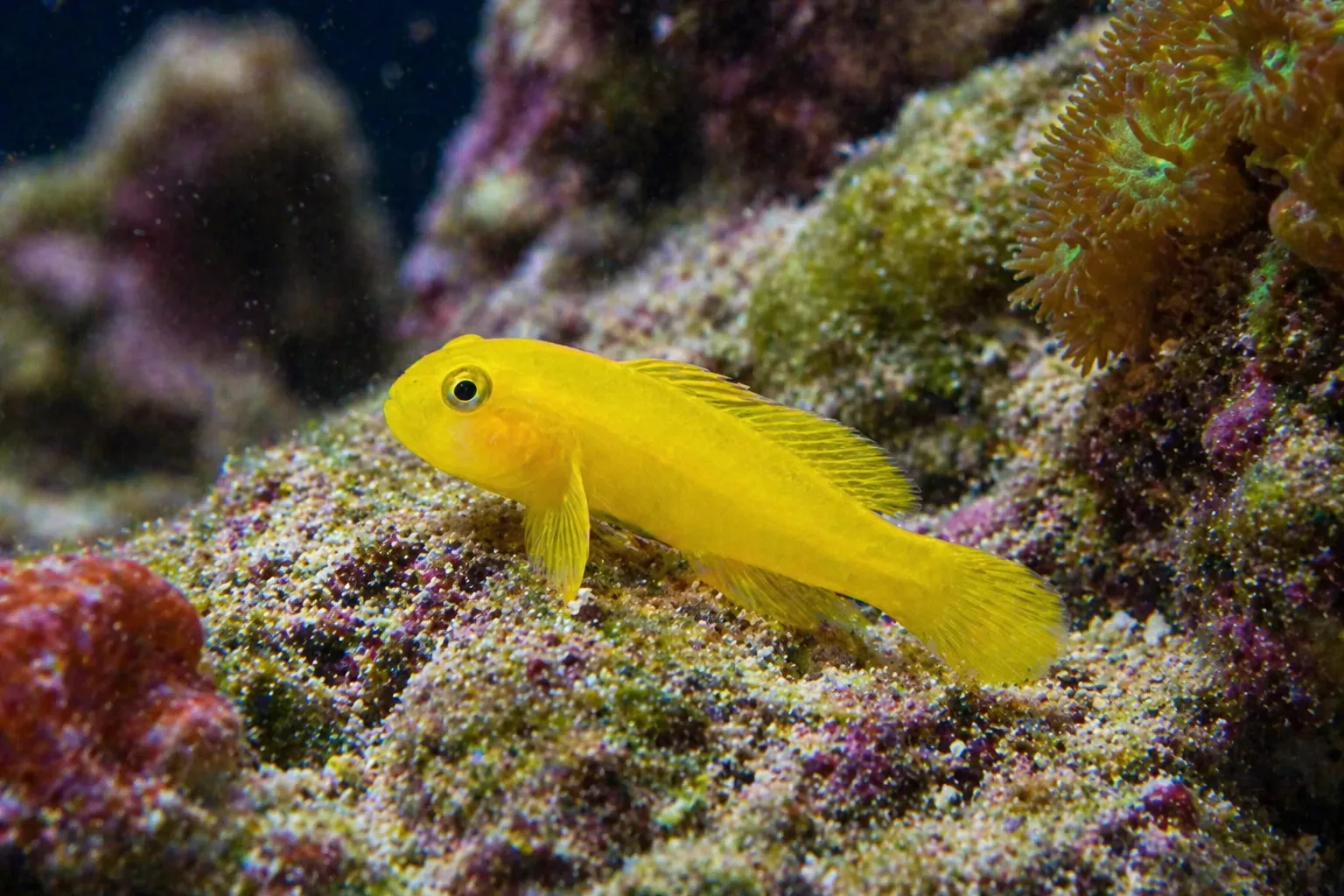
Illustrative images
Clown Goby
Gobiodon okinawae
Overview
The Clown Goby, belonging to the genus Gobiodon, is a small marine fish popular among reef aquarium enthusiasts. Known for their vibrant colors and playful behavior, these fish are often found perched on coral and live rock, adding a lively element to a marine environment.
Natural Habitat
Clown Gobies are typically found in shallow coastal waters of the Indo-Pacific region, including coral reefs. They are known for their symbiotic relationship with coral, which provides them shelter and a place to forage for food.
Care Requirements
While Clown Gobies can be relatively hardy, they do require specific conditions to thrive. Providing a stable environment with appropriate water parameters is essential for their health and well-being.
- Water Type: Marine
- Temperature: Ideally between 24°C and 27°C (75°F to 81°F)
- Salinity: Maintain a salinity level between 1.020 and 1.025.
- pH: A range of 8.1 to 8.4 is recommended.
- Filtration: Good water movement and filtration are important to keep the water quality high.
Tank Setup
When setting up a tank for Clown Gobies, consider the following:
- Minimum tank size of 70 liters (18 gallons) for a single fish is recommended.
- Include plenty of live rock for hiding spots and to promote grazing opportunities.
- Coral structures or similar décor that mimic their natural habitat will help them feel secure.
- A tank with room to explore and perch is ideal.
Compatibility
Clown Gobies are generally peaceful but can display territorial behavior, especially if kept in small spaces. They can be housed with a variety of reef-safe fish, but caution should be taken when introducing them to aggressive species. Ideal tankmates include:
- Other small fish like blennies and cardinals
- Invertebrates such as shrimp and hermit crabs
Feeding
In the wild, Clown Gobies feed primarily on small zooplankton and algae. In captivity, they can be fed a varied diet that includes:
- High-quality flakes or pellets
- Frozen or live prey such as brine shrimp and mysis shrimp
- Vegetable matter like spirulina and algae
Feeding should occur several times a day in small amounts to prevent overfeeding.
Lifespan
With proper care, Clown Gobies can live for several years in captivity, typically around 5-7 years.
How to care for Clown Goby
- 1
Set up the tank
Prepare a well-established aquarium with plenty of live rock, caves, and crevices to provide hiding spots for the Clown Goby.
- 2
Acclimate slowly
Introduce the Clown Goby to the aquarium gradually to minimize stress and ensure a smooth transition.
- 3
Maintain water parameters
Keep the water temperature between 22.2-25.6°C (72-78°F), pH at 8.1-8.4, specific gravity between 1.020-1.025, and carbonate hardness (KH) at 8-12 dKH.
- 4
Provide appropriate diet
Feed the Clown Goby a varied diet rich in meaty foods, such as small crustaceans like krill, mysis, and artemia, as well as zooplankton like Cyclops and copepods.
- 5
Monitor tank mates
Ensure that tank mates are peaceful, as Clown Gobies can be territorial towards others of their own kind and may be outcompeted for food by more aggressive species.
Frequently asked questions
What is the maximum size of Gobiodon okinawae?▾
Gobiodon okinawae, commonly known as the Clown Goby, reaches a maximum size of approximately 3.0 cm (1.18 inches).
What are the ideal water parameters for Clown Gobies?▾
Clown Gobies thrive in water with a temperature of 22.2-25.6°C (72-78°F), a pH of 8.1-8.4, a specific gravity of 1.020-1.025, and a carbonate hardness (KH) of 8-12 dKH.
Are Clown Gobies reef-safe?▾
Clown Gobies are generally considered reef-safe with caution. They may nip at corals, especially Acropora species, as they feed on coral mucus and tissue along with benthic invertebrates and copepods.
What is the recommended minimum tank size for Clown Gobies?▾
A minimum tank size of 50 liters (13.21 US gallons) is recommended for Clown Gobies, providing ample space for their activity and well-being.
What is the natural habitat of Gobiodon okinawae?▾
Gobiodon okinawae is native to the Western Pacific, ranging from southern Japan to the Rowley Shoals and the southern Great Barrier Reef, including Palau and the Marshall Islands in Micronesia.