

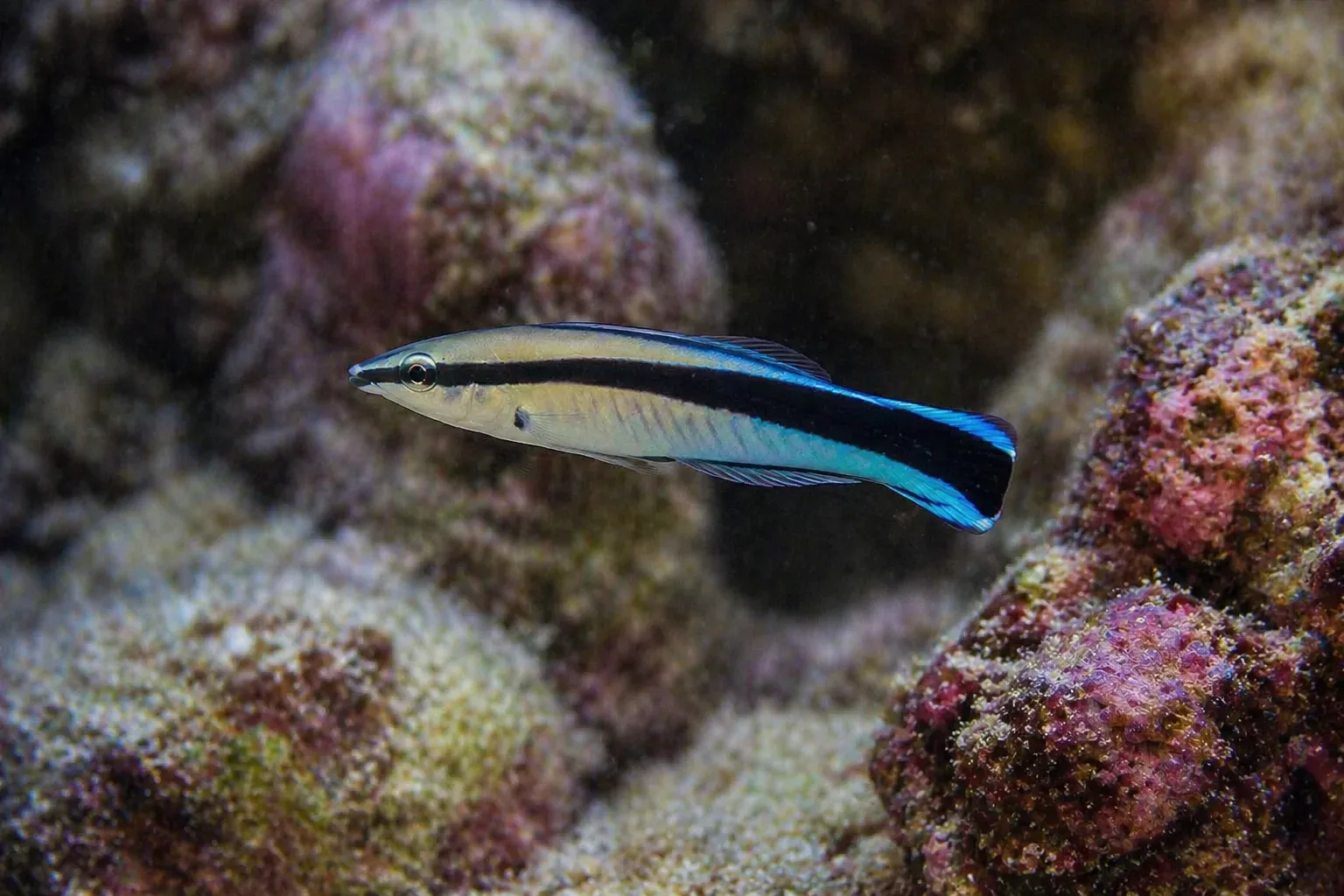
Illustrative images
Cleaner Wrasse
Labroides dimidiatus
Overview
The Cleaner Wrasse, scientifically known as Labroides dimidiatus, is a small, vibrant fish that belongs to the Labridae family. It is renowned for its unique symbiotic cleaning behavior, in which it removes parasites and dead tissues from the bodies of larger fish. This fascinating behavior has made it a popular choice among marine aquarists looking to add dynamic interaction to their reef tanks.
Natural Habitat
Cleaner Wrasses are primarily found in coral reefs across the Indian and Pacific Oceans. They typically inhabit shallow waters near the reef, where they can establish their cleaning stations. These areas are often frequented by various fish, which rely on Cleaner Wrasses for parasite removal.
Care Requirements
Caring for a Cleaner Wrasse requires an understanding of its specific needs:
- Tank Size: A minimum of 200 liters (50 gallons) is recommended for a single Cleaner Wrasse due to its active nature.
- Water Parameters: This species prefers stable water conditions typical of reef environments. Regular monitoring of salinity, pH, and temperature is essential.
- Diet: While Cleaner Wrasses supplement their diet by cleaning other fish, in an aquarium, they will require a varied diet including high-quality marine flakes, small pellets, and frozen foods like mysis shrimp and brine shrimp.
- Lighting: Moderate to high lighting levels are suitable, mimicking their natural coral reef environment.
- Filtration: A robust filtration system is necessary to maintain water quality, along with regular water changes.
Tank Setup
When setting up a tank for a Cleaner Wrasse, consider including plenty of rockwork for hiding and establishing cleaning stations. Live rock provides the necessary habitat and helps to maintain water quality. It’s also important to create open swimming areas since these fish are quite active.
Compatibility
Cleaner Wrasses can be somewhat territorial, particularly with their own kind. Keeping multiple Cleaner Wrasses in smaller tanks is generally not recommended, as they may compete for space and resources. They typically get along well with other reef fish but may exhibit aggressive behaviors towards similar species. When adding them to a community tank, ensure that they are not housed with overly aggressive fish that may stress them out.
Conclusion
The Cleaner Wrasse is an engaging fish that can bring activity and interest to a marine aquarium. While they can be a challenging species to care for due to their specific dietary and environmental needs, their unique cleaning behavior makes them a captivating addition to any reef setup. Providing ample space, proper diet, and a suitable environment will help ensure their well-being in captivity.
How to care for Cleaner Wrasse
- 1
Set up a spacious tank
Provide a well-established reef tank of at least 284 liters (75 US gallons) with plenty of live rock and hiding spots.
- 2
Acclimate the Cleaner Wrasse
Introduce the Cleaner Wrasse to the tank slowly, allowing it to adjust to the new environment.
- 3
Maintain optimal water parameters
Keep water temperature between 22.2-25.6°C (72-78°F), salinity at 1.020-1.025 specific gravity, pH between 8.1-8.4, and alkalinity at 8-12 dKH.
- 4
Provide a suitable diet
Offer a variety of meaty foods, such as vitamin-enriched brine shrimp, Mysis shrimp, and finely chopped prawns, to supplement their natural diet.
- 5
Monitor tank mates
Ensure the tank has a community of fish that the Cleaner Wrasse can clean, as they rely on this symbiotic relationship for nutrition.
Frequently asked questions
What is the maximum size of a Cleaner Wrasse?▾
Cleaner Wrasses can grow up to 14 cm (5.5 inches) in length.
What are the ideal water parameters for a Cleaner Wrasse?▾
Maintain water temperature between 22.2-25.6°C (72-78°F), salinity at 1.020-1.025 specific gravity, pH between 8.1-8.4, and alkalinity at 8-12 dKH.
What is the minimum tank size required for a Cleaner Wrasse?▾
A minimum tank size of 284 liters (75 US gallons) is recommended for a Cleaner Wrasse.
What is the natural diet of a Cleaner Wrasse?▾
In the wild, Cleaner Wrasses feed on parasites, dead tissue, and mucus from other fish.
Can Cleaner Wrasses be kept with other fish species?▾
Yes, Cleaner Wrasses are peaceful and can be kept with other fish species, especially in well-established reef tanks.