

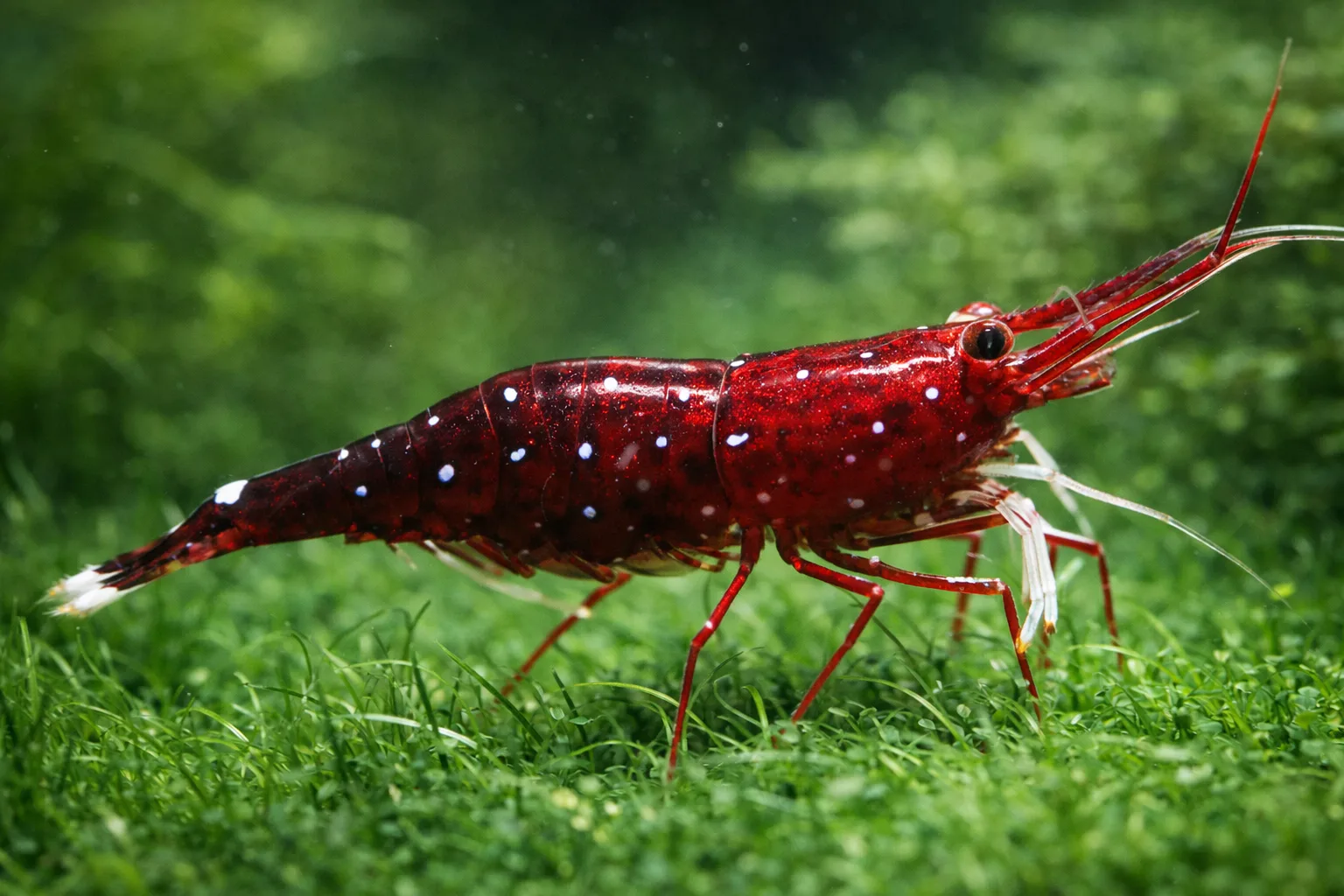
Illustrative images
Cardinal Sulawesi Shrimp
Caridina dennerli
Overview
The Cardinal Sulawesi Shrimp, scientifically known as Caridina dennerli, is a captivating freshwater invertebrate native to the Sulawesi region of Indonesia. Renowned for their striking colors and graceful movements, these shrimp are a popular choice among aquarists who are looking to enhance the aesthetic appeal of their tanks.
Natural Habitat
Cardinal Sulawesi Shrimp inhabit crystal-clear lakes and waters in Sulawesi, where they thrive in a highly specific environment. Their natural habitat features dense vegetation and a soft substrate, allowing them to feed and hide from potential predators. The water in these habitats has unique parameters, which can be mimicked in an aquarium to ensure the well-being of these shrimp.
Care Requirements
Caring for Cardinal Sulawesi Shrimp requires attention to their specific needs, but they can be rewarding for aquarists who are willing to provide the right environment.
Tank Setup
When setting up a tank for Cardinal Sulawesi Shrimp, consider the following:
- Minimum Tank Size: A minimum of 20 liters is recommended to provide adequate space for movement and grazing.
- Substrate: Use a fine, soft substrate such as sand to mimic their natural environment and allow for sifting.
- Plants and Decorations: Adding plenty of live plants, rocks, and driftwood can create hiding spots and replicate their lake habitat.
- Water Parameters: Maintain stable water conditions to match their needs.
Compatibility
Cardinal Sulawesi Shrimp are generally peaceful and can coexist with other small, peaceful species. However, they can be sensitive to aggressive tankmates. Ideal companions include:
- Small freshwater fish
- Other peaceful invertebrates
Feeding
These shrimp are primarily omnivorous, enjoying a varied diet that includes:
- Shrimp pellets
- Algae wafers
- Biofilm and organic debris in the tank
- Vegetables like blanched lettuce or cucumber
A diverse diet is essential for maintaining their health and vibrant coloration.
Lighting and CO2
Moderate lighting is beneficial for both the shrimp and any live plants in the aquarium. It encourages plant growth while providing light for the shrimp to forage. Additionally, while CO2 injection is not strictly necessary for shrimp tanks, it can support plant health if you choose to incorporate live greenery.
Conclusion
In summary, the Cardinal Sulawesi Shrimp is an excellent choice for aquarists looking for a colorful and engaging shrimp species. With proper care, attention to water parameters, and suitable companions, they can thrive in a home aquarium, adding life and beauty to your aquatic landscape.
How to care for Cardinal Sulawesi Shrimp
- 1
Set up the tank
Prepare a 20–30 liter (5–8 gallon) tank with an inert substrate like crushed coral or limestone chips to maintain alkaline conditions. ([gensou.sg](https://gensou.sg/rainbow-shrimp-sulawesi-care/?utm_source=openai))
- 2
Acclimate slowly
Introduce shrimp to the tank gradually to minimize stress, as they are sensitive to water parameter fluctuations. ([theshrimpfarm.com](https://www.theshrimpfarm.com/posts/cardinal-shrimp-care/?utm_source=openai))
- 3
Maintain water parameters
Keep the water temperature between 27–29°C, pH between 7.5 and 8.5, and general hardness (GH) between 6–9 dGH. ([gensou.sg](https://gensou.sg/rainbow-shrimp-sulawesi-care/?utm_source=openai))
- 4
Provide appropriate diet
Feed powdered foods and ensure the tank has rocks and driftwood for the shrimp to graze upon, as they feed on biofilm, algae, and detritus. ([fishlaboratory.com](https://www.fishlaboratory.com/fish/sulawesi-shrimp/?utm_source=openai))
- 5
Monitor water quality
Regularly check water parameters and perform partial water changes to maintain optimal conditions, as these shrimp are sensitive to water quality. ([theshrimpfarm.com](https://www.theshrimpfarm.com/posts/cardinal-shrimp-care/?utm_source=openai))
Frequently asked questions
What are the ideal water parameters for Cardinal Sulawesi Shrimp?▾
Maintain a temperature of 27–29°C, pH between 7.5 and 8.5, and a general hardness (GH) of 6–9 dGH. Avoid using active soils that can lower pH. ([gensou.sg](https://gensou.sg/rainbow-shrimp-sulawesi-care/?utm_source=openai))
What size tank is suitable for Cardinal Sulawesi Shrimp?▾
A species-only nano tank of 20–30 liters (approximately 5–8 gallons) is recommended for a starter colony of 10–15 shrimp. ([gensou.sg](https://gensou.sg/rainbow-shrimp-sulawesi-care/?utm_source=openai))
What should be included in the tank setup for Cardinal Sulawesi Shrimp?▾
Use inert substrates like crushed coral or limestone chips to maintain alkaline conditions. Incorporate porous rocks such as lava stone or Sulawesi rock to provide biofilm grazing surfaces. ([gensou.sg](https://gensou.sg/rainbow-shrimp-sulawesi-care/?utm_source=openai))
What is the diet of Cardinal Sulawesi Shrimp?▾
They feed on biofilm, algae, and detritus in the wild. In captivity, provide powdered foods and ensure the tank has rocks and driftwood for them to graze upon. ([fishlaboratory.com](https://www.fishlaboratory.com/fish/sulawesi-shrimp/?utm_source=openai))
How do Cardinal Sulawesi Shrimp reproduce?▾
Females carry 10–15 large eggs for about four weeks before releasing fully formed miniature shrimp, which are immediately independent and around 2 mm in size. ([gensou.sg](https://gensou.sg/rainbow-shrimp-sulawesi-care/?utm_source=openai))