

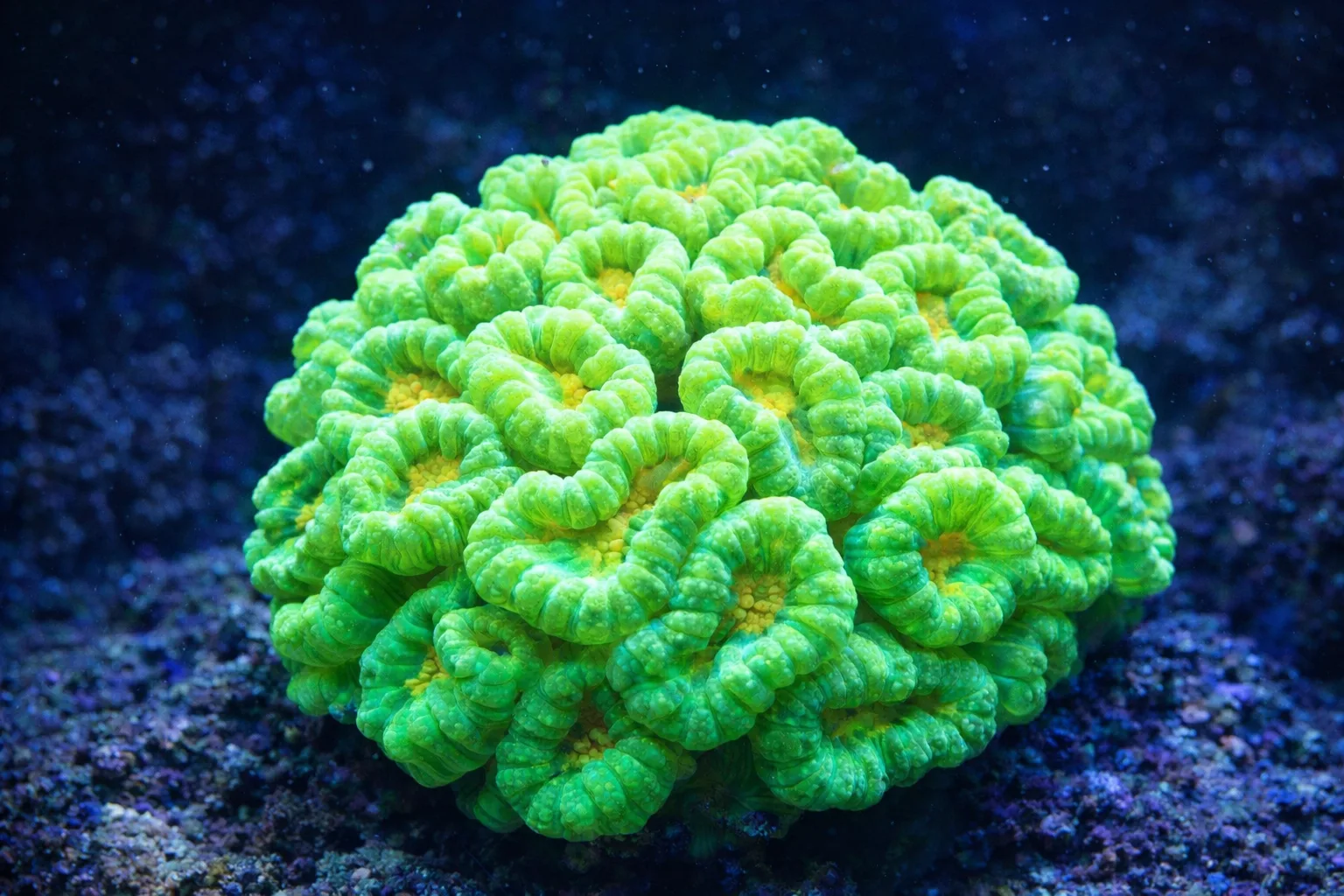
Illustrative images
Candy Cane Coral
Caulastrea furcata
The Candy Cane Coral (Caulastrea), also known as Trumpet Coral, is a popular and beginner-friendly LPS coral commonly found in reef aquariums. Native to the Indo-Pacific reefs, this coral forms colonies made of individual tubular heads that grow on branching skeletons. Each polyp resembles a small round candy, which is why the coral earned the name “Candy Cane Coral.”
In reef aquariums, Candy Cane Coral is loved for its bright fluorescent colors and distinctive structure. Each head sits on top of a short skeletal stalk, creating clusters of round polyps that expand during the day. The coral typically displays neon green, teal, turquoise, or bright lime coloration, often with a lighter or glowing center when viewed under blue reef lighting.
Candy Cane Coral belongs to the LPS (Large Polyp Stony) coral group, meaning it has a hard calcium carbonate skeleton and fleshy polyps that extend outward to feed. At night, the coral often extends feeding tentacles to capture plankton and suspended particles from the water column, although most of its energy comes from photosynthesis through symbiotic zooxanthellae algae.
One of the reasons Candy Cane Coral is so popular among reef keepers is its hardiness and relatively easy care requirements. It adapts well to a variety of reef tank conditions and can thrive in tanks with moderate experience levels.
For optimal growth, Candy Cane Coral prefers moderate lighting and gentle to moderate water flow. Too much flow can cause the polyps to retract, while insufficient flow may allow debris to settle between the heads.
Maintaining stable reef parameters is important for healthy skeletal growth. Ideal conditions include:
-
Calcium: 400–450 ppm
-
Alkalinity: 8–9 dKH
-
Magnesium: 1250–1350 ppm
-
Temperature: 24–26°C (75–79°F)
Candy Cane Coral is generally peaceful and reef safe, making it a great addition to mixed reef aquariums. Unlike some aggressive LPS corals, it usually has short sweeper tentacles and rarely damages nearby corals when properly spaced.
Another appealing aspect of this coral is its easy propagation. New heads form through a natural splitting process, and hobbyists can frag the coral by cutting the skeleton between polyps. This allows reef keepers to grow and share colonies over time.
With its glowing coloration, branching structure, and easy care requirements, the Candy Cane Coral is one of the best LPS corals for beginner and experienced reef aquarists alike, adding vibrant color and texture to marine aquascapes.
How to care for Candy Cane Coral
- 1
Set up the tank
Ensure a stable marine environment with appropriate equipment to maintain desired water parameters.
- 2
Acclimate slowly
Introduce the Candy Cane Coral to your tank gradually to minimize stress and allow it to adjust to new conditions.
- 3
Monitor water parameters
Regularly check and adjust temperature, pH, salinity, and alkalinity to keep them within optimal ranges.
- 4
Provide appropriate lighting
Install lighting that delivers 100–150 PAR to support the coral's photosynthetic needs.
- 5
Feed appropriately
Offer supplemental feedings of meaty foods like mysis shrimp once a week to support growth.
- 6
Monitor coral health
Observe the coral for signs of stress or disease, such as tissue recession or discoloration, and address issues promptly.
Frequently asked questions
What are the ideal water parameters for Candy Cane Coral?▾
Maintain a temperature of 75–81°F (24–27°C), pH between 8.1 and 8.4, salinity at 1.023–1.025, and alkalinity (dKH) between 8 and 12.
How should I feed Candy Cane Coral?▾
While primarily photosynthetic, supplement with meaty foods like mysis shrimp or finely chopped seafood once a week to support growth.
What lighting conditions are best for Candy Cane Coral?▾
Provide moderate lighting, aiming for a light intensity of 100–150 PAR, to promote healthy growth and coloration.
How do I place Candy Cane Coral in my tank?▾
Position in areas with low to moderate water flow and lighting, typically at the bottom or middle of the tank, to mimic its natural habitat.
Is Candy Cane Coral aggressive towards other corals?▾
Candy Cane Coral is considered peaceful, with relatively short tentacles, but should still be given space to prevent potential stinging.