

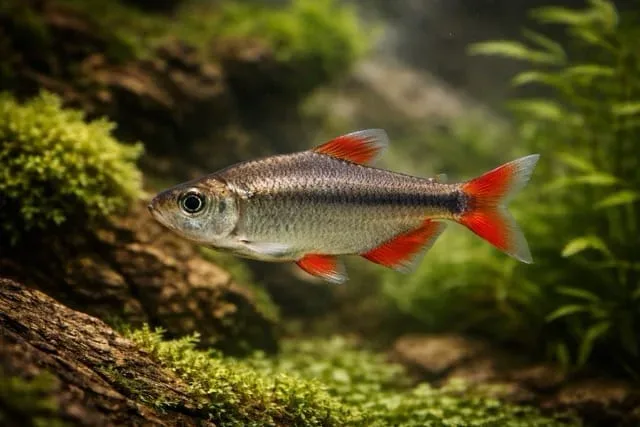
Illustrative images
Buenos Aires Tetra
Hyphessobrycon anisitsi
Overview
The Buenos Aires Tetra, scientifically known as Hyphessobrycon anisitsi, is a popular freshwater fish among aquarium enthusiasts. With its striking coloration and active swimming behavior, this species is ideal for community tanks. Originally from South America, they add vibrant energy to aquascapes and are particularly well-loved for their schooling nature.
Natural Habitat
Buenos Aires Tetras are native to the freshwater rivers and streams of Argentina, Paraguay, and Uruguay. They thrive in waters with plenty of vegetation and gentle currents. In their natural habitat, they are often found in schools, which helps them avoid predators and enhances their social behavior.
Care Requirements
This tetra species is considered to be relatively easy to care for, making it suitable for both beginner and experienced aquarists. However, they do have specific needs that must be met to ensure their health and happiness:
- Water Parameters: Tetras generally prefer slightly acidic to neutral water (pH 6.5 to 7.5), with a temperature range of 20°C to 25°C (68°F to 77°F).
- Tank Setup: A well-planted tank with plenty of open swimming space is ideal. Use soft, dark substrate and incorporate floating plants to mimic their natural environment.
- Filtration: Good filtration is essential to maintain water quality, but avoid strong currents as these can stress the fish.
Compatibility
Buenos Aires Tetras are peaceful fish that get along well with other community species. They are best kept in groups of six or more, as they are social creatures. Suitable tank mates include:
- Other tetras (such as Neon Tetras)
- Danios
- Rasboras
- Guppies
- Small catfish (like Corydoras)
It is advisable to avoid larger, more aggressive fish that may see them as prey.
Feeding
Buenos Aires Tetras are omnivorous and will eat a variety of foods. A balanced diet should include:
- High-quality flake or pellet food
- Frozen or live foods (like brine shrimp, daphnia)
- Vegetable matter (like spirulina)
Feeding them a varied diet will enhance their coloration and overall health.
Conclusion
In summary, the Buenos Aires Tetra is an excellent choice for community tanks due to its vibrant appearance and active nature. By replicating their natural habitat and providing appropriate care, hobbyists can enjoy these lively fish for years to come.
How to care for Buenos Aires Tetra
- 1
Set up the tank
Choose a tank of at least 30 gallons (113.5 liters) with a secure lid, as Buenos Aires Tetras are active swimmers and may jump.
- 2
Acclimate slowly
Introduce the Tetras to the tank gradually to minimize stress, especially if water parameters differ from their previous environment.
- 3
Maintain water parameters
Keep the water temperature between 68–77°F (20–25°C) and pH between 6.0–8.0. Regularly monitor ammonia, nitrite, and nitrate levels to ensure water quality.
- 4
Provide appropriate diet
Feed a balanced diet of quality flakes or pellets, supplemented with live or frozen foods like baby brine shrimp, daphnia, and finely chopped bloodworms.
- 5
Select compatible tank mates
Choose similarly sized, active fish that can tolerate the same water conditions. Avoid slow-moving or long-finned species to prevent fin nipping.
- 6
Monitor behavior
Observe the Tetras for signs of stress or aggression, especially during the initial introduction period.
Frequently asked questions
What is the ideal tank size for Buenos Aires Tetras?▾
A minimum tank size of 30 gallons (113.5 liters) is recommended to accommodate a group of Buenos Aires Tetras comfortably.
What are the water temperature and pH requirements for Buenos Aires Tetras?▾
Buenos Aires Tetras thrive in water temperatures between 68–77°F (20–25°C) and a pH range of 6.0–8.0.
How large do Buenos Aires Tetras grow?▾
Buenos Aires Tetras typically reach an adult size of 2.5–3 inches (6.5–7.5 cm).
What do Buenos Aires Tetras eat?▾
Buenos Aires Tetras are omnivorous and accept a variety of foods, including quality flakes, small sinking pellets, and live or frozen foods like baby brine shrimp, daphnia, and finely chopped bloodworms.
Are Buenos Aires Tetras suitable for planted aquariums?▾
Buenos Aires Tetras can be kept in planted aquariums, but they may nibble on softer plants. Hardy plants like Java fern are more suitable.
How many Buenos Aires Tetras should be kept together?▾
It's best to keep at least six Buenos Aires Tetras together to ensure they feel secure and exhibit natural schooling behavior.