

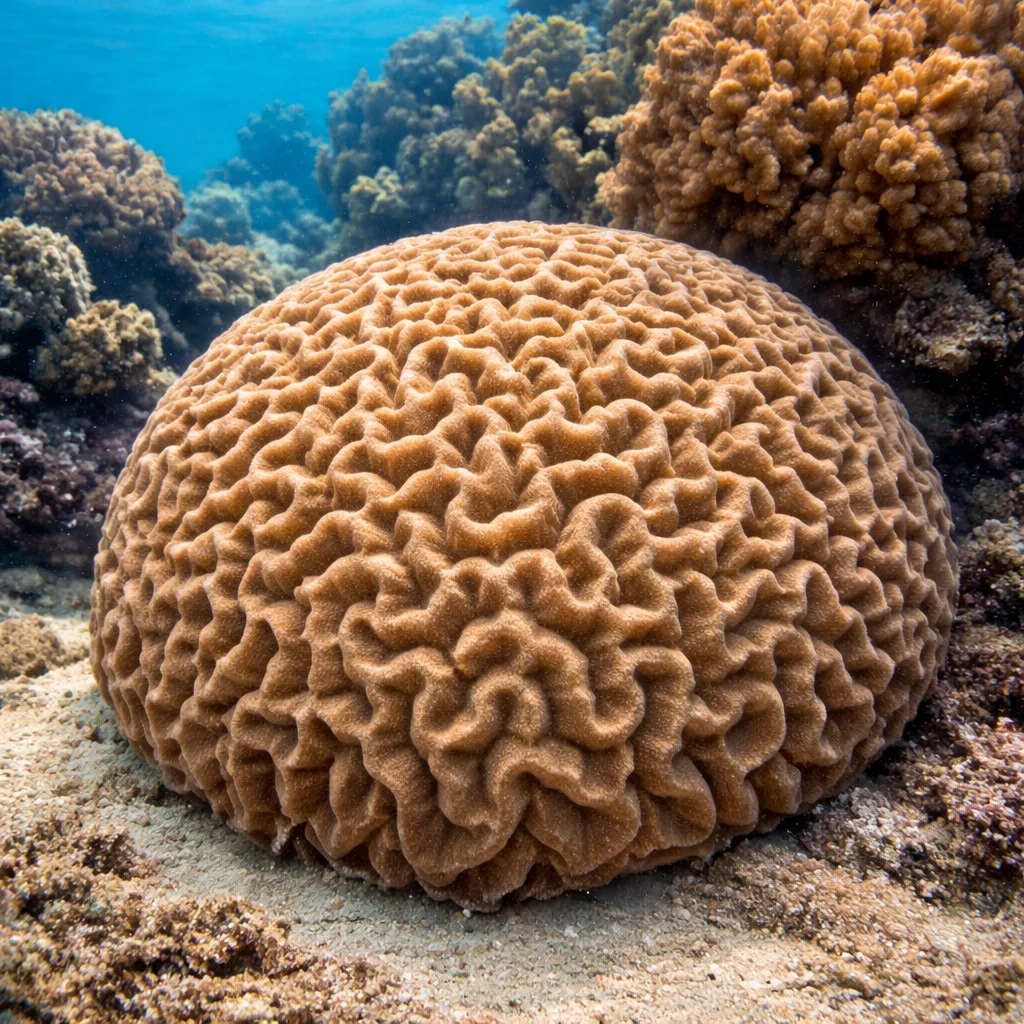
Illustrative images
Brain Coral
Trachyphyllia geoffroyi
Brain Coral is one of the most iconic and fascinating corals found in tropical reef ecosystems. Named for its distinctive surface pattern that closely resembles the folds and ridges of a human brain, Brain Coral belongs to several coral genera such as Diploria, Platygyra, and Trachyphyllia. These corals are commonly found in warm waters throughout the Caribbean, Indo-Pacific, and other tropical reef regions where they form large, dome-shaped colonies that can live for decades or even centuries.
In reef aquariums, Brain Corals are highly valued for their unique texture, slow steady growth, and natural reef appearance. Their maze-like ridges and valleys create a visually striking pattern that stands out among other corals in a marine aquarium. Depending on the species and lighting conditions, Brain Corals can display a range of colors including brown, green, purple, red, tan, and fluorescent shades under reef lighting.
Brain Corals are classified as LPS corals (Large Polyp Stony corals), meaning they have a hard calcium carbonate skeleton and fleshy polyps that extend from the coral’s surface. At night, these polyps often extend further to capture plankton and microscopic food particles from the water column. This feeding behavior helps supplement the energy they already receive from their symbiotic zooxanthellae algae through photosynthesis.
In reef aquariums, Brain Coral care is considered moderate in difficulty, making it a good choice for aquarists who already have some experience maintaining stable reef systems. These corals prefer moderate lighting and gentle to moderate water flow, which allows them to expand fully without being stressed by strong currents.
Maintaining stable water parameters is crucial for healthy growth. Ideal reef conditions include calcium levels around 400–450 ppm, alkalinity between 8–9 dKH, and magnesium around 1250–1350 ppm. Stable temperature between 24–26°C (75–79°F) and low nutrient levels also contribute to long-term coral health.
Brain Corals are generally peaceful but can extend sweeper tentacles at night that may sting nearby corals. Because of this, it is recommended to provide enough space between them and other reef inhabitants. When properly placed and maintained, Brain Corals can grow steadily and become a centerpiece in reef aquascapes.
One of the most fascinating aspects of Brain Coral is its longevity. Some wild colonies are estimated to be hundreds of years old, slowly expanding over time as they build their massive calcium skeletons. In reef aquariums, while growth is slower than some coral species, they remain stable and durable when given proper care.
For reef aquarists looking to add texture, natural reef structure, and long-term stability to their aquarium, Brain Coral is an excellent choice. Its organic shape, intricate ridges, and natural coloration make it a visually impressive coral that perfectly represents the beauty and complexity of coral reef ecosystems.
How to care for Brain Coral
- 1
Set up the tank
Ensure stable water parameters: calcium 380-430 ppm, alkalinity 3.5 meq/L, pH 8.1-8.2, specific gravity 1.024-1.026, and temperature 74-83°F (23-28°C).
- 2
Place the coral
Position Trachyphyllia geoffroyi directly on the sand bed to prevent tissue damage from rough surfaces. Avoid placing it on rockwork.
- 3
Adjust lighting
Provide moderate lighting, typically 50-150 PAR. Too much light can cause bleaching or tissue stress.
- 4
Manage water flow
Maintain gentle to moderate, indirect water flow. Strong currents can damage its fleshy tissue and prevent full expansion.
- 5
Feed appropriately
Feed once or twice per week with meaty foods like mysis shrimp or brine shrimp. Ensure food is fully captured to prevent waste.
- 6
Monitor health
Regularly check for signs of stress, such as tissue damage or bleaching. Adjust care routines as needed.
Frequently asked questions
What lighting does Trachyphyllia geoffroyi need?▾
Trachyphyllia geoffroyi thrives under moderate lighting, typically 50-150 PAR. Too much light can cause bleaching or tissue stress.
What water flow is best for Open Brain Coral?▾
Open Brain Coral prefers gentle to moderate, indirect water flow. Strong currents can damage its fleshy tissue and prevent full expansion.
How should I place Trachyphyllia geoffroyi in my tank?▾
Place Trachyphyllia geoffroyi directly on the sand bed to prevent tissue damage from rough surfaces. Avoid placing it on rockwork.
What are the ideal water parameters for Open Brain Coral?▾
Maintain calcium levels between 380-430 ppm, alkalinity at 3.5 meq/L, pH between 8.1-8.2, specific gravity at 1.024-1.026, and temperature between 74-83°F (23-28°C).
How often should I feed Trachyphyllia geoffroyi?▾
Feed Trachyphyllia geoffroyi once or twice per week with meaty foods like mysis shrimp or brine shrimp. Ensure food is fully captured to prevent waste.
Is Trachyphyllia geoffroyi aggressive towards other corals?▾
Trachyphyllia geoffroyi is moderately aggressive and can extend feeding tentacles, especially at night. It may sting nearby corals if placed too close.
Can Trachyphyllia geoffroyi adapt to different lighting conditions?▾
Yes, Trachyphyllia geoffroyi can adapt to various lighting conditions. However, it's important to acclimate new specimens slowly to prevent stress.