

Illustrative images
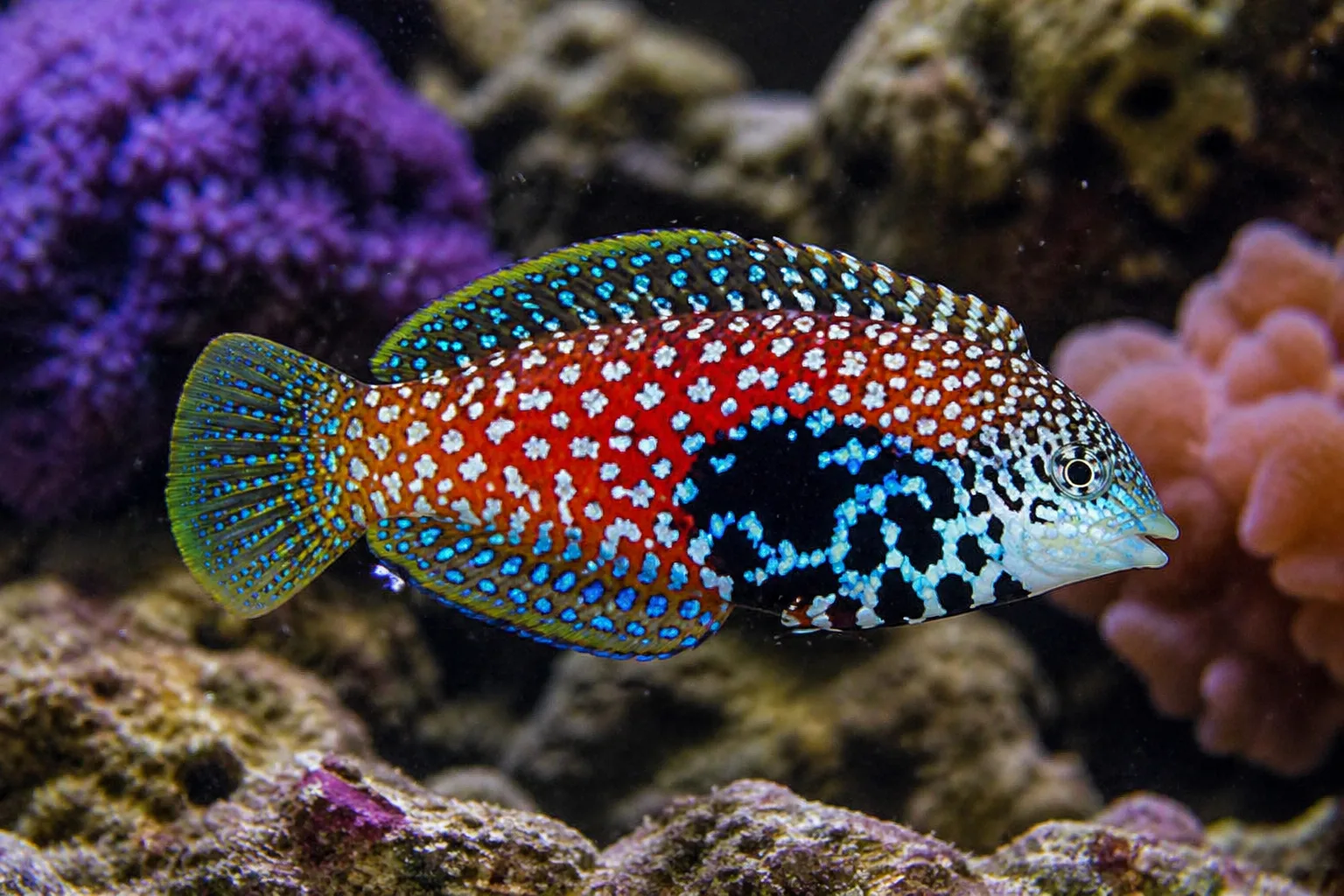
Blue Star Leopard Wrasse
Macropharyngodon bipartitus
Overview
The Blue Star Leopard Wrasse (Macropharyngodon bipartitus) is a stunning marine fish known for its vibrant blue coloration and unique patterning. This species is popular among marine aquarists for its beauty and intriguing behaviors. Native to the coral reefs of the Indo-Pacific region, this wrasse is often seen as a sustainable choice for aquariums due to its hardiness and adaptability.
Natural Habitat
This fish is commonly found in sandy bottoms and rocky areas of shallow coral reefs. It tends to inhabit areas rich in hiding places, which are essential for its safety and comfort. Blue Star Leopard Wrasses are typically seen in pairs or small groups, showcasing social behaviors that can be captivating in the home aquarium.
Care Requirements
Tank Setup
When setting up a tank for the Blue Star Leopard Wrasse, it is recommended to have a minimum size of at least 100 liters (around 26 gallons). The tank should replicate the wrasse's natural environment with sandy substrates, rocks, and plenty of hiding spots to reduce stress. Ideally, include live rock for beneficial bacteria and algae growth.
Lighting
Moderate to bright lighting is suitable for this species, as it supports the growth of algae and beneficial microorganisms that they may graze on. However, be cautious about excessive lighting as it can lead to stress in fish that prefer dimmer areas.
Water Conditions
Maintain stable water conditions, including adequate filtration and regular water changes. This species prefers clean, well-oxygenated water with a temperature between 24-28°C (75-82°F). pH levels between 8.1-8.4 are ideal, and salinity should mimic natural seawater.
Compatibility
The Blue Star Leopard Wrasse is generally peaceful and can be kept with a variety of tank mates, including other reef-safe fish. However, caution is advised when housing them with aggressive species or other wrasses, as territorial disputes can occur. It is best kept in groups of at least three or as a pair to promote social behavior and reduce stress.
Feeding
This species is considered carnivorous, primarily feeding on small invertebrates, zooplankton, and live foods in the wild. In captivity, ensure a varied diet that includes high-quality pellets, flakes, and frozen foods such as mysis shrimp or brine shrimp. Regular feeding will help maintain their vibrant colors and overall health.
Conclusion
The Blue Star Leopard Wrasse can be a delightful addition to a marine aquarium, offering both beauty and captivating behavior. With the proper setup, care, and tank mates, this wrasse can thrive and enhance the underwater scenery of your aquarium.
How to care for Blue Star Leopard Wrasse
- 1
Set up the tank
Use a well-established aquarium with a fine sandy substrate at least 2–3 inches deep to allow the wrasse to bury itself at night.
- 2
Acclimate slowly
Introduce the wrasse to the tank gradually to reduce stress and ensure a smooth transition.
- 3
Maintain water parameters
Keep the water temperature between 75°F and 82°F (24°C to 28°C), salinity at 1.020–1.025, pH between 8.1 and 8.4, and alkalinity at 8–12 dKH.
- 4
Provide hiding spots
Arrange live rocks or structures to create hiding places where the wrasse can feel secure.
- 5
Feed appropriately
Offer a varied diet including live and frozen foods such as brine shrimp, mysis shrimp, and finely chopped seafood.
- 6
Monitor behavior
Observe the wrasse for signs of stress or illness, and ensure it is actively foraging and interacting with its environment.
Frequently asked questions
What is the ideal tank size for a Blue Star Leopard Wrasse?▾
A minimum tank size of 75 gallons (284 liters) is recommended to accommodate a Blue Star Leopard Wrasse.
What are the water temperature requirements for Macropharyngodon bipartitus?▾
Maintain a water temperature between 75°F and 82°F (24°C to 28°C) for optimal health.
Is the Blue Star Leopard Wrasse reef-safe?▾
Yes, Macropharyngodon bipartitus is considered reef-safe and can coexist with other reef inhabitants.
What is the maximum size a Blue Star Leopard Wrasse can reach?▾
This species can grow up to 5 inches (13 cm) in length.
What is the recommended diet for Macropharyngodon bipartitus?▾
Provide a varied diet including live and frozen foods such as brine shrimp, mysis shrimp, and finely chopped seafood.