

Illustrative images
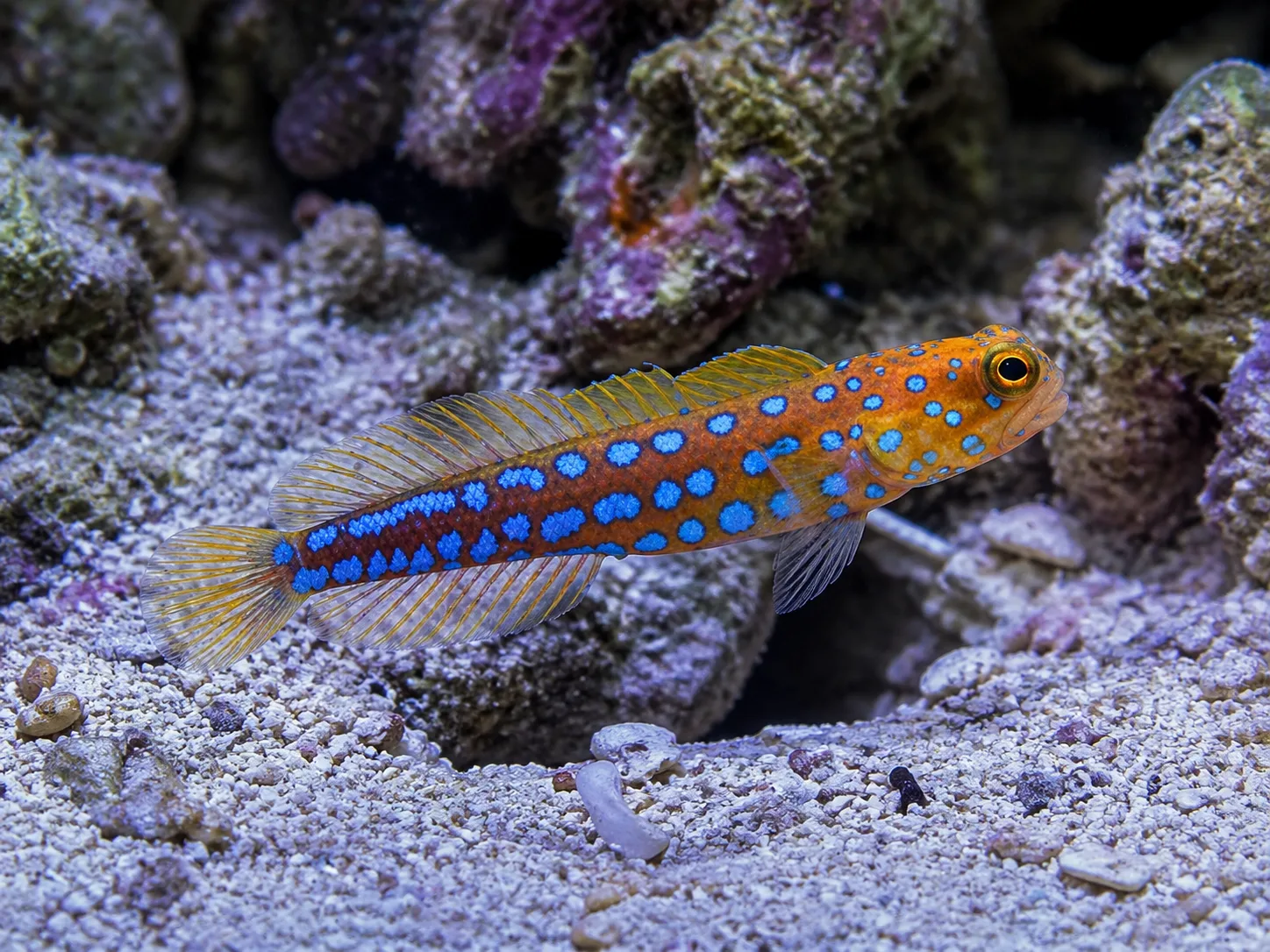
Blue Spotted Jawfish
Opistognathus rosenblatti
Overview
The Blue Spotted Jawfish, a member of the Opistognathidae family, is a popular choice among reef aquarium enthusiasts. Known for its vibrant blue spots and engaging behavior, this fish is often seen perched on the substrate, looking out for food while maintaining a safe retreat into its burrow. Its lively nature and distinctive appearance make it a captivating addition to any marine setup.
Natural Habitat
In the wild, Blue Spotted Jawfish inhabit sandy substrates and rocky crevices in the warm waters of coral reefs. They are typically found at depths of 10 to 60 meters, where they create burrows in the sand to hide from predators. This natural behavior can be replicated in the aquarium, providing them with a suitable environment where they can thrive.
Care Requirements
Blue Spotted Jawfish are generally regarded as moderate in their care requirements. They thrive in well-maintained, stable aquarium conditions. Below are key points to consider when setting up a habitat for these fish:
- Tank Size: A minimum of 100 liters is recommended to provide ample swimming space and substrate for burrowing.
- Substrate: A deep sand bed is essential for burrowing, ideally with a grain size that allows the fish to move easily.
- Water Parameters: Ensure stable temperature, salinity, and pH levels, as fluctuations can stress these fish.
Tank Setup
Creating an optimal tank setup for the Blue Spotted Jawfish involves the following:
- Rock Structures: Incorporate rocks and caves where these fish can hide. This mimics their natural environment and provides security.
- Lighting: Moderate lighting is preferred. Bright lights can cause stress, so consider dimmable options.
- Filtration: Efficient filtration is necessary to maintain water quality, as these fish can be sensitive to poor conditions.
Compatibility
Blue Spotted Jawfish are generally peaceful but can be territorial, especially when establishing their burrows. They do well in community tanks with other peaceful species. It is advisable to avoid overly aggressive tank mates, as this can lead to stress and conflict.
Feeding
As opportunistic feeders, Blue Spotted Jawfish will accept a variety of foods. A balanced diet includes:
- Pellets: High-quality marine pellets.
- Frozen Foods: Mysis shrimp, brine shrimp, and other marine fare.
- Live Foods: Occasional live foods can enhance their diet and stimulate natural foraging behavior.
Conclusion
In summary, the Blue Spotted Jawfish is a fascinating and beautiful addition to a marine aquarium. With appropriate care, environment setup, and dietary considerations, these fish can thrive and display their charming behavior, delighting any aquarist.
How to care for Blue Spotted Jawfish
- 1
Set up the tank
Use a well-established aquarium with a deep sand bed of at least 10 cm (3.9 inches) for burrowing.
- 2
Acclimate slowly
Introduce the fish to the tank gradually to reduce stress and allow adjustment to new water conditions.
- 3
Maintain water parameters
Keep salinity at 1.020-1.025, pH between 8.1 and 8.4, and temperature between 22.2-25.6°C (72-78°F).
- 4
Provide suitable diet
Offer a varied diet of small meaty frozen foods such as plankton, vitamin-enriched brine shrimp, mysis, and finely chopped krill or prawn.
- 5
Monitor tank mates
Ensure peaceful tank mates and avoid overcrowding to prevent territorial disputes.
Frequently asked questions
What are the ideal water parameters for Blue Spotted Jawfish?▾
Maintain a salinity of 1.020-1.025, pH between 8.1 and 8.4, and a temperature range of 22.2-25.6°C (72-78°F).
What size tank is suitable for Blue Spotted Jawfish?▾
A minimum tank size of 114 liters (30 US gallons) is recommended. Ensure the tank has a deep sand bed for burrowing.
What is the natural diet of Blue Spotted Jawfish?▾
In the wild, they primarily feed on zooplankton, including tiny animals drifting in the water column.
Can Blue Spotted Jawfish be kept with other fish?▾
They are peaceful towards other species but highly territorial with their own kind. Keep only one unless you have a mated pair.
How do Blue Spotted Jawfish reproduce?▾
They are paternal mouthbrooders; males incubate the eggs in their mouths until they hatch.
What is the lifespan of Blue Spotted Jawfish?▾
They typically live for 5-8 years.
Are Blue Spotted Jawfish reef-safe?▾
Yes, they are reef-safe and can be kept in reef aquariums.