

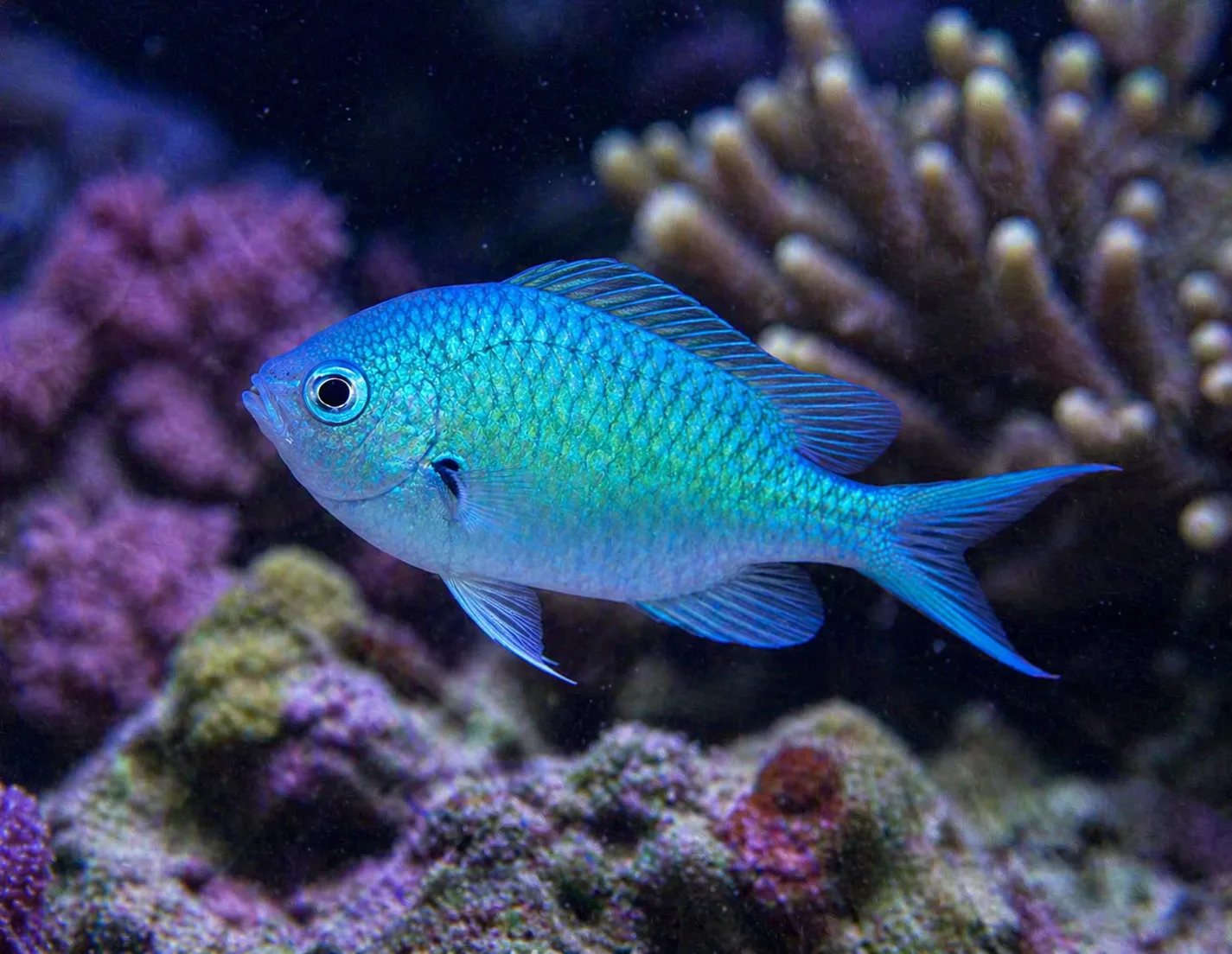
Illustrative images
Blue Green Chromis
Chromis atripectoralis
Overview
The Blue Green Chromis, or Chromis viridis, is a small, vibrant fish that is popular among reef aquarium enthusiasts. Known for its striking blue and green coloration, this species adds a beautiful aesthetic to any marine setup. Typically found in schools, these fish exhibit peaceful behaviors and are an excellent addition to community tanks.
Natural Habitat
In the wild, Blue Green Chromis are typically found in the Indo-Pacific region, inhabiting coral reefs where they thrive in shallow waters. They are often seen swimming in open water near reef structures, providing a natural environment rich in diversity.
Care Requirements
Blue Green Chromis are relatively easy to care for, making them suitable for both beginner and experienced aquarists. They prefer stable water conditions and a well-maintained tank to thrive. Below are some essential care parameters:
- Water Type: Marine
- Temperature: 24-27 °C (75-81 °F)
- pH: 8.1-8.4
Tank Setup
Setting up a suitable environment for Blue Green Chromis involves several considerations:
- Minimum Tank Size: Ideally, a tank of at least 100 liters (26 gallons) is recommended to accommodate a small school.
- Filtration: A good filtration system is crucial to maintain clean water conditions and optimal parameters.
- Habitat Structure: Incorporating live rock and coral is beneficial as it provides hiding spots and encourages natural behaviors.
Compatibility
Blue Green Chromis are social fish that prefer to be kept in groups. They are generally peaceful and can coexist with various marine species, though care should be taken with more aggressive tank mates. Ideal combinations include:
- Other small reef fish (e.g., clowns, gobies)
- Invertebrates (e.g., shrimp, snails)
Feeding
In terms of diet, Blue Green Chromis are omnivores. They can be fed a varied diet that includes:
- High-quality flake or pellet foods
- Frozen foods (e.g., brine shrimp, mysis shrimp)
- Some plant matter (e.g., spirulina) to ensure balanced nutrition
Lifespan
With proper care, Blue Green Chromis have an average lifespan of around 4 to 6 years. Regular monitoring of water quality and health can extend their longevity.
Conclusion
Blue Green Chromis are an excellent choice for those looking to enhance their marine aquarium with colorful, active fish. They are enjoyable to observe and contribute positively to a community tank setting.
How to care for Blue Green Chromis
- 1
Set up the tank
Prepare a well-established aquarium with live rock formations to mimic the natural habitat of Chromis atripectoralis.
- 2
Acclimate the fish
Acclimate Chromis atripectoralis slowly to the new aquarium by floating the bag in the tank for 15-20 minutes, then gradually adding small amounts of tank water to the bag over the next 30 minutes before releasing the fish. ([reeflings.com](https://reeflings.com/species/chromis-atripectoralis?utm_source=openai))
- 3
Maintain water parameters
Ensure the water temperature is between 24-28°C (75-82°F), specific gravity is 1.020-1.025, and pH is 8.0-8.4. ([reeflings.com](https://reeflings.com/species/chromis-atripectoralis?utm_source=openai))
- 4
Provide appropriate diet
Feed Chromis atripectoralis a varied diet of flake, pellet, and frozen foods, including copepods, amphipods, and zoea. ([fishbase.se](https://www.fishbase.se/FieldGuide/FieldGuideSummary.php?c_code=036&genusname=Chromis&speciesname=atripectoralis&utm_source=openai))
- 5
Monitor behavior
Observe Chromis atripectoralis for signs of stress or aggression, and ensure they are schooling and feeding well.
Frequently asked questions
What is the maximum size of Chromis atripectoralis?▾
Chromis atripectoralis can reach a maximum length of 12 cm (4.7 inches). ([fishbase.se](https://www.fishbase.se/FieldGuide/FieldGuideSummary.php?c_code=036&genusname=Chromis&speciesname=atripectoralis&utm_source=openai))
What are the ideal water parameters for Chromis atripectoralis?▾
Chromis atripectoralis thrives in water with a temperature of 24-28°C (75-82°F), a specific gravity of 1.020-1.025, and a pH of 8.0-8.4. ([reeflings.com](https://reeflings.com/species/chromis-atripectoralis?utm_source=openai))
Is Chromis atripectoralis reef-safe?▾
Yes, Chromis atripectoralis is reef-safe and can be kept in reef aquariums. ([reeflings.com](https://reeflings.com/species/chromis-atripectoralis?utm_source=openai))
What is the natural diet of Chromis atripectoralis?▾
In the wild, Chromis atripectoralis feeds primarily on copepods, amphipods, and zoea. ([fishbase.se](https://www.fishbase.se/FieldGuide/FieldGuideSummary.php?c_code=036&genusname=Chromis&speciesname=atripectoralis&utm_source=openai))
How should Chromis atripectoralis be acclimated to a new aquarium?▾
Acclimate Chromis atripectoralis slowly to the new aquarium by floating the bag in the tank for 15-20 minutes, then gradually adding small amounts of tank water to the bag over the next 30 minutes before releasing the fish. ([reeflings.com](https://reeflings.com/species/chromis-atripectoralis?utm_source=openai))
What is the recommended tank size for Chromis atripectoralis?▾
A minimum tank size of 75 liters (20 gallons) is recommended for Chromis atripectoralis. ([reeflings.com](https://reeflings.com/species/chromis-atripectoralis?utm_source=openai))
What are the common tank mates for Chromis atripectoralis?▾
Chromis atripectoralis is peaceful and can be kept with other reef-safe species, such as clownfish, gobies, and other damselfish. ([reeflings.com](https://reeflings.com/species/chromis-atripectoralis?utm_source=openai))
How can I encourage Chromis atripectoralis to school in the aquarium?▾
To encourage schooling behavior, keep Chromis atripectoralis in groups of five or more individuals. ([reeflings.com](https://reeflings.com/species/chromis-atripectoralis?utm_source=openai))