

Illustrative images
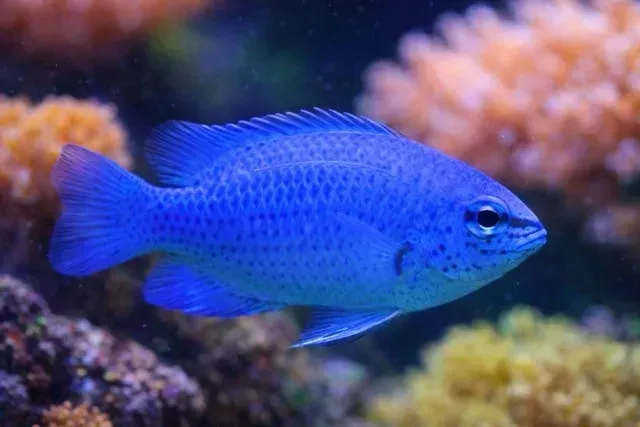
Blue Damselfish
Chrysiptera cyanea
Overview
The Blue Damselfish, known scientifically as Chrysiptera cyanea, is a vibrant marine fish that is popular among aquarists. This species is often chosen for its striking blue coloration and hardiness, making it an excellent choice for both beginner and experienced hobbyists.
Natural Habitat
Blue Damselfish are native to the Indo-Pacific region, commonly found in coral reefs and rocky substrates. They thrive in warm, shallow waters where they seek out territories to protect and defend against intruders. This natural behavior is important to consider when keeping them in an aquarium.
Care Requirements
Blue Damselfish are relatively easy to care for, but understanding their needs is crucial to ensure a healthy environment:
- Water Type: Marine
- Minimum Tank Size: A minimum of 75 liters is recommended to provide adequate swimming space.
- Diet: They are omnivorous and should be provided with a varied diet that includes high-quality marine flakes, pellets, and occasional frozen or live foods.
Tank Setup
For the best environment, consider the following when setting up a tank for Blue Damselfish:
- **Aquascaping:** Provide plenty of live rock and hiding places to mimic their natural habitat.
- **Lighting:** Moderate lighting is ideal, as it promotes the growth of algae and beneficial microorganisms that they can graze on.
- **Water Parameters:** Ensure stable water quality with regular monitoring of salinity, pH, and temperature.
Compatibility
While they are generally peaceful, Blue Damselfish can exhibit territorial behavior, especially towards their own kind or similar species. It is best to keep them in groups of at least three to reduce aggression among them. Suitable tank mates include various reef-safe fish species that occupy different swimming levels.
Feeding
Blue Damselfish have a diverse diet and benefit from regular, varied feeding. Offer a mix of high-quality flakes, pellets, and frozen foods to ensure they receive essential nutrients. They are grazers and will also enjoy algae growth in the aquarium.
Lifespan and Size
In captivity, Blue Damselfish can live for several years, often exceeding 5 years with proper care. They typically reach a size of about 7.5 cm when fully grown.
Conclusion
The Blue Damselfish is a striking and hardy species well-suited for marine aquariums. With the right care and tank conditions, they can thrive and add a vibrant touch to your aquatic environment.
How to care for Blue Damselfish
- 1
Set up the tank
Prepare a 30-gallon (114-liter) aquarium with fine sand or crushed coral substrate and ample live rock for hiding places.
- 2
Acclimate slowly
Introduce Blue Damselfish to the tank gradually to reduce stress and prevent aggression.
- 3
Maintain water parameters
Keep water temperature between 22.2-25.6°C (72-78°F), pH 8.1-8.4, salinity 1.020-1.025, and water hardness 8-12 dKH.
- 4
Provide a varied diet
Feed Blue Damselfish a balanced diet of live, frozen, freeze-dried, and vitamin-enriched foods such as brine shrimp, finely chopped mysis shrimp, and prepared pellets and flakes.
- 5
Monitor tankmates
Be cautious with tankmates, as Blue Damselfish can be aggressive, especially towards similar-sized fish.
Frequently asked questions
What is the maximum size of a Blue Damselfish?▾
Blue Damselfish (Chrysiptera cyanea) can reach up to 8.5 cm (3.3 inches) in length.
What are the ideal water parameters for Blue Damselfish?▾
Maintain water temperature between 22.2-25.6°C (72-78°F), pH 8.1-8.4, salinity 1.020-1.025, and water hardness 8-12 dKH.
What is the minimum tank size for keeping Blue Damselfish?▾
A minimum tank size of 30 gallons (114 liters) is recommended for Blue Damselfish.
What is the diet of Blue Damselfish?▾
Blue Damselfish are omnivorous, feeding on zooplankton, small invertebrates, and accepting a variety of foods including marine flakes and pellets.
Are Blue Damselfish reef-safe?▾
Yes, Blue Damselfish are reef-safe and can be kept in reef aquariums.
How do Blue Damselfish reproduce?▾
Blue Damselfish are oviparous; males guard and tend to the eggs, which adhere to the substrate.
What is the lifespan of Blue Damselfish?▾
Blue Damselfish typically live for 2-3 years in captivity.