

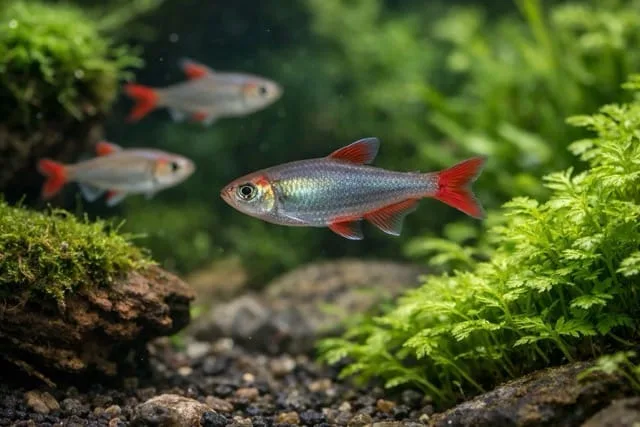
Illustrative images
Bloodfin Tetra
Aphyocharax anisitsi
Overview
The Bloodfin Tetra, known scientifically as Aphyocharax anisitsi, is a small, attractive freshwater fish popular among aquarium hobbyists. With its vibrant red fins and peaceful nature, it is an excellent choice for community tanks. Bloodfin Tetras are known for their active schooling behavior and can bring life to any aquarium.
Natural Habitat
This species is native to the rivers and streams of South America, specifically in the regions of Brazil and Paraguay. They prefer slow-moving waters with ample vegetation, which provides both food and shelter. In their natural habitat, they are often found in large groups, swimming together to avoid predators and enhance their safety.
Care Requirements
Bloodfin Tetras are relatively easy to care for, making them ideal for beginners. They thrive in a well-maintained aquarium with stable water conditions. Here are some essential care requirements:
- Water Type: Freshwater
- Tank Size: A minimum of 40 liters (10 gallons) is recommended for a small school.
- Temperature: 22°C to 28°C (72°F to 82°F)
- pH Level: 6.0 to 7.5
- Hardness: 2 to 20 dGH
Tank Setup
For Bloodfin Tetras, a well-planted tank with plenty of open swimming space is essential. Use fine gravel or sand as substrate and include plants like Java moss and floating plants to mimic their natural habitat. Providing hiding spots with driftwood and rocks can also help make them feel secure.
Compatibility
Bloodfin Tetras are peaceful and can be kept with a variety of other species. Ideal tankmates include:
- Other Tetras (e.g., Neon Tetras, Cardinal Tetras)
- Rasboras
- Dwarf Gouramis
- Danios
It is best to avoid aggressive species or those that might nip at their fins, as this can lead to stress.
Feeding
Bloodfin Tetras are omnivorous and will accept a wide variety of foods. A balanced diet should include:
- High-quality flake food
- Micropellets
- Frozen or live foods like daphnia, brine shrimp, and bloodworms
Ensure to feed small amounts several times a day rather than a large quantity at once to maintain water quality.
Lighting
Moderate lighting is beneficial for Bloodfin Tetras. They prefer dimmer lighting similar to their natural environment, which can be achieved with floating plants that provide shade.
Conclusion
The Bloodfin Tetra is a charming and lively addition to many community tanks, known for its sociability and beautiful coloration. With proper care and a suitable environment, they can thrive and provide enjoyment for aquarium enthusiasts.
How to care for Bloodfin Tetra
- 1
Set up the tank
Choose a tank of at least 20 gallons, providing ample swimming space and a well-planted environment with dense vegetation along the sides and open areas for swimming.
- 2
Acclimate slowly
Introduce Bloodfin Tetras to the aquarium gradually to minimize stress, allowing them to adjust to the new environment.
- 3
Maintain water parameters
Keep the water temperature between 70-80°F (21-27°C), pH between 6.0-8.0, and hardness between 3-30 dGH to ensure optimal health.
- 4
Provide a balanced diet
Feed Bloodfin Tetras a varied diet of high-quality flake food, supplemented with live or frozen foods like bloodworms, brine shrimp, and daphnia.
- 5
Monitor tank mates
Keep Bloodfin Tetras with other peaceful community fish such as tetras, rasboras, guppies, dwarf gouramis, and small catfish, avoiding fin-nipping or aggressive species.
Frequently asked questions
What is the ideal tank size for Bloodfin Tetras?▾
A minimum tank size of 20 gallons is recommended for Bloodfin Tetras, with larger tanks preferable for larger groups.
What water temperature do Bloodfin Tetras prefer?▾
Bloodfin Tetras thrive in water temperatures between 70-80°F (21-27°C).
What is the maximum size of Bloodfin Tetras?▾
Bloodfin Tetras can grow up to 2.5 inches (6.4 cm) in length.
What is the lifespan of Bloodfin Tetras?▾
Bloodfin Tetras typically live for 7-10 years in captivity.
What is the natural habitat of Bloodfin Tetras?▾
Bloodfin Tetras are native to the river basins of the Orinoco, Amazon, and La Plata systems, including the Paraná and Uruguay rivers.