

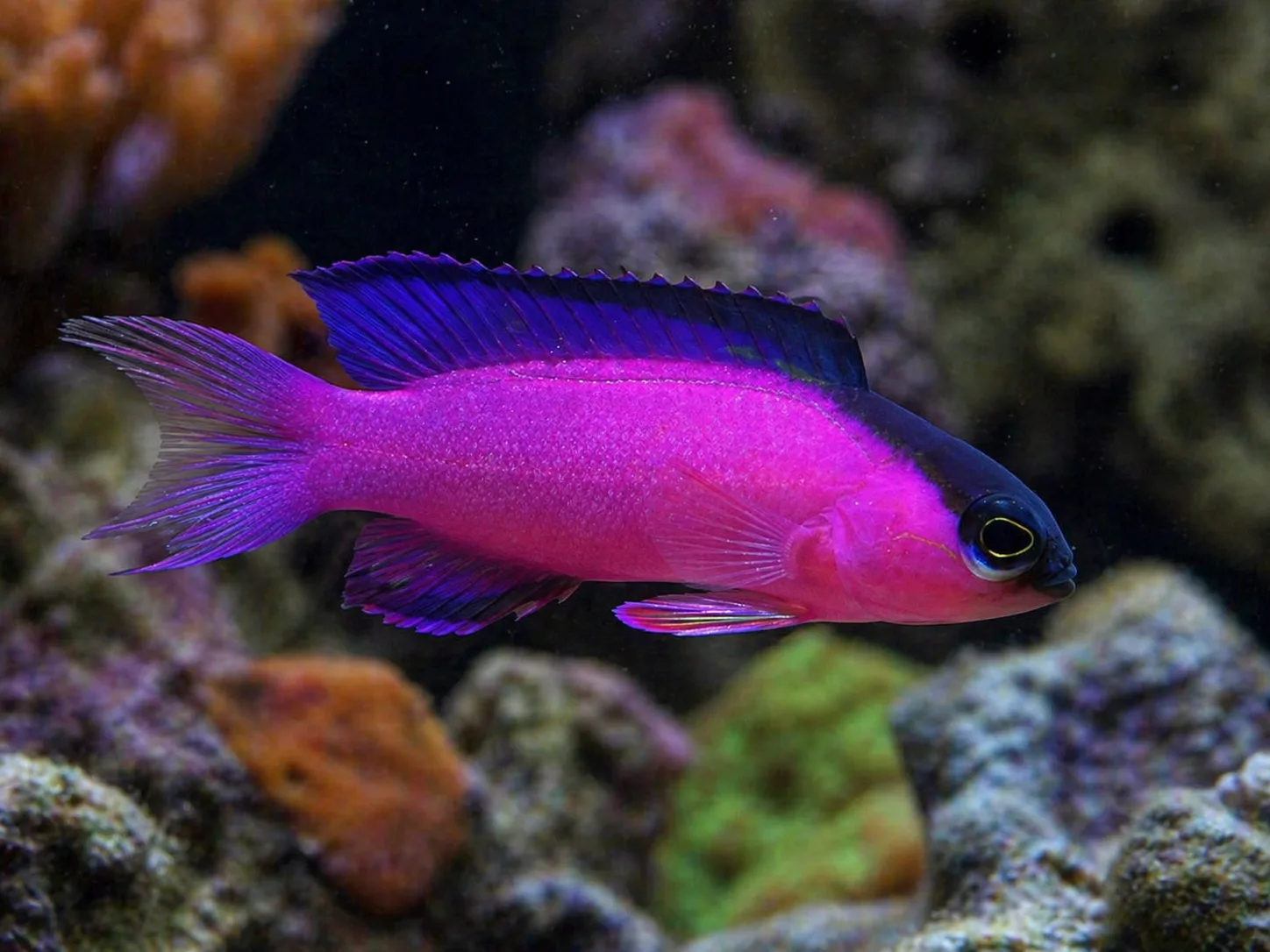
Illustrative images
Blackcap Basslet
Gramma melacara
Overview
The Blackcap Basslet, scientifically known as Grammatonus aculeatus, is a small, vibrant fish known for its striking coloration and unique appearance. Primarily found in coral reefs, this fish is a favorite among marine aquarium enthusiasts due to its peaceful nature and beautiful presentation.
Natural Habitat
The Blackcap Basslet is native to the tropical waters of the Caribbean, particularly around coral reef environments. It thrives in depths ranging from 5 to 40 meters, often found hovering around rocky crevices and coral structures. In its natural habitat, it plays a critical role in controlling algae growth and maintaining the overall health of the reef ecosystem.
Care Requirements
Caring for Blackcap Basslets requires a well-maintained aquarium that mirrors their natural environment. A minimum tank size of 75 gallons is recommended, with an emphasis on stable water parameters. While they are relatively hardy, fluctuations in water quality can stress these fish.
Tank Setup
- Filtration: A high-quality filtration system is necessary to keep the water clean and clear.
- Water Movement: Moderate water movement is ideal to replicate their natural habitat.
- Lighting: While they do not require intense lighting, a well-lit tank with the option for shaded areas is beneficial.
- Decor: Live rock and coral are essential for creating hiding spots and territories.
Compatibility
Blackcap Basslets are generally peaceful and make excellent tank mates for a variety of other marine species. However, they can be territorial towards similar-sized fish, particularly during breeding or when establishing their territory. Suitable companions include:
- Small wrasses
- Clownfish
- Gobies
Feeding
In the wild, the Blackcap Basslet feeds on small zooplankton and invertebrates. In captivity, they thrive on a varied diet that includes:
- High-quality flakes
- Pellets
- Frozen or live food, such as brine shrimp or mysis shrimp
It's essential to offer a mix of foods to ensure their nutritional needs are met and to encourage natural foraging behaviors.
Additional Care Notes
While Blackcap Basslets are relatively hardy, maintaining stable water conditions is crucial to their health. Regular water changes and monitoring of key parameters such as salinity, pH, and temperature will promote a thriving aquarium environment.
Conclusion
The Blackcap Basslet is a beautiful and rewarding addition to any marine aquarium. With proper care and suitable tank mates, hobbyists can enjoy the elegance and vibrant color these fish bring to their underwater landscapes.
How to care for Blackcap Basslet
- 1
Set up the tank
Use a well-established aquarium with plenty of rockwork and caves to provide hiding places for Gramma melacara.
- 2
Acclimate slowly
Introduce Gramma melacara to the tank gradually to reduce stress and allow it to adjust to the new environment.
- 3
Maintain water parameters
Keep the water temperature between 72-78°F (22-26°C), pH between 8.1 and 8.4, and salinity at 1.020-1.025.
- 4
Feed appropriately
Offer a varied diet of meaty foods such as mysis shrimp, brine shrimp, plankton, and chopped shellfish.
- 5
Monitor behavior
Observe Gramma melacara for signs of territorial aggression, especially towards other basslets or similar-looking species.
Frequently asked questions
What are the ideal water parameters for Gramma melacara?▾
Maintain a temperature of 72-78°F (22-26°C), pH between 8.1 and 8.4, and salinity at 1.020-1.025.
What is the maximum size of Gramma melacara?▾
Gramma melacara can grow up to 4 inches (10 cm) in length.
What is the minimum tank size for Gramma melacara?▾
A minimum tank size of 30 gallons (114 liters) is recommended for Gramma melacara.
What is the lifespan of Gramma melacara?▾
Gramma melacara can live for 4 to 8 years in optimal conditions.
What is the diet of Gramma melacara?▾
Gramma melacara is carnivorous, feeding on meaty foods such as mysis shrimp, brine shrimp, plankton, and chopped shellfish.