

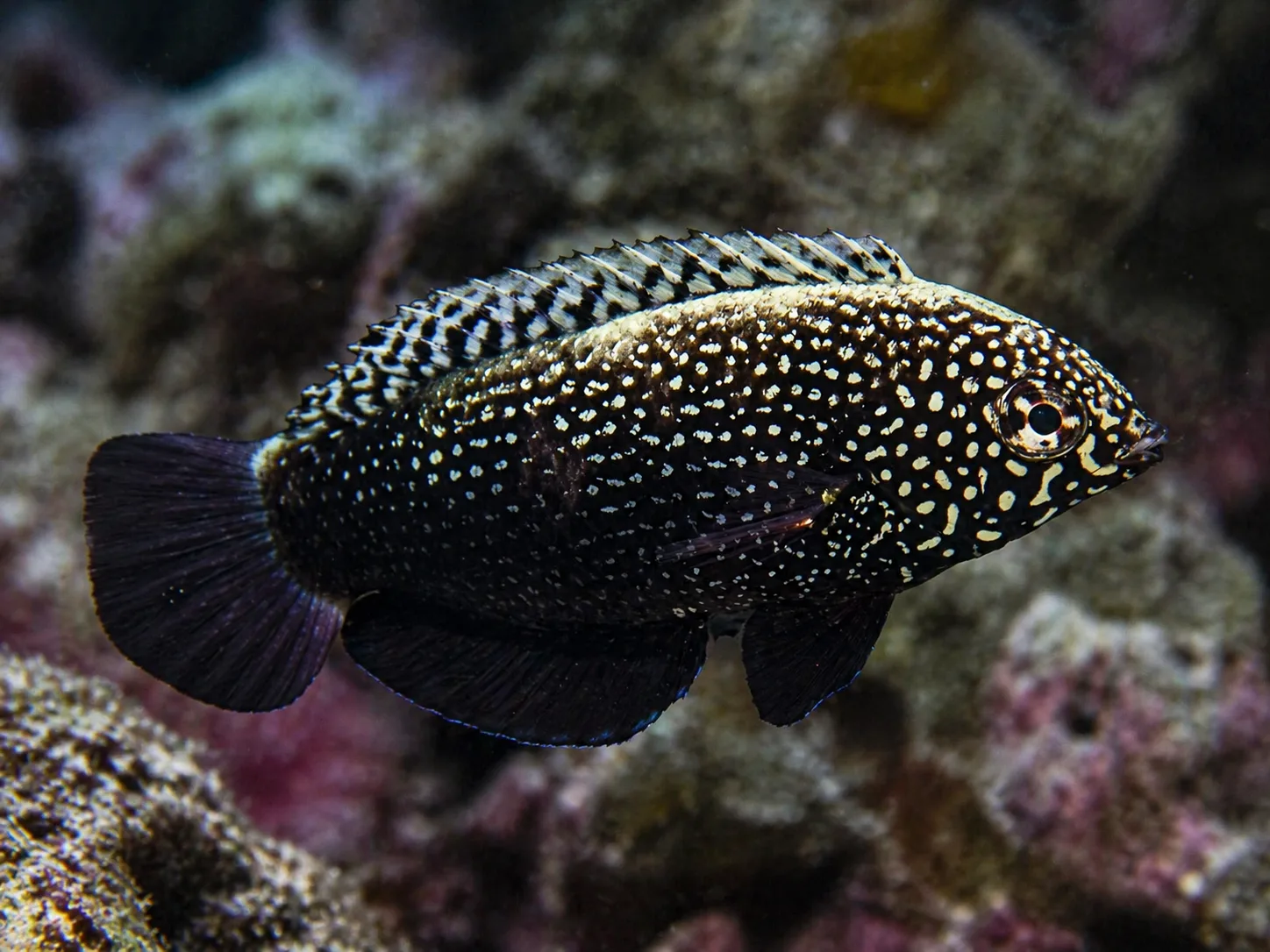
Illustrative images
Black Leopard Wrasse
Macropharyngodon negrosensis
Overview
The Black Leopard Wrasse, scientifically known as Macropharyngodon atrangulus, is a stunning species of fish belonging to the family Labridae. Known for its striking colors and patterns, this wrasse is a popular choice among marine aquarium enthusiasts. Its vibrant markings and dynamic behavior add significant interest to any reef tank.
Natural Habitat
This species is typically found in the coral reefs of the Indo-Pacific region. They prefer sandy substrates where they can easily burrow and hide, which is a crucial behavior for their survival in the wild. The Black Leopard Wrasse thrives in environments with plenty of live rock and coral formations, providing both shelter and foraging opportunities.
Care Requirements
Keeping the Black Leopard Wrasse in a home aquarium requires consideration of several key factors to ensure its health and well-being.
Tank Setup
- Minimum Tank Size: 75 gallons is recommended to provide enough space for swimming and to establish territories.
- Substrate: A sandy substrate is important as it allows the wrasse to burrow.
- Live Rock: Incorporate plenty of live rock to create hiding spots and encourage natural behavior.
- Filtration: Excellent filtration is essential to maintain water quality, as wrasses can be sensitive to poor conditions.
Water Parameters
- Salinity: Maintain stable salinity levels suitable for marine aquariums.
- Temperature: The ideal temperature range is typically between 24-28°C (75-82°F).
- pH: A pH between 8.1 and 8.4 is generally suitable.
Compatibility
The Black Leopard Wrasse is generally considered to be semi-aggressive but can coexist peacefully with a variety of tank mates if introduced carefully. It is essential to avoid housing them with overly aggressive species that may stress them out. Suitable tank mates include:
- Other wrasses
- Clownfish
- Damselfish
- Reef-safe invertebrates
Feeding
The diet of the Black Leopard Wrasse should consist of high-quality marine pellets, frozen foods, and a variety of live foods to ensure a balanced intake of nutrients. Regular feeding with a mix of these options will promote health and vibrant coloration.
Lifespan
With proper care, the Black Leopard Wrasse can live for several years, sometimes reaching a lifespan of over 5 years in captivity.
Conclusion
In summary, the Black Leopard Wrasse is a captivating fish that can be a wonderful addition to a well-maintained marine aquarium. With its unique appearance and interactive behavior, it is favored by many aquarists looking to enhance their reef setup.
How to care for Black Leopard Wrasse
- 1
Set up the tank
Prepare a well-established reef tank with a deep sand bed and plenty of live rock to provide hiding places and foraging opportunities.
- 2
Acclimate slowly
Introduce the Black Leopard Wrasse to the tank gradually to reduce stress and allow it to adjust to its new environment.
- 3
Maintain water parameters
Keep the water temperature between 22-26°C (72-79°F), salinity at 1.020-1.025, and pH between 8.1 and 8.4.
- 4
Provide a varied diet
Offer a diet rich in meaty foods, including vitamin-enriched frozen mysis shrimp, brine shrimp, and other meaty foods, along with high-quality marine flake and pellet foods.
Frequently asked questions
What is the maximum size of Macropharyngodon negrosensis?▾
Macropharyngodon negrosensis can reach up to 12 cm (4.7 inches) in length.
What is the natural habitat of the Black Leopard Wrasse?▾
The Black Leopard Wrasse is found in lagoon and seaward reefs with mixed sand and coral areas, from the Andaman Sea and Christmas Island to the Philippines and Samoa, extending north to the Ryukyu Islands and south to northern Australia.
What is the recommended minimum tank size for a Black Leopard Wrasse?▾
A minimum tank size of 90 gallons (approximately 340 liters) is recommended for a Black Leopard Wrasse.
What is the diet of Macropharyngodon negrosensis?▾
Macropharyngodon negrosensis is carnivorous, feeding on small benthic animals such as foraminiferans and amphipods.
Is Macropharyngodon negrosensis reef-safe?▾
Yes, Macropharyngodon negrosensis is considered reef-safe.