

Illustrative images
Bird's Nest Coral
Seriatopora spp.
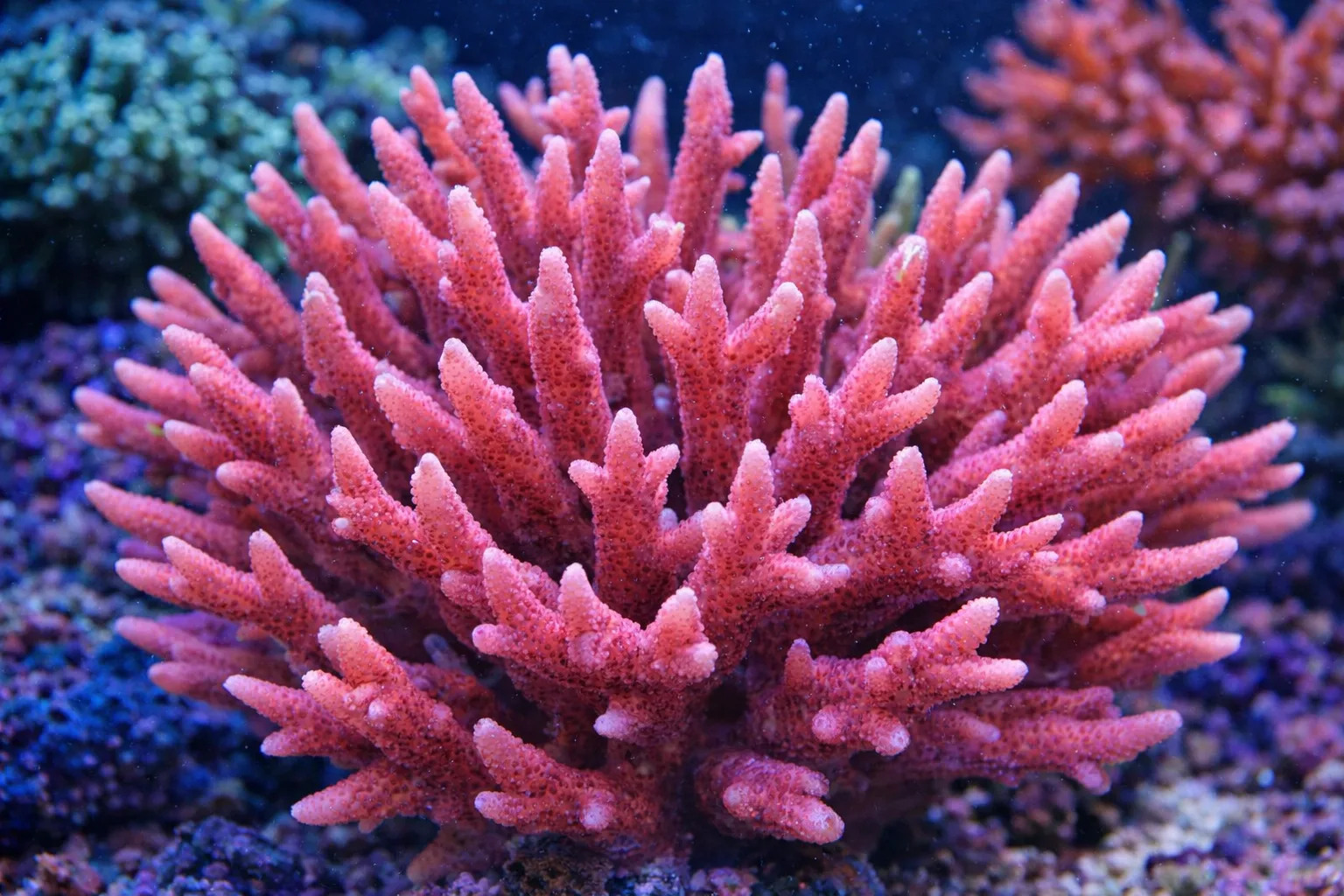
The Bird’s Nest Coral (Seriatopora) is one of the most recognizable and popular SPS (Small Polyp Stony) corals in reef aquariums. Known for its intricate branching structure and delicate appearance, this coral forms dense colonies that resemble a bird’s nest, which is how it gets its common name. Native to the Indo-Pacific region, Bird’s Nest corals thrive in clear, shallow reef environments where strong light and steady water flow allow them to grow rapidly.
In reef aquariums, Bird’s Nest Coral is highly appreciated for its fast growth rate and vibrant coloration. Depending on the species and lighting conditions, it can display stunning shades of pink, green, yellow, purple, or cream, often with lighter tips on its branches. Under high-quality reef lighting such as LED or T5 systems, the coral can develop intense coloration that becomes a focal point in any reef tank.
Seriatopora corals grow in thin, tightly packed branches covered with tiny polyps, which extend during the day to capture plankton and organic particles from the water column. These polyps give the coral a soft, fuzzy appearance when fully extended. Because of its complex branching pattern, Bird’s Nest Coral provides microhabitats for small reef organisms, enhancing the biodiversity within a reef aquarium.
For successful care, Bird’s Nest Coral requires stable water parameters, strong lighting, and moderate to strong turbulent flow. Like most SPS corals, it is sensitive to sudden fluctuations in alkalinity, calcium, and temperature. Maintaining stable levels of alkalinity (8–9 dKH), calcium (400–450 ppm), and magnesium (1250–1350 ppm) is essential for healthy skeletal growth.
This coral thrives best under high PAR lighting, typically between 200 and 350 PAR, which mimics the intense tropical sunlight of its natural reef habitat. Proper water flow is also crucial, as it helps prevent detritus buildup between the coral’s branches and ensures that nutrients and oxygen reach the polyps efficiently.
Bird’s Nest Coral is often recommended as one of the best beginner SPS corals for reef aquarists transitioning from soft corals or LPS species to more demanding SPS systems. Its relatively fast growth and resilience make it a rewarding coral to keep, while its complex branching form adds depth and natural beauty to reef aquascapes.
In well-maintained reef tanks, Bird’s Nest Coral can grow rapidly and may require occasional trimming or fragging. Fragging is relatively easy due to its brittle skeleton, allowing aquarists to propagate and share healthy coral fragments with other reef hobbyists.
With the right lighting, water chemistry, and flow, Bird’s Nest Coral becomes a stunning centerpiece coral that adds texture, movement, and vibrant color to reef aquariums of all sizes.
How to care for Bird's Nest Coral
- 1
Set up the tank
Prepare a stable reef environment with the ideal water parameters: temperature 76-80°F, salinity 1.024-1.026, pH 8.1-8.4, alkalinity 8-10 dKH, calcium 400-450 ppm, magnesium 1250-1350 ppm, nitrates 1-10 ppm, and phosphates <0.03 ppm. ([docscorals.com](https://docscorals.com/pages/birdsnest-coral-care?utm_source=openai))
- 2
Acclimate slowly
Introduce the Bird's Nest Coral to the tank gradually, allowing it to adjust to the new environment and water conditions to minimize stress.
- 3
Provide appropriate lighting
Ensure the coral receives high lighting with a PAR range of 200-350 to support its growth and coloration. ([docscorals.com](https://docscorals.com/pages/birdsnest-coral-care?utm_source=openai))
- 4
Ensure proper water flow
Maintain moderate to strong water flow to keep the coral's tissue healthy and prevent detritus buildup. ([docscorals.com](https://docscorals.com/pages/birdsnest-coral-care?utm_source=openai))
- 5
Feed appropriately
Supplement the coral's diet with amino acids, powdered foods like Benepets and Reef Roids, and planktonic foods a couple of times a week to enhance growth. ([docscorals.com](https://docscorals.com/pages/birdsnest-coral-care?utm_source=openai))
- 6
Monitor health
Regularly check the coral for signs of stress, such as tissue loss or discoloration, and adjust care routines as needed.
Frequently asked questions
What lighting does Bird's Nest Coral need?▾
Bird's Nest Coral requires high lighting, with a PAR range of 200-350, to ensure proper growth and coloration. ([docscorals.com](https://docscorals.com/pages/birdsnest-coral-care?utm_source=openai))
What water flow is best for Bird's Nest Coral?▾
Bird's Nest Coral thrives in moderate to strong water flow, which helps maintain healthy tissue and prevents detritus buildup. ([docscorals.com](https://docscorals.com/pages/birdsnest-coral-care?utm_source=openai))
What are the ideal water parameters for Bird's Nest Coral?▾
Ideal water parameters include a temperature of 76-80°F, salinity of 1.024-1.026, pH of 8.1-8.4, alkalinity of 8-10 dKH, calcium of 400-450 ppm, magnesium of 1250-1350 ppm, nitrates of 1-10 ppm, and phosphates less than 0.03 ppm. ([docscorals.com](https://docscorals.com/pages/birdsnest-coral-care?utm_source=openai))
How should I feed Bird's Nest Coral?▾
While primarily photosynthetic, Bird's Nest Coral benefits from supplemental feeding with amino acids, powdered foods like Benepets and Reef Roids, and planktonic foods. Target feeding a couple of times a week can enhance growth. ([docscorals.com](https://docscorals.com/pages/birdsnest-coral-care?utm_source=openai))
Is Bird's Nest Coral aggressive towards other corals?▾
Bird's Nest Coral is generally peaceful and does not have sweeper tentacles. However, it can be damaged by aggressive neighboring corals and should be placed away from stinging LPS species. ([extremecorals.com](https://www.extremecorals.com/CoralCare_Seriatopora.html?utm_source=openai))