

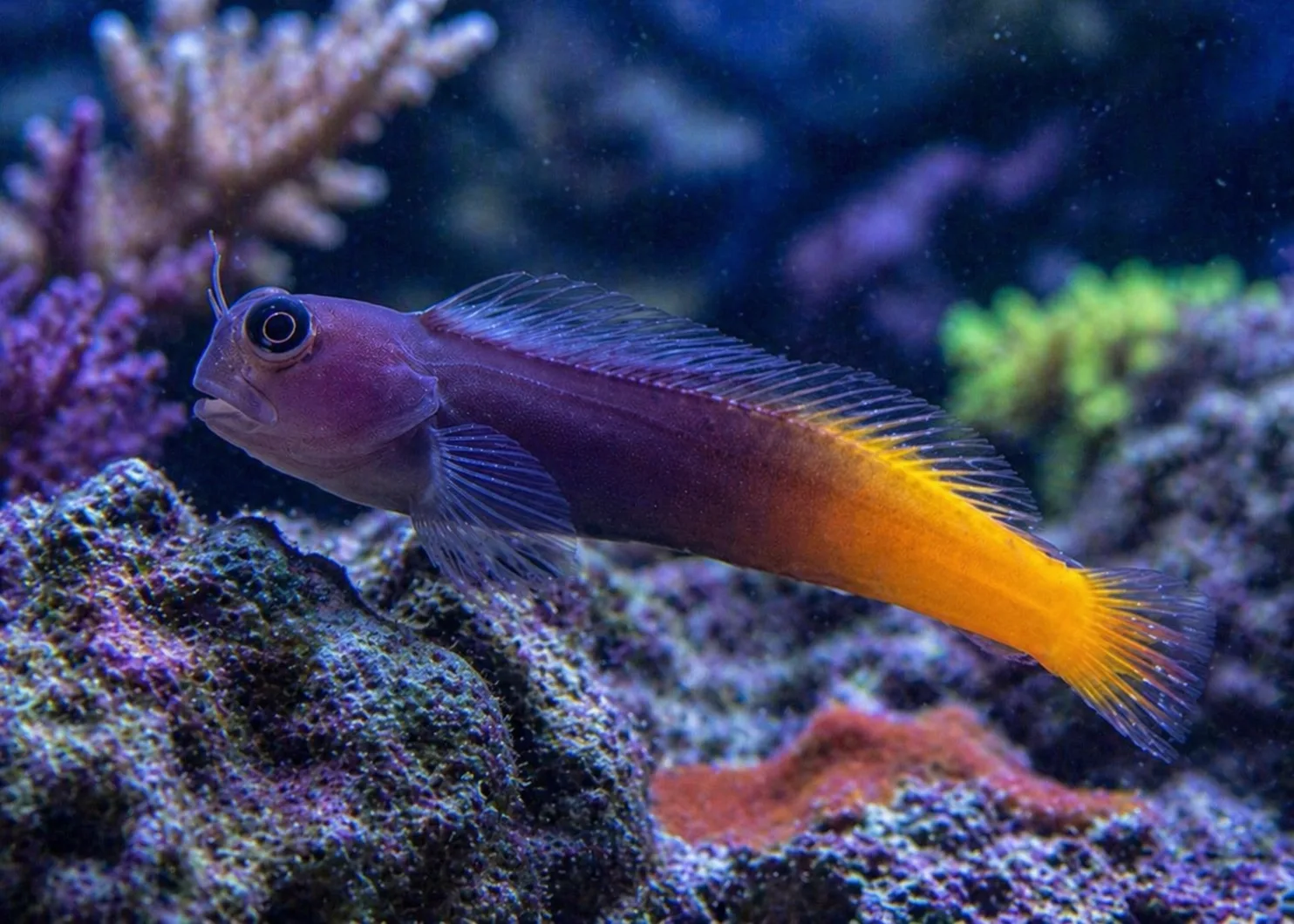
Illustrative images
Bicolor Blenny
Ecsenius bicolor
Overview
The Bicolor Blenny, scientifically known as Ecsenius bicolor, is a popular marine fish found in reef habitats. With its vibrant coloration and engaging behavior, this species is a favorite among aquarists. They are known for their unique body shape, with a striking two-tone appearance that highlights the division between their yellow and blue regions.
Natural Habitat
Bicolor Blennies are native to the Indo-Pacific region, typically residing in rocky crevices and coral reefs. They prefer warm waters and are often found at depths of up to 30 meters. In their natural environment, these fish play a crucial role in the ecosystem, often grazing on algae and helping to maintain the health of the reef.
Care Requirements
Bicolor Blennies require specific care to thrive in captivity. They are best suited for aquarists with a little experience due to their specific needs.
Tank Setup
A well-established tank of at least 75 liters is recommended. The tank should be well-aerated and equipped with live rock for hiding and grazing. Provide plenty of nooks and crannies to mimic their natural habitat. Sand substrate can also be beneficial.
Water Parameters
- Salinity: 1.020 - 1.025
- pH: 8.1 - 8.4
- Temperature: 24 - 28 °C
Compatibility
Bicolor Blennies can be semi-aggressive, especially towards their own kind. It is best to keep them in a tank with other peaceful marine species. They generally do well with similarly sized fish but may exhibit territorial behavior, particularly in smaller tanks.
Feeding
This species is primarily herbivorous. Algae and plant matter should constitute a significant portion of their diet. High-quality algae wafers, marine pellets, and fresh vegetables can be offered to keep them healthy. They may also graze on algae naturally present in the tank.
Lifespan
When properly cared for, Bicolor Blennies can live 4-6 years in an aquarium setting.
Conclusion
The Bicolor Blenny is a captivating addition to a marine aquarium. Providing the right environment and care will ensure these fish remain healthy and display their natural beauty within your aquatic setup.
How to care for Bicolor Blenny
- 1
Set up the tank
Provide a 30-gallon (114-liter) tank with live rock for perching and hiding spots. Ensure stable water parameters: temperature 72-80°F (22.2-26.7°C), pH 8.1-8.4, specific gravity 1.020-1.025, and alkalinity 8-12 dKH.
- 2
Acclimate the fish
Acclimate the Bicolor Blenny slowly to the new environment to reduce stress and prevent shock.
- 3
Maintain water quality
Regularly monitor and maintain water parameters within the recommended ranges to ensure the health of the Bicolor Blenny.
- 4
Feed appropriately
Offer a diet rich in algae, such as Spirulina-based flakes, marine algae sheets (nori), and occasional meaty foods like brine shrimp or mysis shrimp.
- 5
Monitor tank mates
Observe interactions with other fish, especially other blennies, to prevent territorial disputes.
Frequently asked questions
What size tank does a Bicolor Blenny need?▾
A minimum tank size of 30 gallons (114 liters) is recommended for a Bicolor Blenny.
What are the ideal water parameters for a Bicolor Blenny?▾
Maintain a temperature of 72-80°F (22.2-26.7°C), pH between 8.1 and 8.4, specific gravity (salinity) of 1.020-1.025, and alkalinity (dKH) of 8-12.
What do Bicolor Blennies eat?▾
Bicolor Blennies are primarily herbivores, feeding on algae, Spirulina-based flakes, and marine algae sheets (nori). They may also accept occasional meaty foods like brine shrimp or mysis shrimp.
Can Bicolor Blennies live with other fish?▾
Yes, they are generally peaceful and can coexist with species like clownfish, gobies, and wrasses. However, they may be territorial toward other blennies or fish of similar size and shape.
Do Bicolor Blennies nip at corals?▾
They are considered reef-safe but may occasionally nip at the mantles of large-polyp stony corals or clam mantles, especially if underfed.