

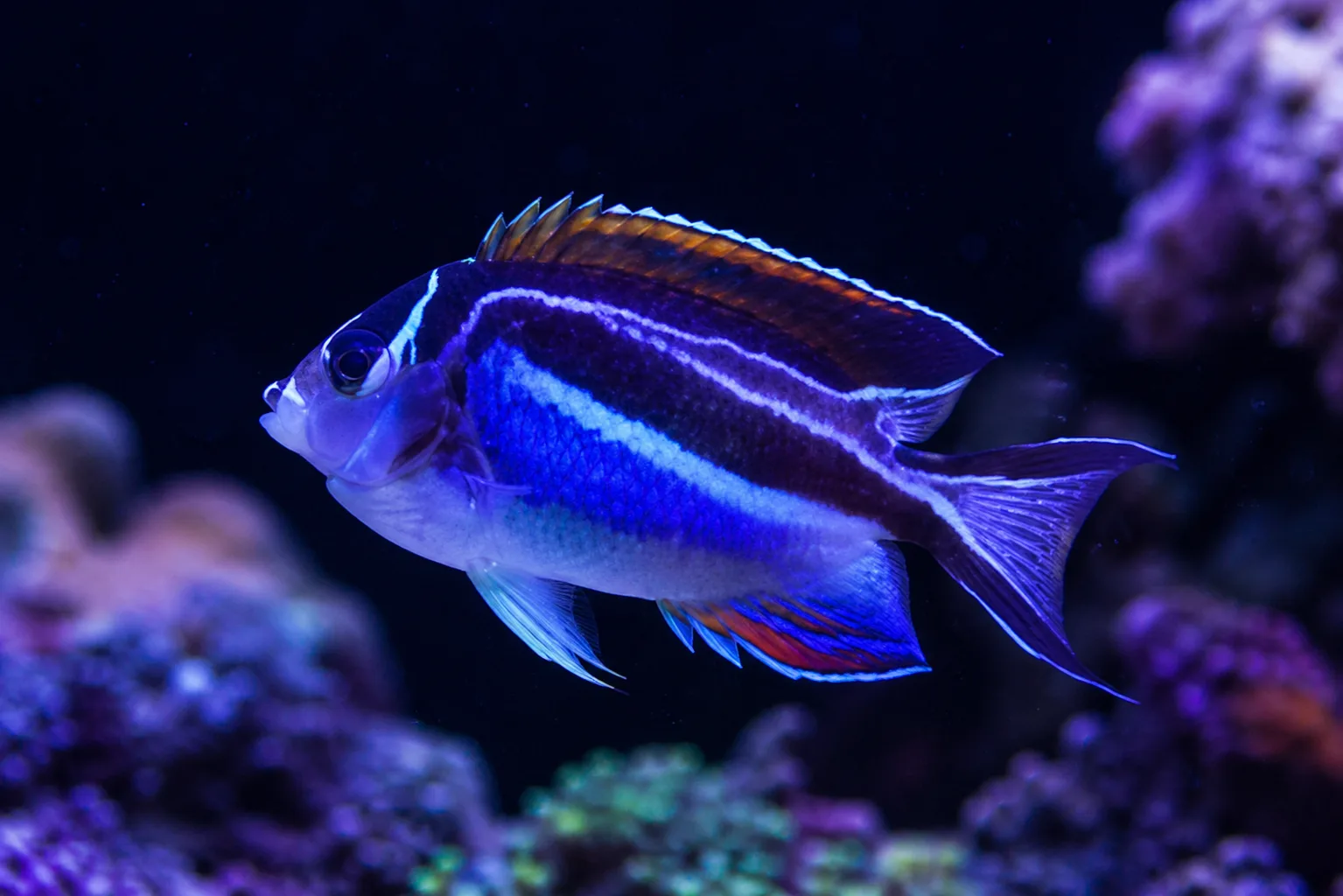
Illustrative images
Bellus Angelfish
Genicanthus bellus
Overview
The Bellus Angelfish, also known as Centropyge bellus, is a stunning marine fish found primarily in the Indo-Pacific region. This species is popular among marine aquarists for its vibrant colors and unique shape, making it an excellent choice for both beginners and experienced fish keepers.
Natural Habitat
In the wild, the Bellus Angelfish inhabits coral reefs where it can be found among the crevices and ledges of the reef structure. They thrive in warm, saltwater environments and prefer areas with abundant coral growth which provides both shelter and food sources.
Care Requirements
The Bellus Angelfish requires a well-maintained aquarium with stable water parameters. A minimum tank size of 200 liters is recommended to accommodate their swimming needs and territorial nature. They are best kept in larger aquariums where they can establish their territory and feel secure.
Water Parameters
- Salinity: Marine
- Temperature: 24-28°C
- pH: 8.1-8.4
- Specific Gravity: 1.020-1.025
Tank Setup
A proper tank setup for Bellus Angelfish includes plenty of hiding spots, such as rock formations and coral structures. Live rock not only enhances the aesthetics of the tank but also provides essential grazing surfaces for their diet. They enjoy moderate water movement and should be kept in well-filtered water to keep the environment clean.
Compatibility
The Bellus Angelfish is generally semi-aggressive and can be territorial, especially towards its own kind. It is advisable to keep them singly or in a group of one male and several females to reduce aggression. Suitable tank mates include larger peaceful fish that can hold their own, such as other angelfish, wrasses, and larger gobies.
Feeding
In terms of diet, Bellus Angelfish are omnivores, and their feeding should consist of high-quality flakes, pellets, and frozen foods. They particularly enjoy algae-based foods and should have access to marine algae and spirulina. Regular feeding of varied foods will help maintain their vibrant coloration and overall health.
Conclusion
The Bellus Angelfish can make a fantastic addition to a marine aquarium for those who are prepared to meet their specific care requirements. With the right tank setup, compatible tank mates, and a varied diet, the Bellus Angelfish can thrive and be a beautiful centerpiece in any marine display.
How to care for Bellus Angelfish
- 1
Set up the tank
Prepare a well-established aquarium with plenty of swimming space, live rock for grazing, and multiple hiding places to mimic their natural habitat.
- 2
Acclimate slowly
Introduce the Bellus Angelfish to the tank gradually to reduce stress, especially if the tank has intense lighting.
- 3
Maintain water parameters
Regularly monitor and adjust salinity (1.020-1.025), pH (8.1-8.4), and temperature (72-78°F or 22-26°C) to keep them within optimal ranges.
- 4
Provide a varied diet
Offer a mix of meaty foods like vitamin-enriched frozen brine shrimp, spirulina, marine algae, high-quality angelfish preparations, and mysis or frozen shrimp.
- 5
Monitor tank mates
Keep them in harems with one male and several females, avoiding keeping two males together to prevent aggression.
Frequently asked questions
What are the ideal water parameters for Bellus Angelfish?▾
Maintain a salinity of 1.020-1.025, pH between 8.1 and 8.4, and a temperature range of 72-78°F (22-26°C).
What is the maximum size of a Bellus Angelfish?▾
Bellus Angelfish can grow up to 7 inches (18 cm) in length.
Are Bellus Angelfish reef-safe?▾
Yes, they are generally considered reef-safe and do not pose a threat to soft or stony corals.
What is the recommended minimum tank size for Bellus Angelfish?▾
A minimum tank size of 125 gallons (approximately 473 liters) is recommended to accommodate their needs.
What is the diet of Bellus Angelfish?▾
They are omnivores, feeding on plankton, small invertebrates, and algae in the wild.