

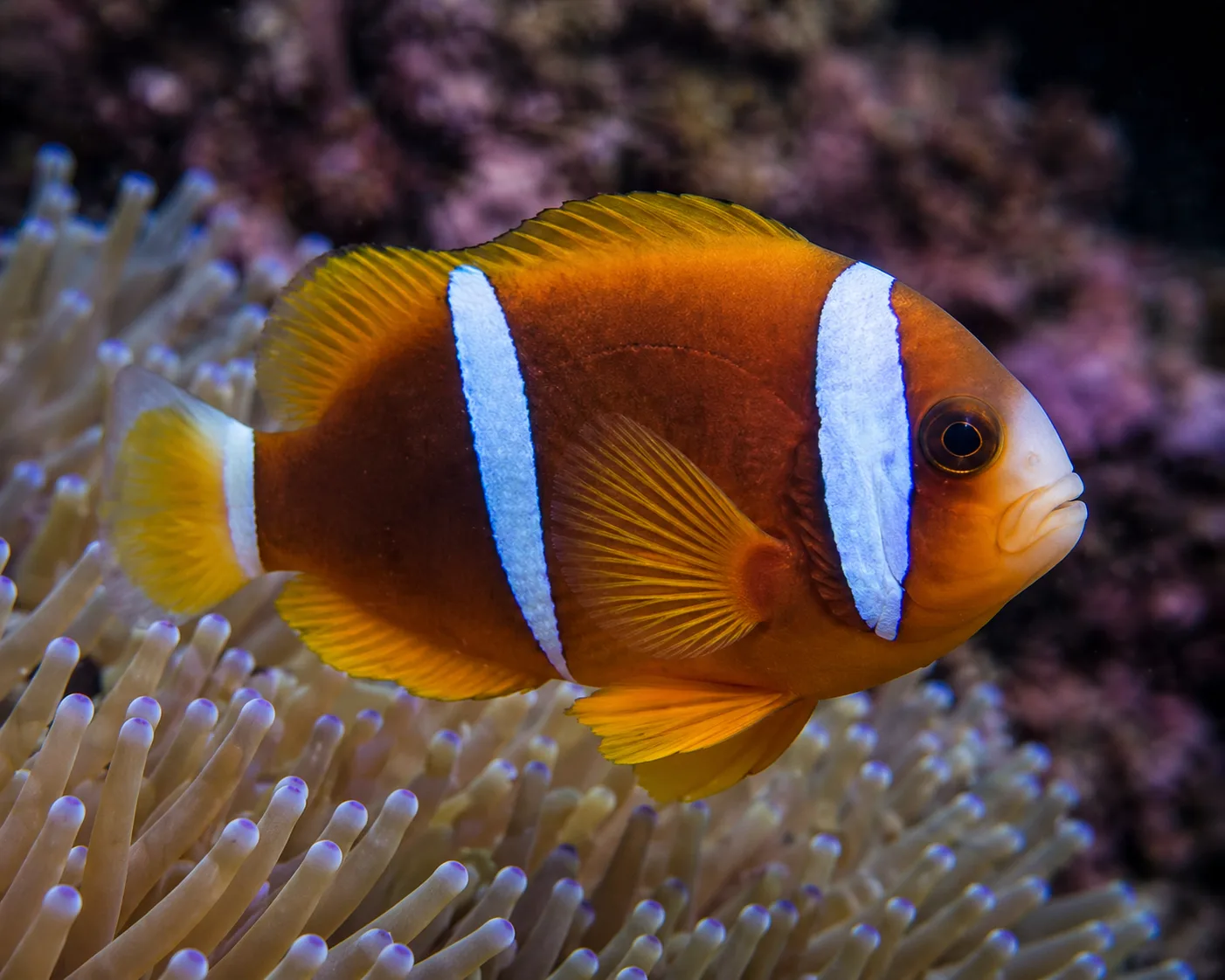
Illustrative images
Barrier Reef Clownfish
Amphiprion akindynos
Overview
The Barrier Reef Clownfish, scientifically known as Amphiprion akindynos, is a vibrant and popular species among aquarium enthusiasts. Known for their striking orange coloration and unique personality, these fish thrive in well-maintained reef tanks and form a symbiotic relationship with anemones. Their hardy nature and engaging behavior make them a favored choice for both beginners and experienced aquarists.
Natural Habitat
This species is predominantly found in the warm waters of the Coral Sea, specifically around the Great Barrier Reef in Australia. They reside in shallow lagoons and small reefs, often associating with anemones that provide protection from predators. The relationship between clownfish and anemones is mutualistic, as clownfish can help keep the anemones clean while receiving shelter from threats.
Care Requirements
Barrier Reef Clownfish are relatively easy to care for, making them suitable for novice aquarists. They require a minimum tank size of 75 liters, preferably with live rock and hiding spaces. Stability in water parameters is essential; hence, regular monitoring and maintenance of tank conditions are advised.
Tank Setup
A well-planted tank with live rock replicas is ideal for simulating their natural habitat. This not only offers hiding spots but also provides surfaces for grazing. Including an anemone can enhance their health and well-being since they are naturally found with these organisms. Lighting should be moderate, and the tank should allow for good water flow to ensure a healthy environment.
Compatibility
Barrier Reef Clownfish are generally peaceful and can coexist with various community species, provided the tank is adequately sized. They are ideally kept in pairs or small groups, as they exhibit a social nature. However, they can be territorial, particularly when breeding, so care should be taken when introducing tank mates.
Feeding
These clownfish are omnivorous and will thrive on a varied diet. They can be fed high-quality pellets, flakes, and occasional live or frozen foods such as brine shrimp and mysis shrimp. Feeding them 2-3 times a day in small amounts is advisable to maintain their health and enhance their colors.
Lighting, CO2, and Water Conditions
While clownfish do not require CO2 injections, providing stable lighting helps in the growth of any corals or anemones in the tank. They prefer water temperatures between 24°C to 28°C and a pH around 7.8 to 8.4. Regular water changes will also aid in maintaining overall tank health.
Conclusion
In summary, the Barrier Reef Clownfish is a captivating species that adds both color and life to an aquarium. Their manageable care needs, while also requiring some specific habitat conditions, make them an excellent choice for a diverse tank. With proper care and a suitable environment, they can become a lively and engaging part of your fishkeeping experience.
How to care for Barrier Reef Clownfish
- 1
Set up the tank
Choose a well-established aquarium with ample live rock for hiding and exploration. Ensure the tank has stable water parameters suitable for marine life.
- 2
Acclimate slowly
Introduce the clownfish to the tank gradually to minimize stress, especially if they are newly acquired.
- 3
Maintain water parameters
Regularly monitor and adjust salinity (1.023-1.026), temperature (24-28°C or 75-82°F), and pH (8.0-8.4) to keep them within optimal ranges.
- 4
Provide a varied diet
Feed a mix of flakes, pellets, and frozen foods like brine shrimp and mysis shrimp once or twice daily, offering portions they can consume in a few minutes.
- 5
Select compatible tank mates
Keep them with other peaceful, reef-safe species to avoid territorial disputes.
- 6
Monitor health regularly
Observe for signs of stress or disease, and perform routine tank maintenance to ensure a healthy environment.
Frequently asked questions
What are the ideal water parameters for Barrier Reef Clownfish?▾
Maintain a salinity of 1.023 to 1.026, temperature between 24 to 28°C (75 to 82°F), and pH levels between 8.0 and 8.4.
What is the recommended tank size for Barrier Reef Clownfish?▾
A minimum tank size of 100 liters (26 gallons) is recommended, though larger tanks are preferable for community setups.
What is the maximum size of Barrier Reef Clownfish?▾
Barrier Reef Clownfish can grow up to 12 cm (5 inches) in length.
What is the natural diet of Barrier Reef Clownfish?▾
In the wild, they feed on algae, small invertebrates, and plankton.
What is the lifespan of Barrier Reef Clownfish in captivity?▾
With proper care, they can live up to 10-15 years in captivity.