

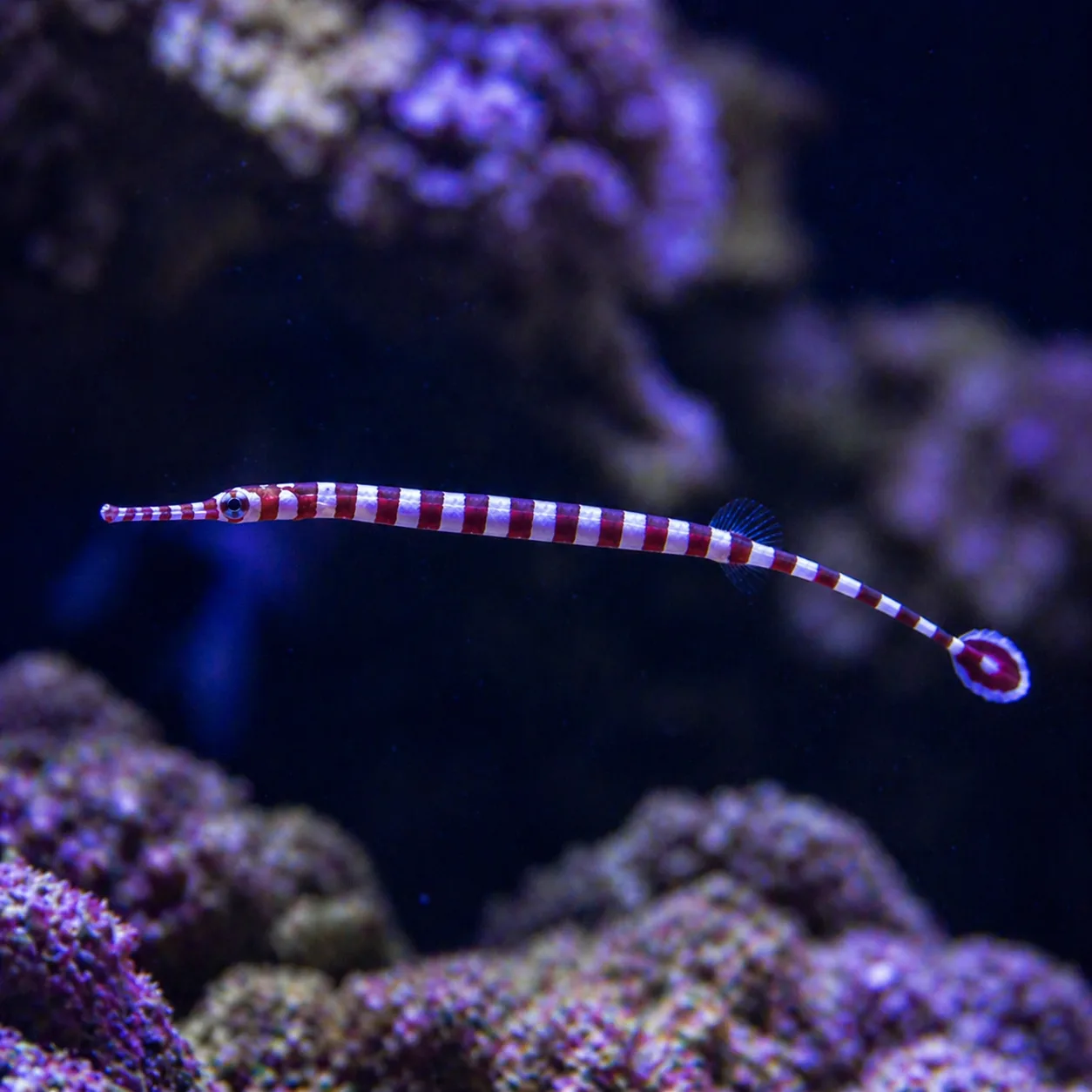
Illustrative images
Banded Pipefish
Doryrhamphus dactyliophorus
Overview
The Banded Pipefish, belonging to the genus Dunckerocampus, is a fascinating marine fish known for its slender body and elongated snout. With its distinctive banded coloration, it is often sought after by aquarists looking for unique and interesting species to add to their saltwater setups.
Natural Habitat
These fish are typically found in shallow, coastal waters, often among seagrass beds and coral reefs. Their natural habitat provides them with ample hiding spots and food sources, which are crucial for their survival. This environment also plays a significant role in their coloration and behavior, as they are adapted to blend in with the surroundings.
Care Requirements
Proper care for Banded Pipefish involves several crucial factors to ensure their health and well-being:
- Tank Size: A minimum of 100 liters is recommended for keeping multiple individuals, as they thrive in spacious environments.
- Water Type: They are suitable for marine tanks. Freshwater conditions can be detrimental to their health.
- Temperature: Ideal water temperatures range between 24-28°C (75-82°F).
- pH Levels: Maintain a pH level between 7.8 and 8.4, closely mimicking their natural environment.
- Water Quality: Regular water changes and good filtration are necessary to keep the environment stable and clean.
Tank Setup
Aquascaping for Banded Pipefish should include plenty of live plants and decorations that mimic their natural habitat. This may consist of:
- Seagrass or similar aquatic plants for shelter.
- Coral structures or rocks where they can hide.
- Gentle water flow to create a comfortable swimming environment.
Compatibility
Banded Pipefish are generally peaceful, but care should be taken when selecting tank mates. Compatible species include:
- Smaller, non-aggressive fish.
- Other pipefish, if space allows.
- Peaceful invertebrates, such as shrimp.
It is advisable to avoid larger or more aggressive species that might view the Banded Pipefish as prey.
Feeding
In the wild, Banded Pipefish primarily consume small crustaceans, plankton, and other tiny marine organisms. In captivity, they can be fed:
- Live or frozen brine shrimp.
- Mysis shrimp.
- Specialized pipefish or carnivore pellets.
Feeding should be done multiple times a day in small amounts to ensure they receive adequate nutrition.
Conclusion
The Banded Pipefish can be a beautiful and intriguing addition to the marine aquarium. By replicating their natural habitat and ensuring proper care, hobbyists can successfully keep these unique fish in their tanks.
How to care for Banded Pipefish
- 1
Set up the tank
Use a well-established reef or fish-only aquarium with plenty of live rock for hiding and hunting small prey.
- 2
Acclimate slowly
Introduce Banded Pipefish to the aquarium gradually to reduce stress and allow them to adjust to the new environment.
- 3
Maintain water parameters
Keep water temperature between 72-78°F (22-26°C), pH between 8.1-8.4, and salinity at 1.020-1.025 specific gravity.
- 4
Provide appropriate diet
Feed live copepods, enriched brine shrimp, and small mysis shrimp to meet their carnivorous dietary needs.
- 5
Select compatible tankmates
Choose peaceful, non-aggressive species like small gobies, dragonets, and seahorses to avoid stress and aggression.
Frequently asked questions
What size tank is suitable for Banded Pipefish?▾
A minimum tank size of 55 gallons (208 liters) is recommended for Banded Pipefish.
What are the ideal water parameters for Banded Pipefish?▾
Maintain water temperature between 72-78°F (22-26°C), pH between 8.1-8.4, and salinity at 1.020-1.025 specific gravity.
What do Banded Pipefish eat?▾
Banded Pipefish are carnivorous, feeding on live copepods, enriched brine shrimp, and small mysis shrimp.
Can Banded Pipefish be kept with other fish?▾
Yes, they can be kept with peaceful, non-aggressive tankmates like small gobies, dragonets, and seahorses.
How do Banded Pipefish reproduce?▾
Male Banded Pipefish carry fertilized eggs in a brood pouch until they hatch, similar to seahorses.