

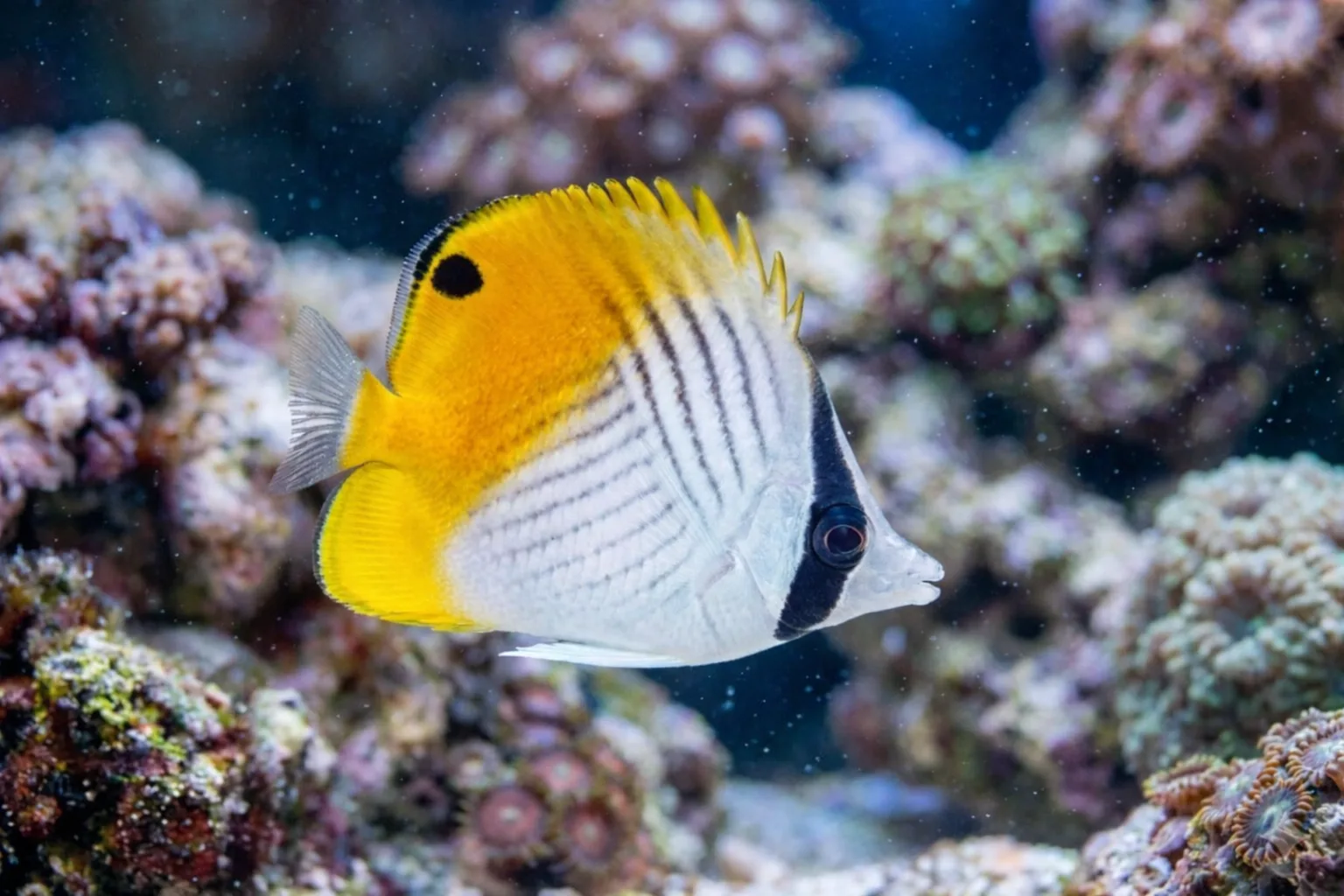
Illustrative images
Auriga Butterflyfish
Chaetodon auriga
Overview
The Auriga Butterflyfish, scientifically known as Chaetodon auriga, is a striking marine fish that is popular among reef aquarium enthusiasts. This species is known for its beautiful coloration and unique markings, making it a visually appealing choice for both beginner and experienced aquarists.
Natural Habitat
In the wild, Auriga Butterflyfish are typically found in the coral reefs of the Indo-Pacific region. They thrive in warm, shallow waters where they can feed on coral polyps and small invertebrates. Their natural habitat plays a significant role in their behavior and dietary needs, necessitating careful consideration when kept in home aquariums.
Care Requirements
Tank Setup
Setting up a suitable environment for the Auriga Butterflyfish is crucial for its health. A well-maintained reef tank is ideal, as it mimics their natural habitat. Here are some recommendations for tank setup:
- Minimum tank size: 200 liters
- Use live rock to provide hiding spots and grazing surfaces.
- Maintain good water quality with regular water changes.
- Incorporate coral structures to simulate a reef environment.
Water Parameters
Auriga Butterflyfish require stable water conditions to thrive. Ensure the following parameters:
- Temperature: 24-28°C
- Salinity: 1.020-1.025 specific gravity
- pH: 8.1-8.4
- Ammonia and nitrite: 0 ppm
- Nitrate: below 10 ppm
Compatibility
This species is known for its semi-aggressive temperament but can coexist with other reef-safe fish. However, caution should be exercised when introducing them to tanks with smaller or more timid species. Suitable tank mates include:
- Other butterflyfish (with caution)
- Wrasses
- Damselfish
- Surgeons and tangs
Feeding and Diet
Auriga Butterflyfish are primarily herbivorous, though they may also consume small invertebrates. A varied diet is essential to keep them healthy. Optimal food choices include:
- High-quality flake or pellet food
- Spiralina and other algae
- Frozen or live food such as brine shrimp
Lifespan
With proper care, the Auriga Butterflyfish can live for around 10 years in captivity. Regular maintenance and a balanced diet will contribute to a longer, healthier life.
How to care for Auriga Butterflyfish
- 1
Set up the tank
Prepare a well-established aquarium with plenty of swimming space and hiding places among live rock.
- 2
Acclimate slowly
Acclimate the fish slowly to the new environment to reduce stress.
- 3
Maintain water parameters
Keep water temperature between 22.2°C and 23.9°C (72°F to 75°F), salinity at 1.020 to 1.025, and pH between 8.1 and 8.4.
- 4
Provide appropriate diet
Offer a varied diet including mysis shrimp, brine shrimp, and high-quality marine flakes and pellets.
- 5
Monitor tank mates
Be cautious with tank mates, as the Auriga Butterflyfish may become territorial and can be semi-aggressive.
Frequently asked questions
What is the ideal tank size for an Auriga Butterflyfish?▾
A minimum tank size of 265 liters (70 US gallons) is recommended for an Auriga Butterflyfish.
What are the water temperature requirements for Chaetodon auriga?▾
The ideal water temperature for Chaetodon auriga is between 22.2°C and 23.9°C (72°F to 75°F).
Is the Auriga Butterflyfish reef-safe?▾
No, the Auriga Butterflyfish is not reef-safe and may nip at coral polyps.
What is the maximum size of Chaetodon auriga?▾
Chaetodon auriga can grow up to 23 cm (9 inches) in length.
What is the recommended salinity for an Auriga Butterflyfish tank?▾
The recommended salinity for an Auriga Butterflyfish tank is a specific gravity of 1.020 to 1.025.