

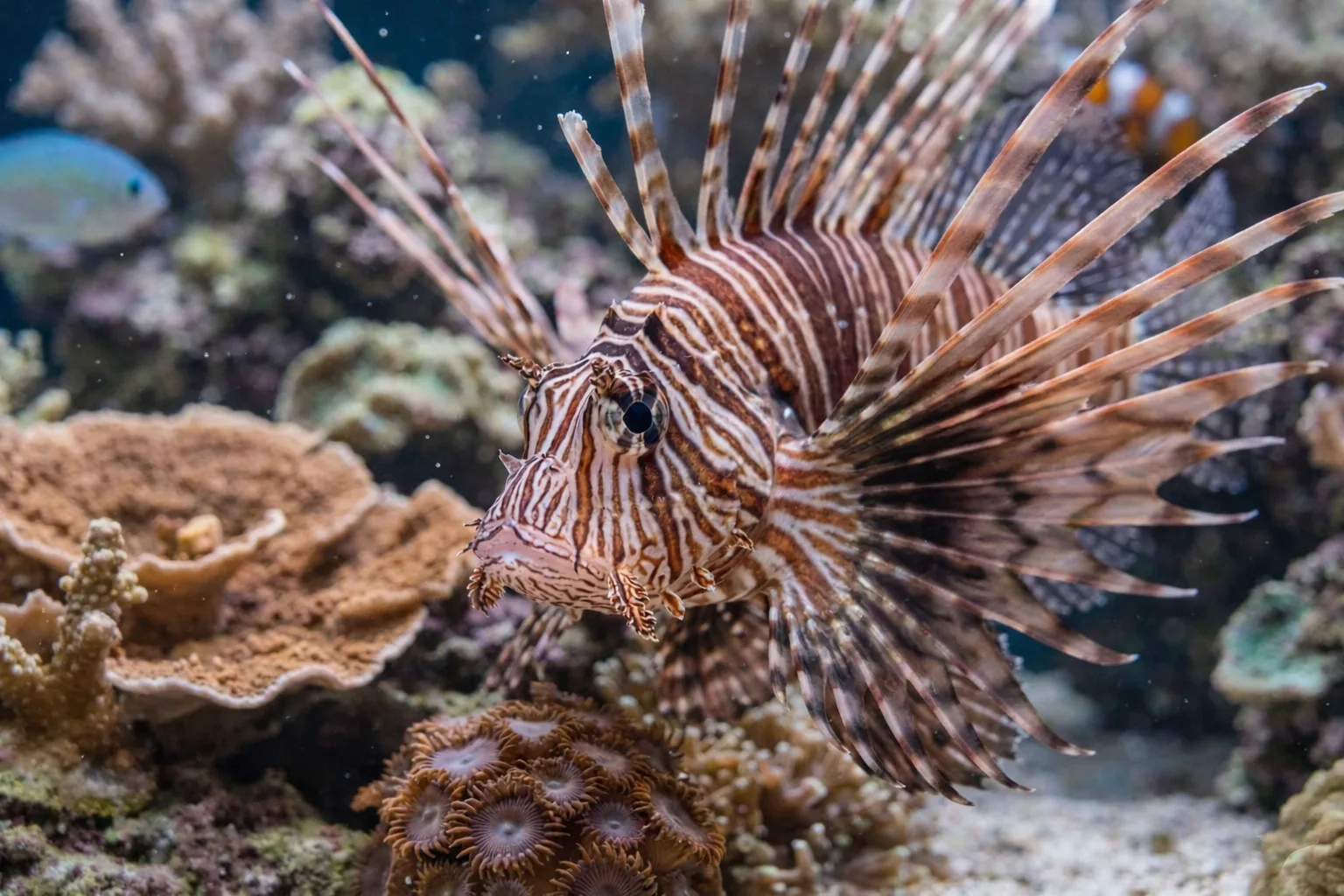
Illustrative images
Antennata Lionfish
Pterois antennata
Overview
The Antennata Lionfish, scientifically known as Pterois antennata, is a striking marine fish renowned for its beautiful coloration and unique fin structure. This species is native to the Indo-Pacific region and is characterized by its impressive fins that resemble a lion's mane, making it a captivating addition to any marine aquarium.
Natural Habitat
In the wild, Antennata Lionfish inhabit coral reefs and rocky crevices where they can find ample cover and hunting grounds. They typically prefer shallow waters, often being found at depths of up to 50 meters. This species plays a vital role in its ecosystem as both a predator and prey.
Care Requirements
Caring for an Antennata Lionfish can be quite challenging and is generally recommended for advanced aquarists. Here are some key care aspects:
- Aquarium Size: A minimum tank size of 200 liters (approximately 53 gallons) is recommended due to their potential size and swimming space needs.
- Water Parameters: The water should be kept at a stable temperature between 24-28°C (75-82°F), with a pH level between 8.1 and 8.4, and specific gravity around 1.020-1.025.
- Filtration: A high-quality filtration system is crucial to keep the water clean and well-oxygenated.
Tank Setup
When setting up a tank for Antennata Lionfish, consider the following:
- Environment: Provide plenty of hiding places using live rock and caves, which simulates their natural habitat.
- Lighting: Moderate lighting is preferable as while they enjoy well-lit areas, extreme brightness can cause stress.
- Substrate: Fine sand substrate can mimic the ocean floor and is gentle on their delicate bodies.
Compatibility
Antennata Lionfish are generally not recommended for community tanks due to their predatory nature. They can be housed with other robust fish that can tolerate their temperament, but smaller fish and slow-moving species are at risk. Caution is advised when selecting tank mates, as they may view smaller tank residents as potential prey.
Feeding
This species is carnivorous, feeding primarily on small fish and invertebrates in the wild. In captivity, they can be fed a diet of:
- Frozen foods: Such as mysis shrimp, krill, and other meaty offerings.
- Live foods: Can be used to stimulate their hunting instincts, but should be used sparingly.
Lifespan
With proper care, the Antennata Lionfish can live for up to 15 years in captivity. Maintaining stable water conditions and a healthy diet plays an essential role in prolonging their lifespan.
Conclusion
The Antennata Lionfish is a stunning species that requires experienced care. If you have a suitable aquarium setup and are prepared for their care requirements, they can be a beautiful and fascinating addition to your marine tank.
How to care for Antennata Lionfish
- 1
Set up the tank
Use a minimum of 200 liters (53 gallons) with ample rockwork, caves, and crevices for hiding.
- 2
Acclimate slowly
Introduce the lionfish gradually to reduce stress and allow it to adjust to the new environment.
- 3
Maintain water parameters
Keep specific gravity at 1.020-1.025, pH between 8.1-8.4, and carbonate hardness (KH) of 8-12 dKH.
- 4
Feed appropriately
Offer live or frozen foods like shrimp and small fish; feed 2-3 times per week to prevent overfeeding.
- 5
Monitor tank mates
Keep with larger, non-aggressive species; avoid small fish and invertebrates that may be preyed upon.
Frequently asked questions
What are the ideal water parameters for Antennata Lionfish?▾
Maintain a specific gravity of 1.020-1.025, pH between 8.1-8.4, and carbonate hardness (KH) of 8-12 dKH.
What is the recommended tank size for Antennata Lionfish?▾
A minimum tank size of 200 liters (53 gallons) is recommended for Antennata Lionfish.
What do Antennata Lionfish eat?▾
They are carnivorous, feeding on live or frozen foods such as shrimp and small fish.
Are Antennata Lionfish reef-safe?▾
No, they are not reef-safe and may prey on small fish and invertebrates.
How large do Antennata Lionfish grow?▾
They can grow up to 20 cm (8 inches) in length.