

Illustrative images
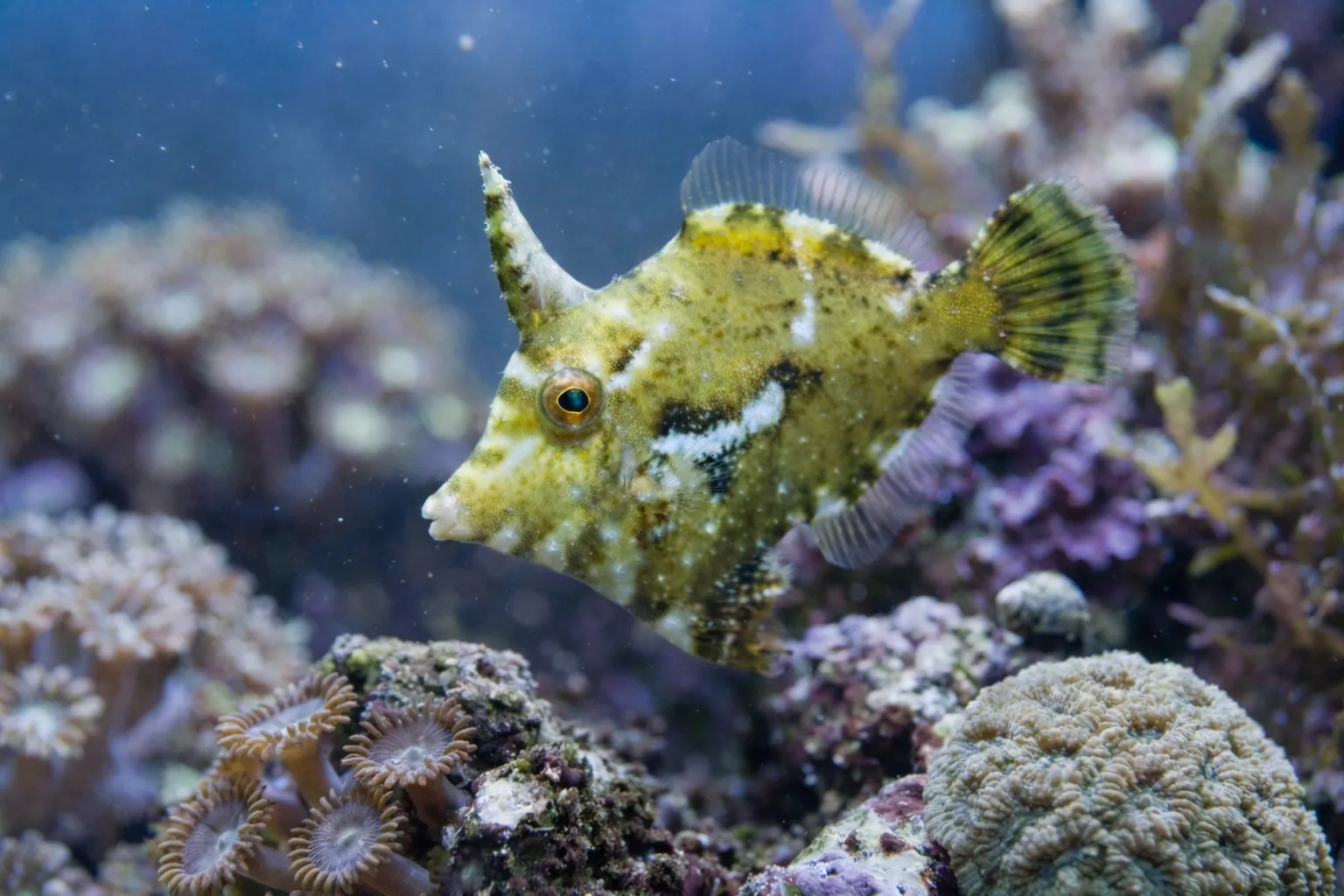
Aiptasia Eating Filefish
Acreichthys tomentosus
Overview
The Aiptasia Eating Filefish, scientifically known as Oxymonacanthus longirostris, is a fascinating marine species belonging to the family of filefish. This species is especially known for its diet that includes the pesky aiptasia anemones, making it a popular choice for reef aquarists dealing with these unwanted pests. In addition to its unique eating habits, the Aiptasia Eating Filefish is notable for its interesting coloration and behaviors, which can add character to a marine aquarium.
Natural Habitat
In the wild, this species is typically found in coral reefs across the Indo-Pacific region. They thrive in shallow waters and are often spotted among rocks and corals, where they use their camouflage to evade predators. Their natural environment is rich in biodiversity, providing them with ample food sources and shelter.
Care Requirements
While the Aiptasia Eating Filefish can be a beneficial addition to a marine tank, it does have specific care needs:
- Water Type: Marine
- Tank Setup: A well-established reef tank is ideal, as it should contain plenty of live rock and hiding spots for the fish to retreat to when necessary.
- Lighting: Moderate lighting is preferable, as it supports the growth of corals and other invertebrates in the tank.
- Temperature: Maintain a temperature range suitable for most reef species, generally between 24-28 °C (75-82 °F).
- Salinity: A salinity level of 1.020-1.025 is recommended for optimal health.
Compatibility
The Aiptasia Eating Filefish is generally peaceful but does best in a community tank that can accommodate its specific needs. It may exhibit aggression towards other filefish or species that closely resemble it. Additionally, it's advisable to avoid housing this fish with overly aggressive tankmates. Ideal companions include:
- Smaller, peaceful fish
- Coral reefs and invertebrates
Feeding
The primary diet of the Aiptasia Eating Filefish consists of aiptasia, but they can also be fed a varied diet that includes:
- Frozen or live foods such as brine shrimp and mysis shrimp
- High-quality pellet food
Offering a well-balanced diet will help keep the fish healthy and vibrant while also maintaining its capacity to control aiptasia populations.
Lifespan
When kept in a suitable environment with proper care, the Aiptasia Eating Filefish can live several years, although the typical lifespan is not particularly well-documented.
Conclusion
In summary, the Aiptasia Eating Filefish is a unique and beneficial species for marine aquarists looking to manage aiptasia in their tanks. With appropriate care and a suitable environment, they can thrive and contribute to the overall health of the aquarium ecosystem.
How to care for Aiptasia Eating Filefish
- 1
Set up the tank
Use a minimum of 30 gallons (114 liters) of water, with live rock for grazing and hiding, and moderate water flow.
- 2
Acclimate slowly
Acclimate over 30–60 minutes to match water parameters, reducing stress and ensuring a smooth transition.
- 3
Maintain water parameters
Keep temperature at 72–80°F (22–27°C), pH between 8.1–8.4, salinity at 1.020–1.025, and alkalinity between 8–12 dKH.
- 4
Feed appropriately
Offer a varied diet including frozen mysis shrimp, brine shrimp, finely chopped seafood, high-quality marine pellets or flakes, and algae-based foods.
- 5
Monitor behavior
Observe for signs of coral nipping; if observed, consider housing in a fish-only tank.
- 6
Provide hiding spots
Ensure ample crevices and overhangs in aquascaping to allow the fish to hide and rest.
Frequently asked questions
What is the ideal tank size for an Aiptasia Eating Filefish?▾
A minimum tank size of 30 gallons (114 liters) is recommended for a single Aiptasia Eating Filefish. Larger tanks are preferable for multiple individuals.
What are the optimal water parameters for Acreichthys tomentosus?▾
Maintain water temperature between 72–80°F (22–27°C), pH at 8.1–8.4, salinity of 1.020–1.025, and alkalinity between 8–12 dKH.
What should I feed an Aiptasia Eating Filefish?▾
Provide a varied diet including frozen mysis shrimp, brine shrimp, finely chopped seafood, high-quality marine pellets or flakes, and algae-based foods.
Can Aiptasia Eating Filefish be kept with corals?▾
While juveniles may be reef-safe, adults can nip at soft corals, LPS corals, and zoanthids. Monitor their behavior and consider housing them in a fish-only tank.
How do I acclimate an Aiptasia Eating Filefish to my aquarium?▾
Acclimate slowly over 30–60 minutes to match water parameters, ensuring a smooth transition and reducing stress.
What are the common diseases affecting Aiptasia Eating Filefish?▾
They are generally hardy but can be susceptible to marine ich during stress or transport. Quarantine and stable acclimation greatly improve long-term health.
How long do Aiptasia Eating Filefish live in captivity?▾
With stable conditions and a varied diet, they typically live 3–5 years, remaining hardy and adaptable throughout their lifespan.