

Illustrative images
African Flameback Angelfish
Centropyge acanthops
Overview
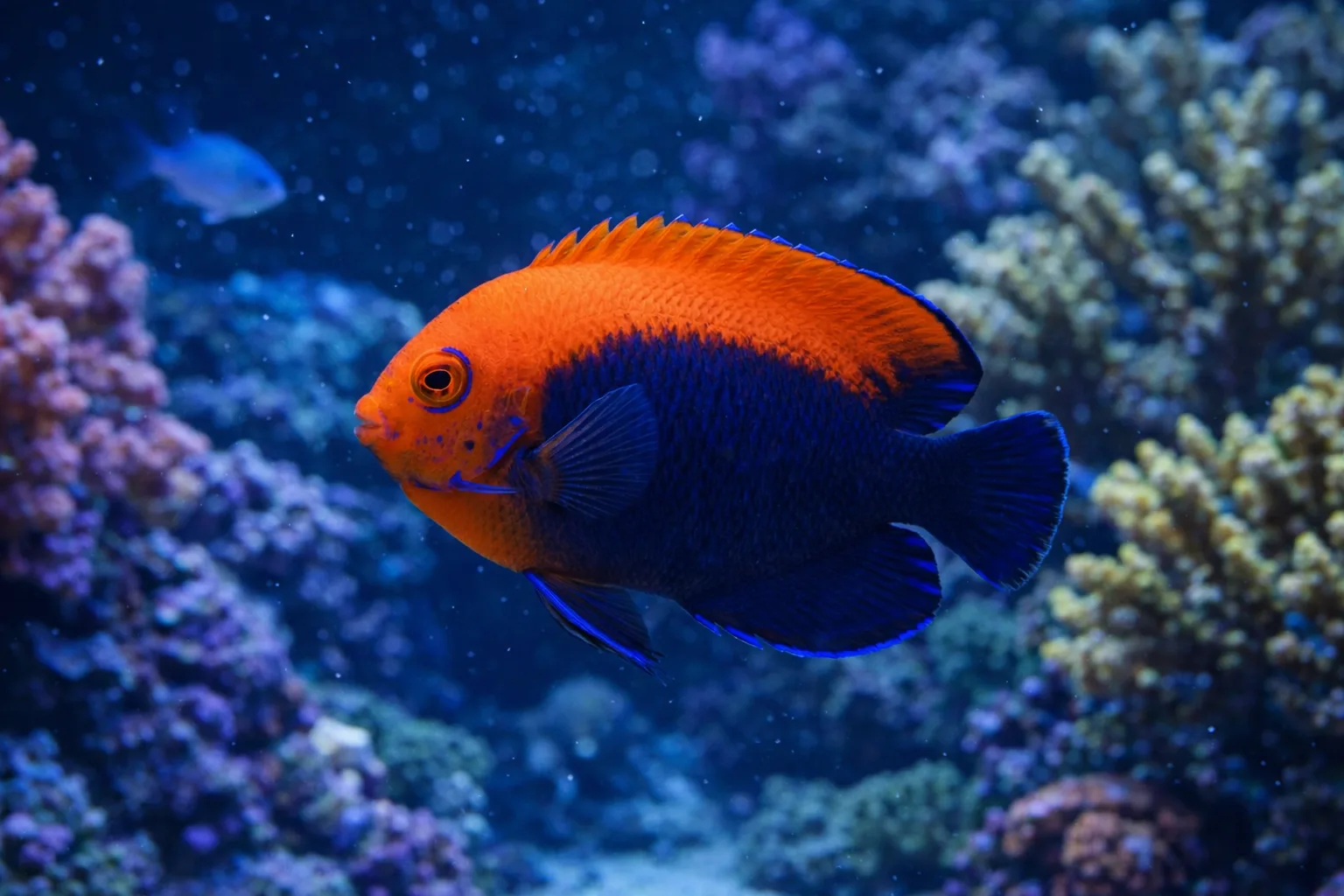
The African Flameback Angelfish, scientifically known as Centropyge acanthops, is a striking marine fish native to the warm waters of the Indian Ocean. Known for its vibrant coloration, this species is a popular choice among reef aquarium enthusiasts. The bright yellow and orange hues of its body, mixed with deep blue accents, make it a stunning centerpiece in any aquarium.
Natural Habitat
This species typically inhabits rocky and coral reefs, where it can be found at depths ranging from 13 to 60 meters. Flameback Angelfish are known to hide in crevices and caves, which provide them protection from predators and a lush environment to explore.
Care Requirements
The African Flameback Angelfish requires a well-maintained reef environment to thrive. It is essential to create a tank that mimics its natural habitat, with plenty of hiding spots and live rock. A minimum tank size of 150 liters (approximately 40 gallons) is recommended to provide ample swimming space and territory.
Tank Setup
When setting up a tank for the Flameback Angelfish, consider the following:
- Live Rock: Incorporate plenty of live rock for grazing and hiding.
- Corals: Soft and hard corals can be included, but ensure that the fish does not nip at them.
- Water Quality: Maintain excellent water quality with regular water changes and filtration.
- Temperature: Keep the water temperature stable between 24-28°C (75-82°F).
Compatibility
The African Flameback Angelfish can be semi-aggressive, which means it can hold its own in a community tank but should be housed with caution. It is best kept with species that share similar temperaments and will not challenge its space. Good tank mates include:
- Clownfish
- Gobies
- Wrasses
Avoid housing it with overly aggressive species or fish that may nip at its fins.
Feeding
Flameback Angelfish are omnivores and require a varied diet. Feed them a mix of quality flake foods, pellets, and frozen foods that include marine algae, brine shrimp, and other meaty offerings. This varied diet will help maintain their vibrant colors and overall health.
Lighting and CO2
Moderate lighting is best for the African Flameback Angelfish tank, as it can support coral growth while keeping the fish comfortable. There is no particular requirement for CO2 injection in a marine setup; focus on water quality instead.
Summary
The African Flameback Angelfish is a visually stunning addition to any reef aquarium, providing both beauty and personality. With the proper care and environment, this enchanting fish can thrive and bring vibrancy to your aquatic ecosystem.
How to care for African Flameback Angelfish
- 1
Set up the tank
Prepare a well-established aquarium of at least 55 gallons (208 liters) with plenty of live rock for grazing and hiding spots.
- 2
Acclimate the fish
Acclimate the African Flameback Angelfish slowly to the new environment to reduce stress and prevent shock.
- 3
Maintain water parameters
Keep the water temperature between 72-78°F (22-26°C), salinity at 1.020-1.025, and pH between 8.1 and 8.4.
- 4
Provide a varied diet
Feed the fish a mix of spirulina, marine algae, high-quality angelfish preparations, mysis shrimp, and other meaty foods.
- 5
Monitor tank mates
Keep the African Flameback Angelfish singly or with other non-aggressive species, as it can be territorial, especially towards other dwarf angelfish.
Frequently asked questions
What is the maximum size of the African Flameback Angelfish?▾
The African Flameback Angelfish grows up to 3 inches (7.6 cm) in length.
What is the minimum tank size for an African Flameback Angelfish?▾
A minimum tank size of 55 gallons (208 liters) is recommended for the African Flameback Angelfish.
What is the natural habitat of the African Flameback Angelfish?▾
The African Flameback Angelfish is native to the western Indian Ocean, including the coast of East Africa and surrounding islands.
Is the African Flameback Angelfish reef-safe?▾
The African Flameback Angelfish is considered reef-safe with caution, as it may nip at corals and clams.
What is the diet of the African Flameback Angelfish?▾
The African Flameback Angelfish is an omnivore, feeding on algae, small crustaceans, and sponges in the wild.