

Illustrative images
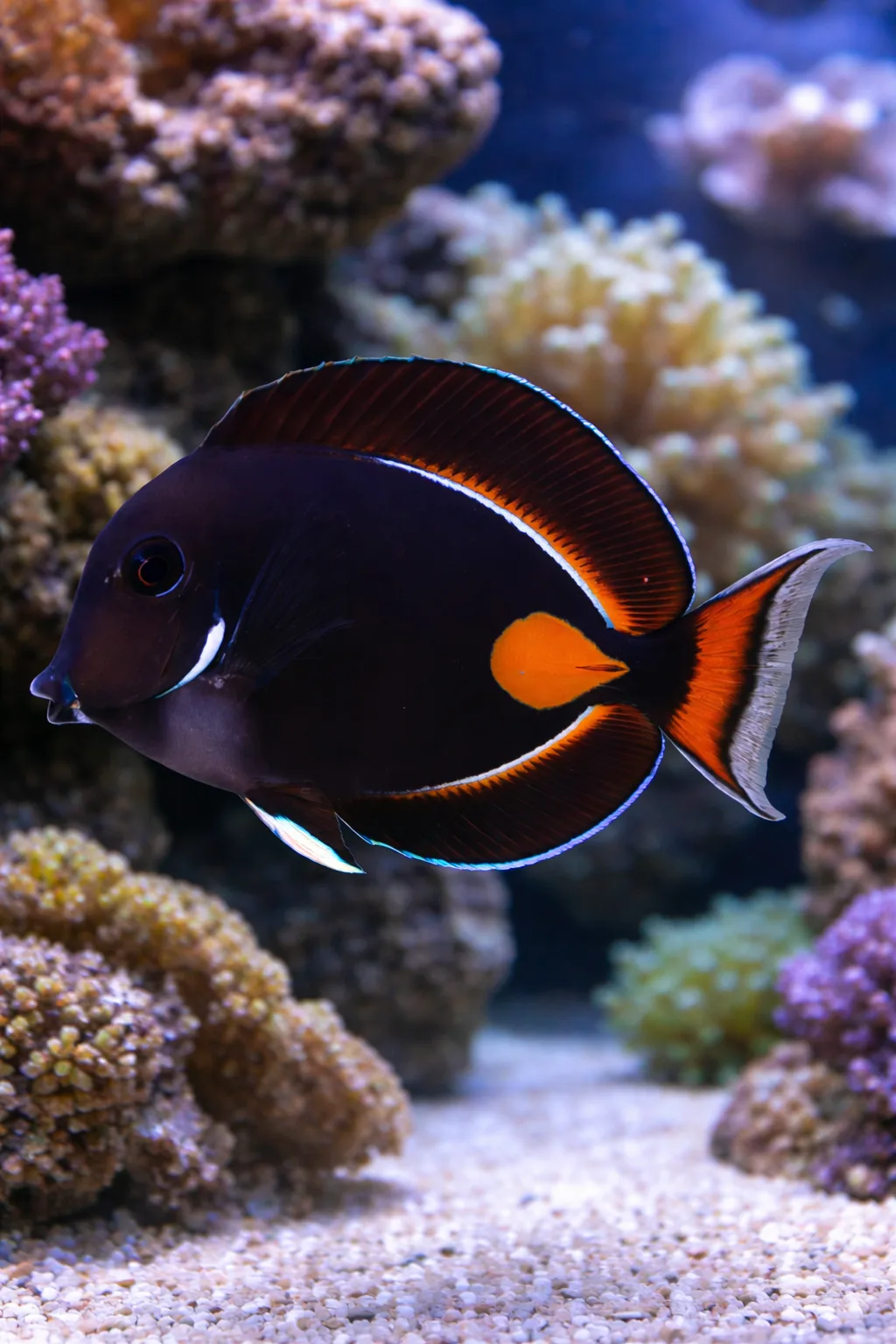
Achilles Tang
Acanthurus achilles
Overview
The Achilles Tang, scientifically known as Acanthurus achilles, is a striking marine fish appreciated for its vibrant colors and active behavior. This species is native to the reefs of the Indo-Pacific region and is popular among saltwater aquarium enthusiasts.
Natural Habitat
In the wild, Achilles Tangs inhabit coral reefs, where they often associate with rocky areas and thrive in warm, shallow waters. Their natural environment provides ample opportunities for grazing on algae, which forms a crucial part of their diet.
Care Requirements
Achilles Tangs require a well-maintained aquarium that mimics their natural habitat. Here are some key care requirements:
- Water type: Marine
- Minimum tank size: 180 liters (approximately 47 gallons) is recommended for adults.
- Water parameters: Maintain stable conditions, ideally with a temperature around 24-27°C (75-81°F) and a pH of 8.1-8.4.
- Filtration: A strong filtration system is necessary to keep the water clean and oxygenated.
Tank Setup
For optimal health, your aquarium should include:
- Plenty of swimming space: Achilles Tangs are active swimmers and need room to move.
- Hideouts: Use rock formations and caves to provide hiding spots, as this species can be shy.
- Live rock: Incorporating live rock not only adds to the aesthetic but also supports beneficial algae growth for grazing.
Compatibility
Achilles Tangs can be semi-aggressive, especially towards other surgeonfish and similarly shaped species. Here are some compatibility tips:
- Best kept in a larger community tank with ample space.
- Avoid keeping multiple Achilles Tangs together to reduce territorial disputes.
- Compatible tank mates include most other peaceful fish that do not resemble them.
Diet
A balanced diet is crucial for maintaining the health of an Achilles Tang. They are primarily herbivores and benefit from:
- High-quality marine algae and seaweed.
- Spirulina-based foods.
- Occasional supplements with meaty foods such as brine shrimp.
Lifespan
In captivity, with proper care, Achilles Tangs can live for 5 to 10 years. Regular monitoring of water parameters and maintaining a healthy diet will contribute to their longevity.
Conclusion
The Achilles Tang is a beautiful addition to any marine aquarium. With their striking appearance and relatively manageable care requirements, they are suited for experienced aquarists looking to enhance their underwater landscape.
How to care for Achilles Tang
- 1
Set up the tank
Use a minimum 180-gallon tank with ample swimming space and live rock for grazing.
- 2
Acclimate slowly
Acclimate over 30 minutes to an hour, matching water temperature and parameters. Use drip acclimation to minimize stress.
- 3
Maintain water quality
Keep water temperature at 75-79°F (24-26°C), salinity at 1.020-1.025, pH between 8.1-8.4, and alkalinity (dKH) between 8-12.
- 4
Feed appropriately
Offer a diet rich in marine algae, such as nori sheets, spirulina-based flakes, and algae pellets. Supplement occasionally with frozen mysis shrimp or brine shrimp.
- 5
Monitor health
Regularly check for signs of ich or marine velvet. Quarantine new arrivals and maintain pristine water quality to prevent outbreaks.
Frequently asked questions
What size tank does an Achilles Tang need?▾
An Achilles Tang requires a minimum tank size of 180 gallons (680 liters) to accommodate its active swimming behavior and territorial nature.
What are the ideal water parameters for an Achilles Tang?▾
Maintain water temperature between 75-79°F (24-26°C), salinity at 1.020-1.025, pH between 8.1-8.4, and alkalinity (dKH) between 8-12.
What should I feed an Achilles Tang?▾
Provide a diet rich in marine algae, such as nori sheets, spirulina-based flakes, and algae pellets. Supplement occasionally with frozen mysis shrimp or brine shrimp for variety.
Can Achilles Tangs live with other fish?▾
Achilles Tangs are semi-aggressive and can be territorial, especially towards other tangs or similarly shaped fish. It's best to keep them as the only tang in the tank unless it's very large.
How do I acclimate an Achilles Tang to my aquarium?▾
Acclimate slowly over 30 minutes to an hour, matching water temperature and parameters. Use a drip acclimation method to minimize stress.
What are common health issues for Achilles Tangs?▾
They are highly susceptible to ich (Cryptocaryon irritans) and marine velvet (Amyloodinium ocellatum). Quarantine new arrivals and maintain pristine water quality to prevent outbreaks.